
Contents
Overview
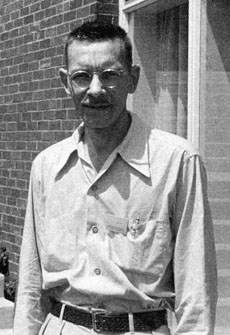
Alfred Day Hershey (December 4, 1908 – May 22, 1997) was a towering figure in 20th-century molecular biology, an American chemist and geneticist whose seminal experiments provided definitive proof that DNA is the carrier of genetic information. Working primarily at the Carnegie Institution in Cold Spring Harbor, New York, Hershey utilized bacteriophages – viruses that infect bacteria – to conduct his groundbreaking research. His most famous experiment, the 1952 Hershey-Chase experiment, elegantly demonstrated that only the DNA of a bacteriophage enters a bacterium during infection, while the protein coat remains outside, thus establishing DNA's central role in heredity. This discovery was a critical stepping stone for the subsequent elucidation of the DNA double helix structure by James Watson and Francis Crick, and it fundamentally reshaped our understanding of life itself. Hershey was awarded the Nobel Prize in Physiology or Medicine in 1969 for his work, solidifying his legacy as one of the key architects of modern genetics.
🎵 Origins & History
Alfred Day Hershey’s scientific journey began in Owosso, Michigan, where he was born on December 4, 1908. He pursued his higher education at Michigan State University, earning a B.S. in chemistry in 1930 and a Ph.D. in bacteriology in 1934. His early academic career was marked by a deep interest in the fundamental mechanisms of life at the microbial level. After his doctoral studies, Hershey joined the faculty at Washington University in St. Louis in 1934, where he began his influential work on bacteriophages, viruses that specifically infect bacteria. It was during this period that he started laying the groundwork for his later, more famous experiments, exploring the life cycles and genetic material of these simple yet powerful biological agents. His meticulous approach and dedication to empirical evidence would define his scientific output for decades to come.
⚙️ How It Works
Hershey’s most celebrated contribution, the 1952 Hershey-Chase experiment, hinges on the distinct chemical compositions of DNA and protein. DNA contains phosphorus but no sulfur, while proteins contain sulfur but no phosphorus (with the exception of the amino acid methionine, which Hershey accounted for). By radioactively labeling the DNA of bacteriophages with phosphorus-32 and their protein coats with sulfur-35, Hershey and his colleague Martha Chase could track which component entered the bacterial cell during infection. When the infected bacteria were agitated in a blender, separating the phage particles from the bacterial cells, and then centrifuged, the radioactive phosphorus (DNA) was found inside the bacterial cells, while the radioactive sulfur (protein) remained in the supernatant. This elegant experiment provided irrefutable evidence that DNA, not protein, was the genetic material responsible for directing viral reproduction.
📊 Key Facts & Numbers
The Hershey-Chase experiment, conducted in 1952, is cited in an estimated 50,000 scientific publications, underscoring its profound impact. Hershey received the Nobel Prize in Physiology or Medicine in 1969, an award with a prize sum of approximately $50,000 USD at the time, shared with Max Delbrück and Salvador Luria for their work on the replication and genetic structure of viruses. His research at the Carnegie Institution for Science spanned over three decades, from 1946 until his retirement in 1975. The Hershey-Chase experiment has been replicated millions of times globally in university biology labs, serving as a cornerstone of genetics education for countless students. His work directly informed the discovery of the DNA double helix structure by James Watson and Francis Crick in 1953, a discovery that earned them the Nobel Prize in 1962.
👥 Key People & Organizations
Key figures in Alfred Hershey’s scientific orbit include his long-time collaborator Martha Chase, whose technical skills were crucial to the success of the 1952 experiment. His mentors and colleagues at Washington University in St. Louis and later at the Carnegie Institution for Science provided a fertile environment for his research. Max Delbrück and Salvador Luria, fellow Nobel laureates, were instrumental in the broader field of viral genetics and often collaborated and debated with Hershey, forming what became known as the "Phage Group" – a loose but influential network of scientists studying bacteriophages. Hershey's work also directly paved the way for James Watson and Francis Crick, whose model of the DNA double helix, published just a year after the Hershey-Chase experiment, provided the structural basis for understanding how DNA functions as genetic material. The Carnegie Institution for Science itself was a crucial organizational entity, providing the resources and intellectual freedom for Hershey's sustained research.
🌍 Cultural Impact & Influence
Alfred Hershey’s work fundamentally altered the trajectory of biological science, shifting the focus from proteins to DNA as the molecule of heredity. This paradigm shift, solidified by the Hershey-Chase experiment, was a critical catalyst for the entire field of molecular biology and the subsequent genomics revolution. It provided the essential foundation upon which discoveries like the DNA double helix structure, gene sequencing, and genetic engineering were built. The implications of understanding DNA as the genetic blueprint have permeated medicine, agriculture, forensics, and biotechnology, influencing everything from the development of new therapies for genetic diseases to the creation of genetically modified organisms. Hershey’s legacy is thus woven into the fabric of modern scientific understanding and its practical applications, making him an undisputed icon of 20th-century biology.
⚡ Current State & Latest Developments
While Alfred Hershey passed away in 1997, the implications of his foundational work continue to resonate. The field of genetics, which he helped to define, is currently experiencing rapid advancements, particularly in areas like CRISPR-Cas9 gene editing, synthetic biology, and personalized medicine. The ongoing exploration of the human genome and the genomes of countless other organisms relies heavily on the understanding that DNA is the primary carrier of genetic information, a fact definitively proven by Hershey’s experiments. Research into viral genetics, a field Hershey was deeply involved in, remains critical for understanding and combating infectious diseases, from HIV/AIDS to emerging pandemics. The principles he established are continuously applied in fields like forensic science and biotechnology daily.
🤔 Controversies & Debates
The primary debate surrounding Hershey’s work, if any, lies not in its validity but in the attribution of credit for the conceptual leap. While the Hershey-Chase experiment is widely celebrated, some historical accounts suggest that the scientific community was already leaning towards DNA as the genetic material, and Hershey’s experiment served as the definitive confirmation rather than the initial spark of suspicion. However, the elegance and clarity of the experimental design, particularly the use of radioactive isotopes to distinguish between DNA and protein, are universally acknowledged as Hershey’s genius. Furthermore, the broader context of the Phage Group’s collaborative yet competitive environment, where ideas were rigorously tested and debated, is often highlighted. The ethical considerations of genetic research, which Hershey’s work indirectly enabled, are a separate but related area of ongoing discussion in contemporary society.
🔮 Future Outlook & Predictions
The future of genetics, built upon the bedrock laid by Alfred Hershey, is poised for further exponential growth. We can anticipate continued breakthroughs in understanding complex genetic diseases, leading to more targeted and effective treatments. The application of gene editing technologies like CRISPR-Cas9 is expected to expand, potentially offering cures for inherited disorders and enabling novel agricultural advancements. The field of epigenetics, which studies heritable changes in gene expression without altering the underlying DNA sequence, will likely deepen our understanding of how environmental factors interact with our genetic code. Furthermore, the ongoing exploration of the microbiome and its genetic contributions to health and disease represents another frontier that owes its existence to the fundamental understanding of genetic material that Hershey helped establish.
💡 Practical Applications
The practical applications stemming from Alfred Hershey’s discovery are vast and touch nearly every aspect of modern life. In medicine, his work is the bedrock of genetic testing, allowing for the diagnosis of inherited diseases and the assessment of predispositions to conditions like cancer. It underpins the development of gene therapy, a revolutionary approach to treating genetic disorders. In agriculture, understanding DNA has led to the creation of genetically modified crops with enhanced yields, pest resistance, and nutritional value. Forensic science relies heavily on DNA fingerprinting to identify individuals in criminal investigations. Furthermore, the biotechnology industry, a multi-billion dollar sector, is entirely predicated on the ability to manipulate and understand DNA, from producing pharmaceuticals like insulin to developing diagnosti
Key Facts
- Category
- science
- Type
- topic