
Contents
Overview
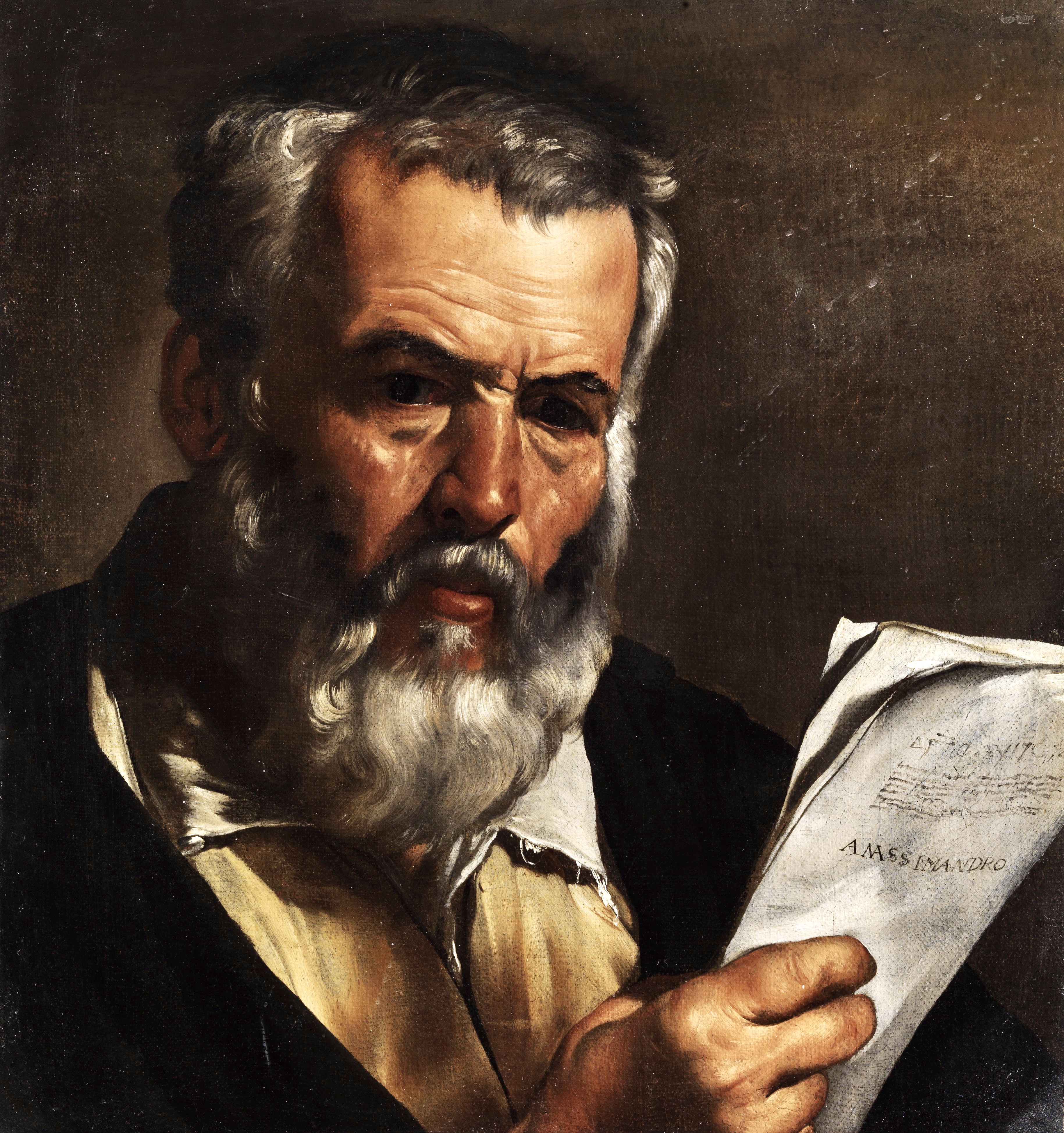
Anaximander emerged from Miletus, a thriving Ionian Greek city on the coast of Asia Minor (modern-day Turkey). He was a direct successor to Thales of Miletus, the acknowledged founder of Greek philosophy, and inherited the Milesian school's focus on naturalistic explanations for the cosmos. While Thales posited water as the fundamental substance, Anaximander, in his seminal work 'On Nature,' proposed a more abstract and radical concept: the 'apeiron' (ἄπειρον). This indefinite, boundless, and eternal primordial substance was seen as the source from which all things arise and to which they return, governed by principles of opposition and balance. This shift from a tangible element to an abstract principle marks a significant leap in philosophical thought, moving beyond mythological explanations towards a more metaphysical understanding of reality. His writings, though lost, were reportedly the first prose philosophical treatise in Greek, setting a precedent for intellectual discourse that would echo through centuries.
⚙️ How It Works
Anaximander's core cosmological innovation was the concept of the 'apeiron.' He argued that if there were a determinate element like water or fire as the arche (ἀρχή, 'principle' or 'origin'), it would necessarily dominate and consume its opposites. The apeiron, being indefinite and boundless, could generate and contain all determinate opposites – hot and cold, wet and dry – without being consumed by them. This primordial substance, through a process of separation and differentiation, gave rise to the cosmos as we know it, including the celestial bodies and the Earth. He envisioned the Earth as a cylinder suspended freely in space, not supported by anything, a revolutionary idea for his time. Furthermore, he proposed that celestial bodies were rings of fire separated from the sky, explaining phenomena like eclipses and the phases of the moon. His understanding of natural processes suggested a universe governed by inherent laws, a concept that would profoundly influence later scientific thought.
📊 Key Facts & Numbers
Anaximander lived during a period of significant intellectual ferment in Ionia. His philosophical writings, though only a fragment survives, were reportedly the first prose treatise in Greek. He is credited with creating one of the earliest maps of the known world, a significant cartographical achievement for its era. His cosmological model suggested the Earth was a cylinder with a height three times its width. He also proposed that the stars were not fixed but were fiery wheels revolving in the heavens, with openings that allowed their light to be seen. His early scientific speculations, though lacking empirical proof by modern standards, represent a monumental shift in human understanding.
👥 Key People & Organizations
Anaximander was a central figure in the Milesian school, succeeding his teacher Thales of Miletus as its preeminent thinker. His pupils included Anaximenes, who would later propose air as the arche, and possibly Pythagoras of Samos, though this association is debated by historians. His intellectual lineage is crucial, forming the bedrock of early Greek natural philosophy. Later philosophers like Heraclitus and Empedocles engaged with and responded to Anaximander's ideas about cosmic origins and change. The fragments of his work were preserved and commented upon by later thinkers such as Aristotle, Simplicius, and Theophrastus, who provide our primary, albeit indirect, access to his thought. His father was Praxiades, a detail noted in historical records.
🌍 Cultural Impact & Influence
Anaximander's influence on Western thought is immeasurable, though often indirect due to the scarcity of his original writings. His conceptualization of the 'apeiron' as a boundless, indeterminate source of all reality was a profound philosophical leap, moving beyond anthropomorphic deities and tangible elements to a more abstract, universal principle. This idea of an underlying unity and order in the cosmos, governed by inherent laws rather than divine caprice, laid the groundwork for scientific rationalism. His early map of the inhabited world, the 'oikoumene,' was a pioneering effort in cartography and geographical understanding. Furthermore, his speculative biology, suggesting that humans originated from aquatic animals, foreshadowed evolutionary theory by over two millennia. The very act of writing down philosophical ideas, which Anaximander is credited with initiating, established a new mode of intellectual transmission and debate, fundamentally shaping the trajectory of philosophy and science through figures like Plato and Aristotle.
⚡ Current State & Latest Developments
While Anaximander himself is a figure of antiquity, the intellectual currents he initiated are perpetually active. His concept of an underlying, unified principle governing the universe continues to resonate in modern physics, particularly in theories seeking a 'theory of everything' that unifies fundamental forces. The philosophical debate surrounding the nature of reality, the search for fundamental constituents, and the relationship between abstract principles and concrete phenomena remains a vibrant area of inquiry. Contemporary discussions in cosmology, such as the nature of dark matter and dark energy, echo Anaximander's quest to understand the unseen forces and substances that shape the universe. The ongoing exploration of life's origins, whether through abiogenesis or panspermia, continues to grapple with questions Anaximander first posed about our place in the natural order.
🤔 Controversies & Debates
The primary controversy surrounding Anaximander lies in the interpretation of his surviving fragment and the testimonies of later philosophers. The exact meaning and nature of the 'apeiron' are subjects of ongoing scholarly debate: was it a purely abstract concept, or did it possess some form of material existence? The attribution of certain ideas, such as the cylindrical Earth or the evolutionary hypothesis, to Anaximander himself, rather than to later interpretations or embellishments by figures like Theophrastus, is also contested. The extent of his originality versus his debt to Thales and other Near Eastern influences remains a point of discussion. Furthermore, the precise dating of his life and writings, and the exact content of his lost works, are subjects of scholarly reconstruction rather than definitive fact, leading to varying perspectives on his precise contribution to the Milesian school and early Greek thought.
🔮 Future Outlook & Predictions
The future of Anaximander's legacy lies in the continued pursuit of fundamental understanding. As scientific inquiry pushes the boundaries of knowledge, the questions Anaximander first articulated about origins, substance, and cosmic order will remain relevant. Future cosmological models might offer new interpretations of boundless or indeterminate principles that govern the universe, potentially drawing parallels with the 'apeiron.' The ongoing search for a unified field theory in physics could be seen as a modern echo of Anaximander's quest for a single, underlying principle. His speculative biology, though lacking empirical grounding at the time, serves as a historical marker for humanity's enduring fascination with our evolutionary past, a field that continues to yield astonishing discoveries. The philosophical exploration of abstract principles governing existence will undoubtedly persist, ensuring Anaximander's thought remains a touchstone for understanding the human drive to comprehend the cosmos.
💡 Practical Applications
While Anaximander's work was theoretical, its impact on practical applications is indirect but profound. His pioneering efforts in cartography, creating one of the earliest maps of the known world, laid the foundation for all subsequent geographical exploration and navigation. His astronomical observations and theories, such as explaining eclipses and the nature of celestial bodies, contributed to the development of calendars and timekeeping, essential for agriculture and societal organization. His philosophical emphasis on natural laws and ratio
Key Facts
- Category
- philosophy
- Type
- topic