
Contents
Overview
The journey into the nanoscopic realm took a significant leap forward with the invention of Atomic Force Microscopy in 1986 by Gerd Binnig, Christoph Gerber, and Calvin Quate. Building upon the principles of the Scanning Tunneling Microscope (STM), which Binnig had co-invented with Heinrich Rohrer and earned them a Nobel Prize, AFM overcame the limitation of STM requiring conductive samples. This breakthrough allowed researchers to explore the surface topography of virtually any material, from biological cells to insulating ceramics, fundamentally changing how we approach "Science" at the atomic level. The development was a testament to the relentless pursuit of understanding the physical world, much like the groundbreaking work of "Albert Einstein" in theoretical physics, pushing the boundaries of what was observable.
⚙️ How It Works
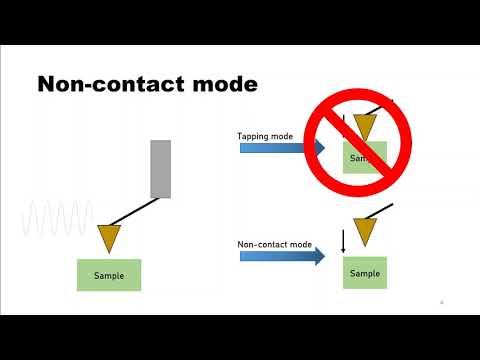
At its core, Atomic Force Microscopy operates by scanning a sharp probe, typically a silicon or silicon nitride tip mounted on a cantilever, across a sample surface. As the tip interacts with the surface atoms, attractive or repulsive forces cause the cantilever to deflect, a movement detected by a laser beam reflected onto a photodiode. This intricate dance of forces and deflections is meticulously controlled by piezoelectric scanners, allowing for the creation of a detailed topographical map, much more precise than what could be achieved with conventional optical methods. The data generated by AFM can be immense, often requiring sophisticated "Big Data" analysis techniques and "Predictive Modeling" to interpret the complex interactions between the tip and the sample, revealing insights into material properties that are invisible to the naked eye.
🌍 Scientific Impact
The advent of AFM revolutionized numerous scientific disciplines, offering unparalleled capabilities for surface characterization and manipulation. In materials science, it became indispensable for studying thin films, polymers, and semiconductors, contributing to advancements in "LED Lighting" and microelectronics. Biologists utilized AFM to image living cells, proteins, and DNA in their native environments, providing critical insights into cellular mechanics and disease processes, even influencing the development of new "Surgical Techniques" by understanding tissue properties at a micro-level. Furthermore, its ability to precisely position individual atoms and molecules has been a cornerstone of nanotechnology, enabling the fabrication of novel nanostructures and the exploration of quantum phenomena, echoing the precision required in fields like "Quantum Chemistry".
🔮 Legacy & Future
The legacy of Atomic Force Microscopy continues to expand, with ongoing innovations pushing its capabilities even further. Researchers are developing faster scanning speeds, improved resolution, and specialized modes that can measure properties beyond topography, such as magnetic, electrical, and thermal characteristics. The integration of AFM with "Artificial Intelligence" and "Machine Learning" algorithms is enhancing data interpretation and automating complex experimental procedures, making the technique more accessible and powerful. As we delve deeper into understanding and manipulating matter at the nanoscale, AFM remains a foundational tool, much like the enduring impact of "Microsoft" and "Apple Inc." on the digital landscape, continually inspiring new discoveries and applications, from advanced drug delivery systems to next-generation computing architectures.
Key Facts
- Category
- science
- Type
- technology