
Contents
Overview
The Black Sea coast's history is as ancient as human civilization itself, serving as a crucial bridge between Eastern Europe and Western Asia. The Roman Empire and the Byzantine Empire exerted control over the Black Sea coast, followed by the Ottoman Empire, which dominated the northern and western coasts for centuries. The 20th century brought further upheaval with the Russian Revolution, World Wars, and the dissolution of the Soviet Union, redrawing borders and impacting coastal communities profoundly.
⚙️ Geological & Ecological Features
Geologically, the Black Sea coast is a study in dramatic contrasts. To the south, the Pontic Mountains rise steeply from the sea, creating a rugged and often inaccessible coastline in Turkey. Eastward, the Caucasus Mountains form a formidable barrier, with their foothills meeting the sea in a series of dramatic cliffs and bays, particularly in Russia's Krasnodar Krai. The mid-north is dominated by the Crimean Mountains, which plunge into the sea, forming the iconic southern coast of Crimea. In contrast, the western coast, encompassing Bulgaria and Romania, features more gradual slopes, extensive floodplains fed by major rivers like the Danube, Dnieper, and Dniester. Ecologically, the Black Sea itself is unique, characterized by a stratified water column with a deep, anoxic layer, which limits marine life in its lower depths but supports a rich ecosystem in the oxygenated upper layers, including significant fisheries for species like anchovies and sprats.
📊 Key Facts & Numbers
The economic significance is substantial, with major ports handling millions of tons of cargo annually, including oil, grain, and manufactured goods.
👥 Key Nations & Cities
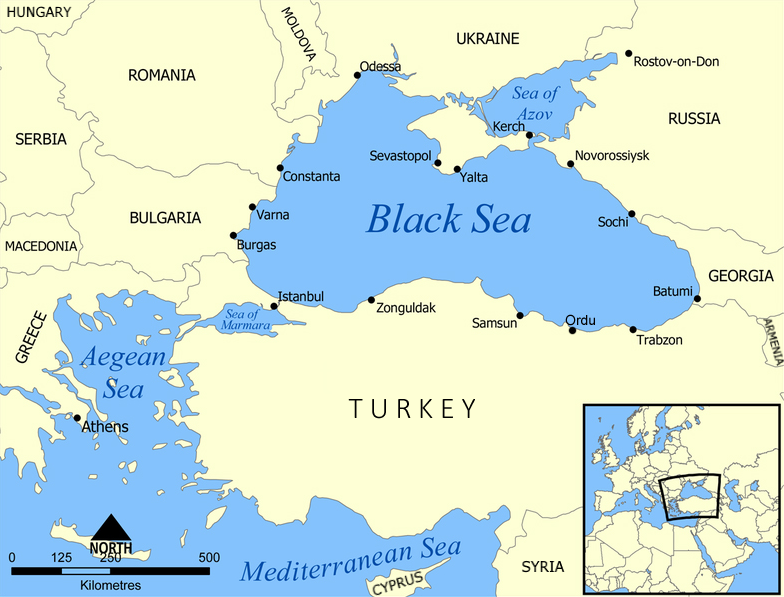
The Black Sea coast is bordered by six distinct nations, each contributing to its unique character. Turkey's northern coast is home to major cities like Trabzon and Samsun, centers of trade and culture. Russia's coastline includes the vital port of Novorossiysk and the resort city of Sochi. Ukraine's coast is dominated by the bustling port of Odesa and the historic city of Sevastopol in Crimea. Romania's coast features the major port of Constanța and the resort town of Mamaia. Bulgaria's coastline includes historic cities like Varna and Burgas, important cultural and economic hubs. Georgia's coast is characterized by the port city of Batumi and the resort town of Kobuleti. These cities, with populations ranging from hundreds of thousands to over a million, serve as economic engines, cultural centers, and gateways to the wider Black Sea region, each with its own distinct architectural styles, culinary traditions, and historical narratives.
🌍 Cultural Impact & Influence
The Black Sea coast has been a crucible of cultures for millennia, shaping and being shaped by the diverse peoples who have inhabited its shores. Its strategic location made it a vital artery for trade and cultural exchange between the Byzantine Empire, Genoese, Venetians, Ottomans, and various Slavic and Caucasian peoples. This historical interaction has left an indelible mark on the region's languages, cuisines, music, and architecture. The coast has inspired countless artists, writers, and musicians, from the romantic poetry of Alexander Pushkin to the evocative landscapes painted by Ivan Aivazovsky. The region's folklore is rich with tales of seafaring, mythical creatures, and ancient gods. The culinary traditions are a fusion of Mediterranean, Balkan, Caucasian, and Eastern European influences, with seafood playing a central role. The vibrant mix of Orthodox Christianity, Islam, and other faiths has also contributed to a unique cultural mosaic, evident in the diverse religious sites and festivals found along the coast.
⚡ Current State & Latest Developments
The ongoing conflict in Ukraine has had profound repercussions on the Black Sea region, disrupting maritime trade, affecting fisheries, and raising security concerns across the region. Turkey, as a NATO member and a key player in the region, navigates a delicate balance, controlling the Bosphorus and Dardanelles straits, which are crucial for naval access. Environmental concerns, including pollution from rivers and shipping, as well as the impact of climate change on marine ecosystems, are also pressing issues. Despite these challenges, tourism remains a significant economic driver for many coastal areas, particularly in Russia, Turkey, and Bulgaria, though its sustainability is increasingly debated.
🤔 Controversies & Debates
The Black Sea coast is a focal point for several ongoing controversies and debates. Environmental degradation is a critical issue; debates rage over the effectiveness of pollution control measures, the impact of industrial development on marine biodiversity, and the long-term consequences of climate change on the sea's unique ecosystem. The management of fisheries, particularly concerning overfishing and the impact on species like sturgeon, is also a contentious topic. Furthermore, the development of coastal infrastructure, including ports and resorts, often sparks debates about balancing economic growth with environmental preservation and the impact on local communities. The militarization of the region, with increased naval presence from various powers, also fuels discussions about regional security and the potential for conflict.
🔮 Future Outlook & Predictions
The future of the Black Sea coast is poised at a critical juncture, shaped by geopolitical shifts, environmental imperatives, and evolving economic interests. Experts predict a continued focus on energy security, with potential for new offshore exploration and pipeline projects, though environmental concerns may temper such developments. The growth of sustainable tourism, emphasizing ecotourism and cultural heritage, is likely to become more pro
💡 Tourism & Recreation
The Black Sea coast offers a wealth of opportunities for tourism and recreation. From the sandy beaches of Bulgaria and Romania to the rugged cliffs of Turkey and the resort towns of Russia and Georgia, the region attracts visitors with its diverse landscapes and cultural attractions. Water sports, hiking in the coastal mountains, and exploring historic port cities are popular activities. The culinary scene, a fusion of various regional influences, provides a unique gastronomic experience for tourists. Many coastal areas are investing in infrastructure to enhance the visitor experience, aiming to balance economic benefits with the preservation of the natural and cultural heritage.
Key Facts
- Category
- nature
- Type
- topic