
Contents
Overview
The concept of the embryo, as the initial stage of life, has been pondered since antiquity. Early Greek philosophers like Aristotle proposed theories of epigenesis, suggesting development involved the gradual formation of organs, a view that contrasted with preformationism, the idea that a miniature organism (homunculus) already existed within the sperm or egg. The formal scientific study of embryology gained momentum in the 17th century with the advent of the microscope, allowing detailed observation of early developmental stages. Pioneers like William Harvey meticulously documented embryonic development in various species. The 19th century saw the establishment of embryology as a distinct scientific discipline, with researchers like Karl Ernst von Baer identifying key developmental patterns and the concept of germ layers, laying the groundwork for modern developmental biology and evolutionary biology.
⚙️ How It Works
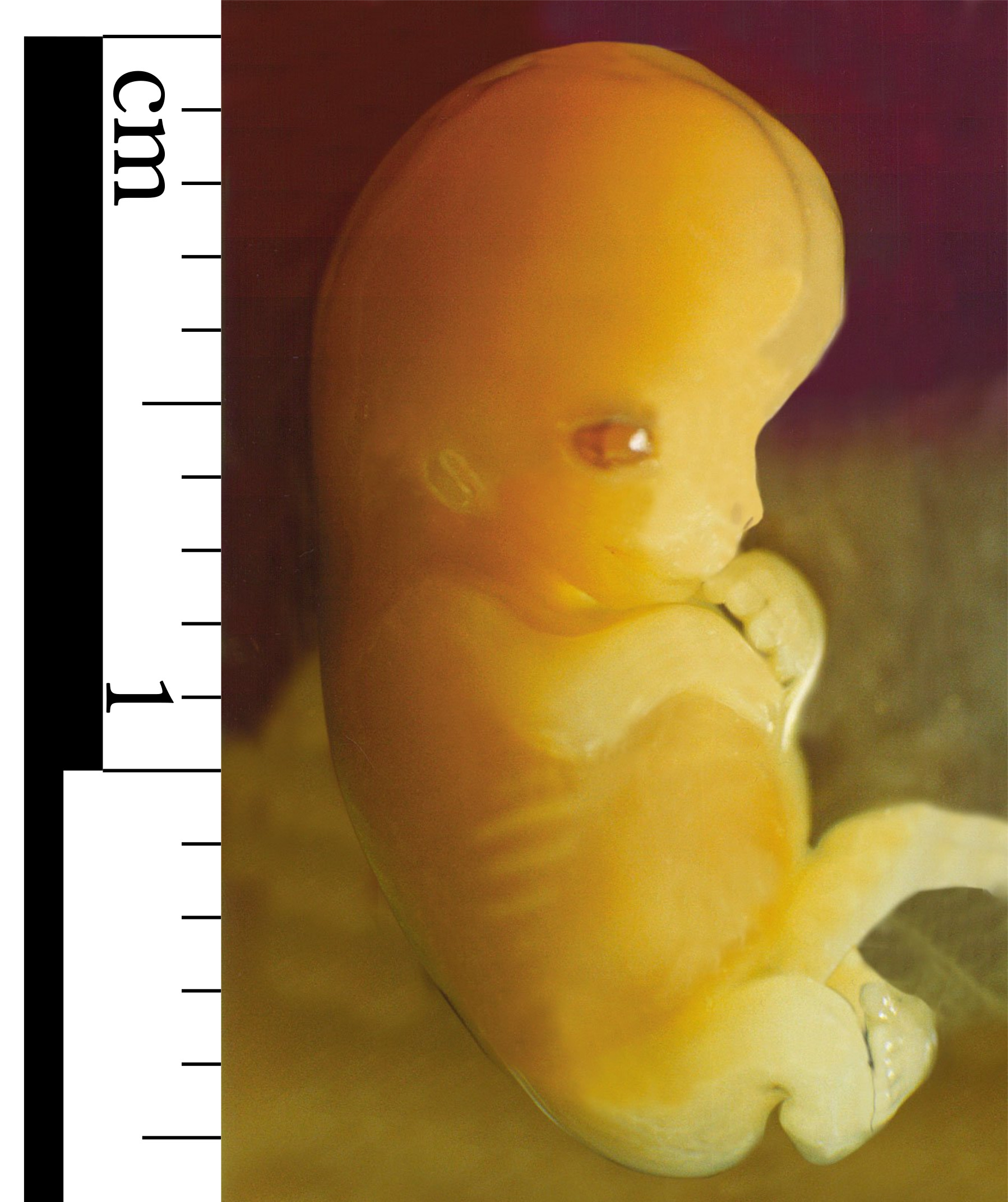
Embryonic development begins with fertilization, the fusion of a male gamete (sperm) and a female gamete (egg) to form a diploid zygote. This single cell undergoes rapid mitotic cell divisions known as cleavage, forming a cluster of cells called blastomeres. As these cells divide, they arrange into a solid ball called a morula, which then develops a fluid-filled cavity, becoming a blastula (or blastocyst in mammals). In mammals, the blastocyst implants into the uterine wall, initiating gastrulation, where the three primary germ layers—ectoderm, mesoderm, and endoderm—are formed. These layers are the precursors to all tissues and organs. Subsequent stages include neurulation (formation of the neural tube) and organogenesis (development of organs).
📊 Key Facts & Numbers
Globally, an estimated 130 million babies are born each year, each originating from a single-celled zygote. In in vitro fertilization (IVF) procedures, embryos are typically cultured for 3 to 5 days before transfer, with success rates varying significantly by clinic and patient demographics, often ranging from 20% to 40% per cycle.
👥 Key People & Organizations
Key figures in embryology include Karl Ernst von Baer, often called the 'father of modern embryology,' who discovered the mammalian ovum and described germ layers. William Harvey's early work in the 17th century provided crucial observational data. In the 20th century, Hilde Mangold's experiments on amphibian embryos, guided by Hans Spemann, elucidated the concept of embryonic induction. The National Institutes of Health (NIH) and the Medical Research Council (MRC) are major funding bodies for developmental biology research. Organizations like the Society for Developmental Biology foster research and collaboration among scientists worldwide.
🌍 Cultural Impact & Influence
Embryos hold profound cultural and ethical significance, often symbolizing new life, potential, and the future. Religious traditions worldwide have varying views on the moral status of the embryo, influencing debates on abortion and reproductive technologies. In art and literature, the embryo has been depicted as a symbol of vulnerability, creation, and the mysteries of life, appearing in works ranging from ancient myths to contemporary science fiction. The development of IVF in the late 20th century, pioneered by Robert Edwards and Patrick Steptoe, brought the scientific manipulation of human embryos into the public consciousness, sparking widespread discussion and ethical considerations that continue to shape societal norms and legal frameworks, particularly concerning stem cell research and gene editing.
⚡ Current State & Latest Developments
Current research in embryology is rapidly advancing, driven by new technologies like CRISPR-Cas9 gene editing and single-cell RNA sequencing. Scientists are now able to study embryonic development at unprecedented resolution, identifying key genes and signaling pathways that govern cell fate and tissue formation. Human embryo models can be created from stem cells, which allow researchers to study the earliest stages of human development without using actual embryos, though these models themselves raise new ethical questions. Advances in prenatal diagnostics are also enabling earlier detection of developmental abnormalities, leading to improved interventions and patient outcomes. The field is also exploring the potential of regenerative medicine by understanding how embryonic stem cells differentiate into various cell types.
🤔 Controversies & Debates
The moral status of the embryo is one of the most contentious debates in modern society, particularly concerning abortion rights and stem cell research. Arguments often center on when life begins and whether an embryo possesses rights, such as the right to life. The use of IVF and the creation of embryo cloning also raise ethical concerns about the commodification of life and potential for misuse. Debates also surround the creation and use of human embryo models, with differing views on whether they warrant the same ethical protections as a fertilized egg. Gene editing in embryos for therapeutic purposes, while promising, faces significant ethical hurdles regarding germline modifications that could be passed to future generations.
🔮 Future Outlook & Predictions
The future of embryology holds immense potential for understanding and treating a wide range of conditions. Researchers anticipate significant progress in developing personalized regenerative medicine therapies derived from stem cells, potentially enabling the repair of damaged tissues and organs. Advances in gene therapy may offer ways to correct genetic defects before or shortly after birth, preventing debilitating diseases. The creation of increasingly sophisticated human embryo models will likely accelerate our understanding of early human development, infertility, and the origins of congenital disorders. Furthermore, insights gained from studying embryonic development could lead to novel strategies for anti-aging and enhancing human healthspan, though these prospects are accompanied by significant ethical considerations and regulatory challenges.
💡 Practical Applications
Embryonic development is fundamental to numerous practical applications. In vitro fertilization (IVF) allows individuals and couples facing infertility to conceive. Prenatal diagnostics, including amniocentesis and chorionic villus sampling, enable the detection of genetic abnormalities and developmental issues. Stem cell research, utilizing embryonic stem cells, holds promise for treating diseases like Parkinson's disease, diabetes, and spinal cord injuries. Understanding embryonic development is also critical for toxicology and teratology, helping to identify environmental factors or substances that can cause birth defects. Assisted reproductive technologies are continuously evolving, offering new hope and options for prospective parents.
Key Facts
- Category
- science
- Type
- topic