
Contents
- 📈 What is Hubbert Peak Theory?
- 📜 Origins and Key Figures
- 💡 How it Works: The Bell Curve Explained
- 🌍 Global Application: Peak Oil
- 🤔 Criticisms and Counterarguments
- 🚀 Real-World Implications and Debates
- 📊 Data and Predictions: What the Numbers Say
- 🔑 Understanding the Controversy Spectrum
- 🌐 Related Concepts and Theories
- 💡 Practical Takeaways for Navigators
- Frequently Asked Questions
- Related Topics
Overview
Hubbert Peak Theory, pioneered by geophysicist M. King Hubbert in 1956, posits that for any given finite resource, its rate of extraction over time will follow a symmetrical bell-shaped curve. This means production will rise, reach a peak, and then inevitably decline. Hubbert famously predicted U.S. oil production would peak around 1970, a forecast that proved remarkably accurate. The theory's implications extend beyond oil to any finite commodity, raising critical questions about resource scarcity, economic stability, and the sustainability of growth-based societies. Its enduring relevance lies in its stark, often uncomfortable, depiction of resource depletion as an unavoidable consequence of exploitation.
📈 What is Hubbert Peak Theory?
Hubbert Peak Theory, at its core, posits that the production rate of a finite resource, most famously oil, within a given geographic area follows a predictable bell-shaped curve. This means that production will eventually reach a maximum point (the peak) and then inevitably decline. It's not about running out of oil entirely, but about the rate of extraction slowing down, which has profound economic and geopolitical consequences. Understanding this theory is crucial for anyone trying to navigate the complexities of energy markets and resource management.
📜 Origins and Key Figures
The theory is named after M. King Hubbert, a geoscientist who first articulated it in his 1956 paper, "Nuclear Energy and the Fossil Fuels." Hubbert famously predicted in 1956 that U.S. oil production would peak around 1970, a prediction that proved remarkably accurate. While Hubbert is the central figure, his work built upon earlier geological observations and statistical modeling, influencing later thinkers in the peak oil movement.
💡 How it Works: The Bell Curve Explained
The "bell curve" or logistic curve is central to Hubbert's model. It describes a phenomenon that starts slowly, accelerates, reaches a maximum rate, and then decelerates. For oil, this means initial discovery and easy extraction lead to rapid production growth. As the most accessible reserves are depleted, extraction becomes more difficult and expensive, causing the production rate to plateau and then fall, even if significant reserves remain underground. This mathematical framework is key to its predictive power.
🌍 Global Application: Peak Oil
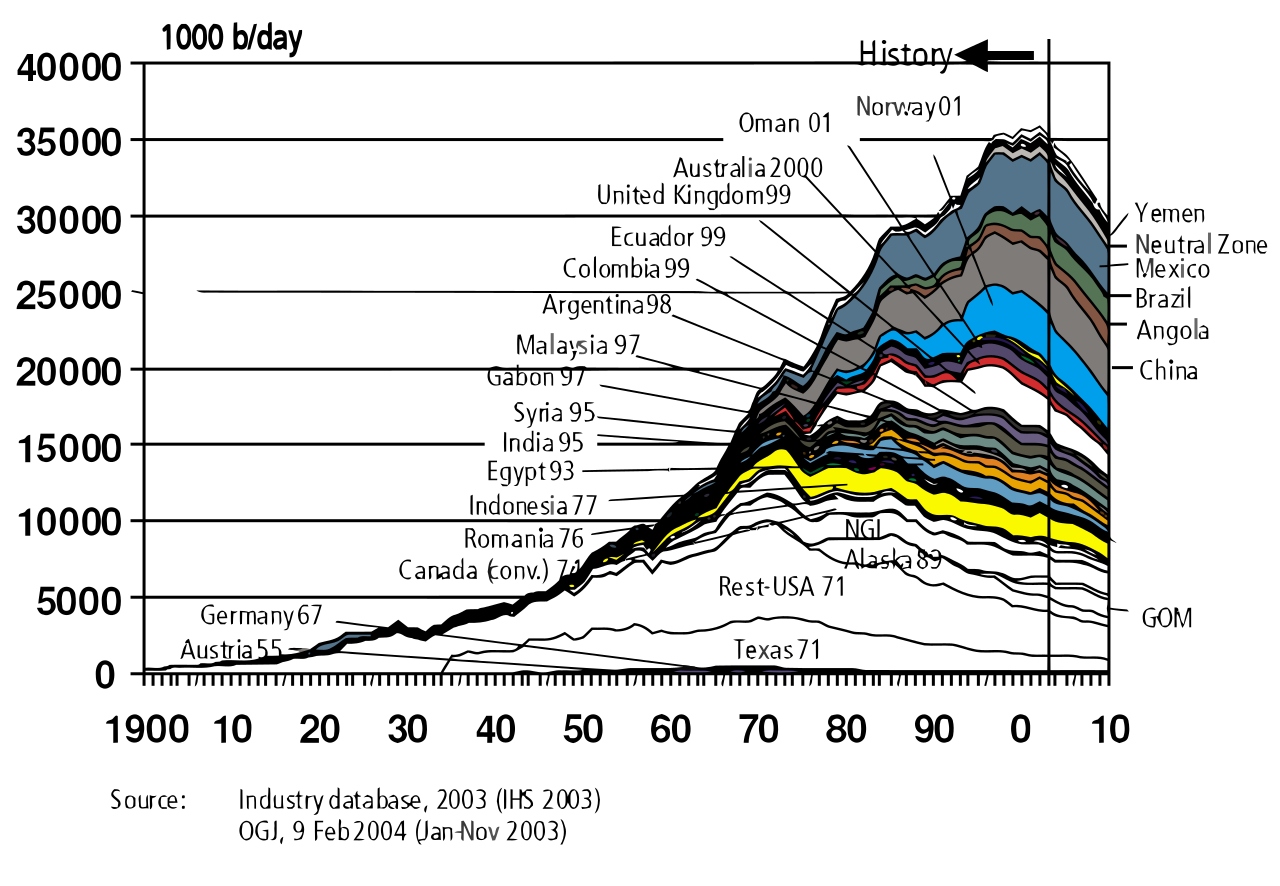
The most prominent application of Hubbert Peak Theory is to global oil production, often referred to as "Peak Oil." Proponents argue that global oil output has already peaked or is nearing its peak, leading to concerns about energy security and price volatility. The theory suggests that as demand continues to rise, a declining supply rate will inevitably create supply crunches and economic disruption, impacting everything from transportation to manufacturing.
🤔 Criticisms and Counterarguments
Critics often point to technological advancements and new discoveries as factors that can shift the peak or extend production. The shale oil revolution in the United States, for instance, significantly boosted production and challenged earlier peak oil predictions. Skeptics argue that Hubbert's model is too simplistic and fails to account for economic incentives, innovation, and the discovery of previously uneconomical reserves that become viable with new extraction techniques like fracking.
🚀 Real-World Implications and Debates
The implications of Hubbert Peak Theory are vast, sparking intense debate in geopolitics and economics. If global oil production peaks and declines, nations heavily reliant on oil imports could face severe economic strain, potentially leading to increased geopolitical tensions and resource conflicts. Conversely, a successful transition to renewable energy could mitigate these risks, but the speed and feasibility of such a transition remain subjects of heated discussion.
📊 Data and Predictions: What the Numbers Say
While Hubbert's original predictions for U.S. oil production were prescient, global peak oil predictions have been more contentious. Various organizations and analysts have proposed different peak dates, often based on differing methodologies and data interpretations. The International Energy Agency (IEA) has historically offered forecasts that suggest peaks driven by demand rather than supply constraints, a point of contention with strict adherents to Hubbert's original formulation.
🔑 Understanding the Controversy Spectrum
The controversy surrounding Hubbert Peak Theory lands it squarely in the middle of the Controversy Spectrum. On one end, you have fervent believers who see it as an undeniable law of finite resources, predicting imminent societal collapse or radical transformation. On the other, you have staunch skeptics who dismiss it as alarmist or outdated, pointing to market forces and innovation as sufficient buffers. The reality likely lies in the nuanced middle, where the theory offers valuable insights into resource depletion dynamics, even if its precise timing and ultimate impact are debated.
Key Facts
- Year
- 1956
- Origin
- USA
- Category
- Geopolitics & Economics
- Type
- Theory
Frequently Asked Questions
Has global oil production already peaked?
This is the central debate. Proponents of Hubbert Peak Theory argue that global oil production likely peaked between 2005 and 2010, or is very close to it. Critics point to the surge in U.S. shale oil production and argue that technological advancements can continually push the peak further into the future. Official data from organizations like the IEA often show production plateaus or slight declines, but the interpretation of whether this constitutes a definitive 'peak' remains contested.
What's the difference between "peak oil" and "running out of oil"?
Hubbert Peak Theory is about the rate of extraction, not the total amount of oil available. 'Running out of oil' implies complete depletion. 'Peak oil' signifies the point where the maximum rate of global oil extraction is reached, after which the rate of production will decline. Significant amounts of oil may still exist, but extracting it becomes progressively slower, more difficult, and more expensive.
How do new technologies like fracking affect Hubbert's theory?
Technologies like hydraulic fracturing (fracking) and horizontal drilling have significantly altered production profiles, particularly in the United States. These innovations have unlocked vast quantities of previously inaccessible oil and gas, effectively 'flattening' or even 'reshaping' the bell curve for certain regions. Critics of Hubbert's theory argue these advancements demonstrate its limitations, while proponents suggest they might only be delaying the inevitable or creating a series of smaller, regional peaks.
What are the economic consequences if oil production peaks?
If global oil production peaks and begins to decline while demand remains high or grows, it would likely lead to sustained high oil prices and increased price volatility. This could trigger inflation, slow economic growth, and create significant challenges for oil-dependent industries and nations. It would also accelerate the economic case for investing in and transitioning to alternative energy sources.
Is Hubbert Peak Theory still relevant today?
Yes, Hubbert Peak Theory remains highly relevant, though its predictions are subject to ongoing debate and revision. It provides a fundamental framework for understanding the dynamics of finite resource extraction. Even if technological advancements shift the timing or shape of the peak, the underlying principle that production from finite sources cannot grow indefinitely is a crucial consideration for long-term energy strategy and economic planning.