
Contents
Overview
The story of human growth hormone (HGH) begins in the early 20th century with the isolation of growth-promoting substances from the pituitary glands of animals. The development of recombinant human growth hormone (rhGH) was a monumental achievement, spearheaded by scientists at Genentech, including David Goeddel and Robert Swain Chandler, who successfully engineered E. coli to produce the hormone in 1981. Eli Lilly and Company later introduced Humatrope, another significant rhGH product. Key medical organizations like the American Association of Clinical Endocrinologists and the Pediatric Endocrine Society provide clinical guidelines for HGH therapy, while regulatory bodies such as the U.S. Food and Drug Administration (FDA) oversee its approval and prescription. The World Anti-Doping Agency (WADA) lists HGH as a prohibited substance in sports.
⚙️ How It Works
HGH is a complex protein hormone synthesized and secreted in pulsatile bursts by somatotroph cells in the anterior pituitary gland. Its release is tightly regulated by the hypothalamus, primarily through growth hormone-releasing hormone (GHRH), which stimulates secretion, and somatostatin, which inhibits it. Once in the bloodstream, HGH exerts direct effects on various tissues, promoting lipolysis (fat breakdown) and increasing blood glucose levels. Crucially, it also acts on the liver to stimulate the production of insulin-like growth factor 1 (IGF-1), also known as somatomedin C. IGF-1 is the primary mediator of HGH's growth-promoting effects, binding to receptors on chondrocytes in cartilage to stimulate bone elongation and promoting protein synthesis in muscle and other tissues. This intricate feedback loop ensures that growth is carefully managed throughout development and adulthood.
📊 Key Facts & Numbers
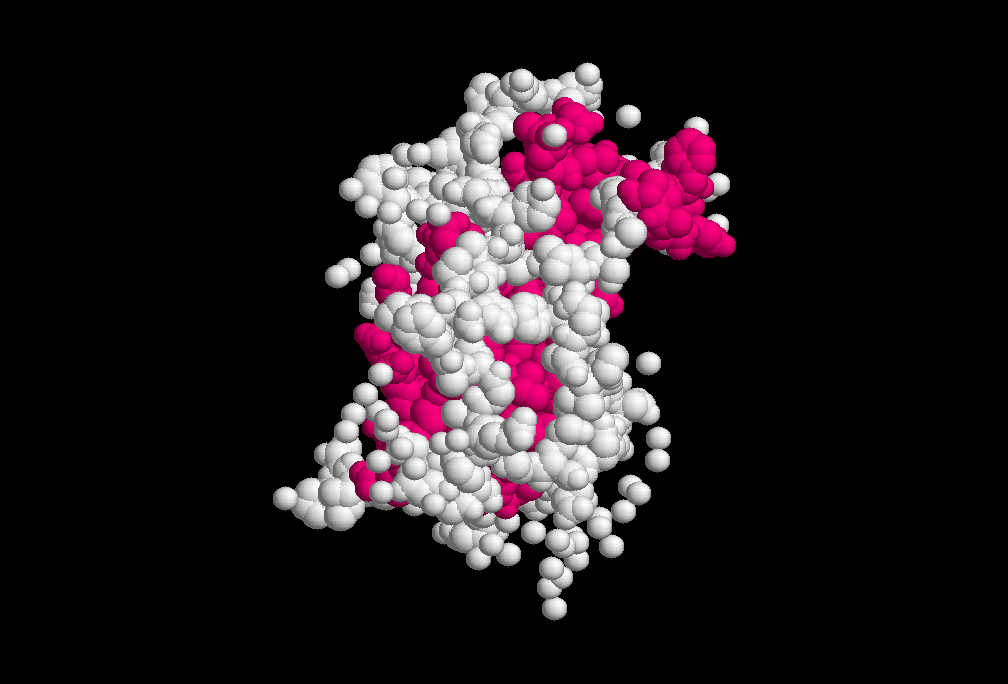
The human growth hormone molecule is a single-chain polypeptide comprising 191 amino acids, with a molecular weight of approximately 22,124 Daltons. During childhood and adolescence, the pituitary gland secretes HGH in pulses, with peak levels often occurring during deep sleep stages. Studies estimate that healthy children produce between 0.5 and 1.5 IU (International Units) of HGH per kilogram of body weight per day. In adults, HGH secretion declines significantly, with levels dropping by as much as 14% per decade after age 20. By age 60, adult HGH levels can be as low as 25% of those seen in young adults. The global market for recombinant HGH therapies, primarily for growth hormone deficiency, was valued at over $4.5 billion in 2022 and is projected to exceed $6 billion by 2028, according to market research firms like Grand View Research.
👥 Key People & Organizations
Pioneering endocrinologists like Choh Hao Li and Hermann B. Collip were instrumental in the initial isolation and characterization of growth hormone in the mid-20th century. The development of recombinant human growth hormone (rhGH) was a monumental achievement, spearheaded by scientists at Genentech, including David Goeddel and Robert Swain Chandler, who successfully engineered E. coli to produce the hormone in 1981. Eli Lilly and Company later introduced Humatrope, another significant rhGH product. Key medical organizations like the American Association of Clinical Endocrinologists and the Pediatric Endocrine Society provide clinical guidelines for HGH therapy, while regulatory bodies such as the U.S. Food and Drug Administration (FDA) oversee its approval and prescription. The World Anti-Doping Agency (WADA) lists HGH as a prohibited substance in sports.
🌍 Cultural Impact & Influence
HGH's cultural resonance is deeply tied to the ideal of youthful vitality and physical prowess. In the 1980s and 1990s, the availability of synthetic HGH began to fuel a burgeoning underground market for anti-aging and performance enhancement, popularized by figures like Dan Duggan and discussed in publications such as Muscle & Fitness magazine. This perception of HGH as a fountain of youth or a shortcut to athletic success has permeated popular culture, appearing in discussions around celebrity health trends and the pursuit of eternal youth. The narrative often contrasts the medical necessity of HGH for individuals with deficiencies against its illicit use by athletes seeking an edge or individuals chasing an elusive anti-aging elixir, creating a complex public image.
⚡ Current State & Latest Developments
The landscape of HGH therapy is continuously evolving. In 2023, the FDA approved somapacitan-injection (brand name Growjections), a long-acting rhGH formulation administered once weekly, offering greater convenience for patients compared to daily injections. Research is also ongoing into novel delivery methods, such as oral or transdermal HGH, though significant bioavailability challenges remain. Furthermore, the field of regenerative medicine is exploring HGH's potential role in tissue repair and wound healing, moving beyond its traditional growth-promoting functions. The regulatory environment remains strict, with prescriptions required for all approved HGH therapies in major markets like the United States and the European Union.
🤔 Controversies & Debates
The use of HGH outside of medically approved indications is a minefield of controversy. Athletes, particularly in sports like bodybuilding and track and field, have long been suspected and caught using HGH for its muscle-building and recovery-enhancing properties, leading to its inclusion on WADA's prohibited list. The ethical debate intensifies around its use for 'anti-aging,' with proponents touting benefits like increased muscle mass, decreased body fat, and improved skin elasticity, while critics, including many medical professionals and organizations like the Endocrine Society, warn of significant risks. These include carpal tunnel syndrome, joint pain, edema, and a potential increased risk of diabetes and certain cancers, such as acromegaly if used inappropriately.
🔮 Future Outlook & Predictions
The future of HGH research points towards more targeted and personalized applications. Scientists are investigating HGH's role in mitigating age-related muscle loss (sarcopenia) and improving bone density in older adults, potentially leading to new therapeutic avenues for age-related frailty. Gene therapy approaches are also being explored as a means to stimulate endogenous HGH production, offering a potentially more natural and sustained approach than exogenous hormone replacement. Furthermore, advancements in understanding the complex signaling pathways involving HGH and IGF-1 may unlock new treatments for conditions beyond growth disorders, including metabolic syndrome and neurodegenerative diseases. The challenge remains to harness these benefits while rigorously mitigating the associated risks, particularly concerning long-term safety and potential misuse.
💡 Practical Applications
The primary and most established application of synthetic HGH, somatropin, is in treating diagnosed growth hormone deficiency in children, ensuring they reach an appropriate adult height. It is also prescribed for idiopathic short stature and Turner syndrome in children, and for adult growth hormone deficiency, which can manifest with reduced muscle mass, increased body fat, and impaired quality of life. Beyond these approved uses, HGH is controversially employed off-label and illicitly for athletic performance enhancement, bodybuilding, and anti-aging purposes, despite significant health risks and regulatory prohibitions. Some research also explores its potential in wound healing and recovery from severe burns or surgery, though these applications are not yet widely established.
Key Facts
- Category
- science
- Type
- topic