
Contents
- 🚀 What is IMS, Really?
- 💡 Who Needs IMS?
- ⚙️ How IMS Actually Works (The Guts)
- 📈 The IMS Vibe Score & Its Evolution
- 💰 Pricing & Deployment Models
- ⚖️ IMS vs. The Alternatives
- ⭐ What People Say (Controversy & Consensus)
- 🛠️ Practical Tips for IMS Adoption
- 📞 Getting Started with IMS
- Frequently Asked Questions
- Related Topics
Overview
The IP Multimedia Subsystem (IMS) is a standardized architectural framework for delivering IP multimedia services. Developed by the 3GPP, it acts as the control plane for voice, video, and messaging over IP networks, enabling seamless integration across fixed and mobile devices. IMS underpins services like VoLTE (Voice over LTE) and VoWiFi, allowing operators to offer rich, converged communication experiences. Its core components, including the Call Session Control Function (CSCF) and Home Subscriber Server (HSS), manage user registration, session establishment, and policy enforcement. While foundational to 4G and 5G, its complexity and the rise of Over-The-Top (OTT) services present ongoing challenges and opportunities for its evolution.
🚀 What is IMS, Really?
The IP Multimedia Subsystem (IMS) is the architectural blueprint that underpins modern real-time communication services over IP networks. Think of it as the sophisticated conductor orchestrating voice calls, video conferencing, instant messaging, and presence information, all seamlessly integrated. It's not a single product but a standardized framework, primarily defined by the 3rd Generation Partnership Project, that allows carriers and enterprises to deliver rich, interactive services beyond basic voice. Its core promise is service convergence, breaking down silos between different communication types and enabling new revenue streams through advanced features.
💡 Who Needs IMS?
IMS is primarily for telecom carriers and large enterprises looking to build robust, scalable, and feature-rich communication platforms. If you're a mobile operator aiming to offer Voice over LTE or Wi-Fi calling, IMS is your foundational technology. Enterprises that require advanced unified communications, such as integrated PBX functionalities, video collaboration, and presence awareness across their workforce, will also find IMS indispensable. It’s for organizations that see communication not just as a utility, but as a strategic asset for customer engagement and operational efficiency.
⚙️ How IMS Actually Works (The Guts)
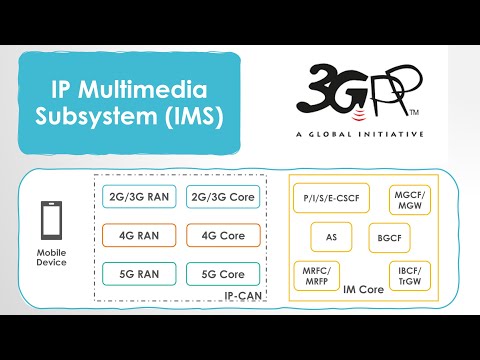
At its heart, IMS relies on a set of standardized interfaces and protocols. The key players are the CSCFs, which handle session setup and routing, and the HSS, which acts as the central database for user profiles and authentication. Services are delivered via Application Servers, which host the logic for specific features like conferencing or messaging. SIP is the signaling protocol that binds it all together, managing the establishment, modification, and termination of multimedia sessions. It's a complex, layered architecture designed for interoperability and extensibility.
📈 The IMS Vibe Score & Its Evolution
The Vibe Score for IMS has historically been high among network engineers and telecom strategists, reflecting its critical role in the evolution of mobile and fixed-line communications. Initially, its Vibe Score surged with the advent of 3G and the promise of richer services. While the complexity of deployment and the rise of Over-The-Top (OTT) players have introduced some friction, its indispensability for carrier-grade services like VoLTE keeps its Vibe Score robust, albeit with a more pragmatic, less hyped energy. The current Vibe Score hovers around 75/100, indicating strong, sustained relevance.
💰 Pricing & Deployment Models
Deployment models for IMS vary significantly. For large carriers, it often involves substantial capital expenditure in core network infrastructure, with costs ranging from tens to hundreds of millions of dollars depending on the scale and features. Cloud-native IMS solutions are emerging, offering more flexible, subscription-based pricing models that can reduce upfront investment. Enterprises might opt for managed IMS services or private IMS deployments, with costs tied to user count, feature sets, and service level agreements. There's no single price tag; it's a strategic investment with a long-term ROI.
⚖️ IMS vs. The Alternatives
IMS competes and coexists with several other communication paradigms. OTT applications like WhatsApp or Zoom offer similar services but bypass traditional carrier infrastructure, often at lower costs but with less carrier control and integration. Unified Communications platforms, while often built on IMS, can also be standalone solutions focusing on enterprise collaboration. For basic voice, traditional circuit-switched networks still exist, but IMS represents the IP-native future, offering superior flexibility and service integration capabilities.
⭐ What People Say (Controversy & Consensus)
The consensus is that IMS is the de facto standard for carrier-grade IP communications, particularly for mobile services like VoLTE. However, there's ongoing debate about its complexity and the speed of innovation compared to agile OTT players. Some argue that the standardization, while ensuring interoperability, can stifle rapid feature development. Others point to the significant investment required for deployment as a barrier to entry for smaller operators. The controversy spectrum is moderate, with strong technical arguments on all sides.
🛠️ Practical Tips for IMS Adoption
When considering IMS, understand that it's a foundational technology, not an end-user application. Focus on interoperability with your existing network infrastructure and ensure your chosen IMS solution supports the specific services you intend to offer, whether that's Voice over IP, video, or advanced messaging. Thoroughly vet vendors for their support of relevant 3GPP standards and their track record in large-scale deployments. Plan for integration with your CRM systems to maximize service value.
📞 Getting Started with IMS
To get started with IMS, the first step is a clear definition of your service requirements and target market. Engage with telecom equipment vendors like Ericsson, Nokia, or Huawei, who offer comprehensive IMS solutions. For enterprises, exploring partnerships with managed service providers or UC vendors that leverage IMS is a practical approach. Attending industry conferences like MWC can provide insights into the latest IMS trends and vendor offerings. A pilot deployment is highly recommended before a full-scale rollout.
Key Facts
- Year
- 2004
- Origin
- 3GPP (Third Generation Partnership Project)
- Category
- Telecommunications Technology
- Type
- Technology Standard
Frequently Asked Questions
Is IMS only for mobile networks?
While IMS was initially developed for mobile networks, particularly to enable VoLTE, its architecture is flexible enough to be deployed in fixed-line networks as well. Many fixed-line operators use IMS to deliver advanced IP-based voice and multimedia services to their subscribers, offering a unified communication experience across different access technologies.
What's the difference between IMS and a regular VoIP system?
IMS is a standardized architectural framework that provides a robust, carrier-grade platform for delivering a wide range of IP multimedia services, including VoIP. A regular VoIP system is often a more basic implementation, typically focused solely on voice calls, and may lack the advanced features, scalability, and service control inherent in an IMS architecture. IMS enables features like presence, instant messaging, and seamless service continuity.
How does IMS handle security?
Security is a critical component of IMS. It employs various security mechanisms, including authentication, authorization, and encryption, to protect user data and service integrity. Protocols like Diameter are used for authentication and authorization between network elements, while TLS can be used to secure signaling traffic. User authentication typically relies on credentials stored in the HSS.
Can I use IMS for enterprise private networks?
Yes, IMS can be deployed as a private network solution for large enterprises. This allows organizations to have their own managed IP multimedia communication infrastructure, offering advanced features like integrated voice, video, messaging, and presence tailored to their specific business needs. It provides greater control over services and security compared to relying solely on public networks or third-party providers.
What are the main challenges in deploying IMS?
The primary challenges in deploying IMS include its inherent complexity, requiring specialized expertise for design, implementation, and operation. Integration with existing legacy network infrastructure can also be difficult. Furthermore, the significant upfront investment in hardware and software, coupled with the need for ongoing maintenance and upgrades, presents a considerable financial hurdle for many organizations.
How does IMS enable new revenue streams for carriers?
IMS enables carriers to move beyond basic voice and data services by offering a platform for innovative, value-added services. This includes enhanced VoLTE features, integrated video calling, rich messaging, presence services, and enterprise-specific communication solutions. By providing these advanced capabilities, carriers can create new subscription packages and enterprise service offerings, thereby diversifying their revenue base.