
Contents
Overview
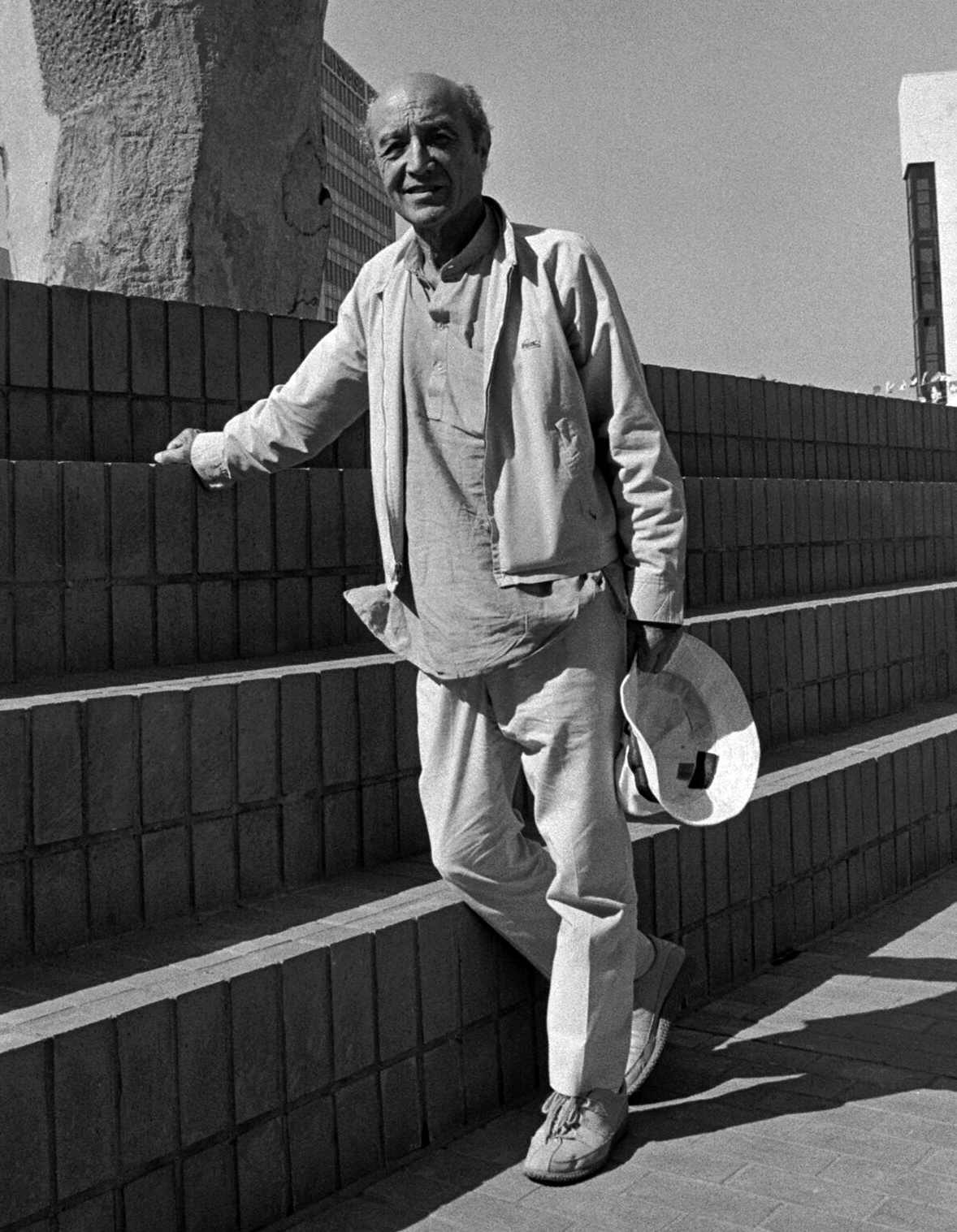
Isamu Noguchi (1904-1988) was a singular force in 20th-century art, transcending traditional boundaries between sculpture, design, and landscape architecture. Born in Los Angeles to a Japanese poet father, Yone Noguchi, and an American writer mother, Léonie Gilmour, Noguchi's bicultural heritage profoundly shaped his worldview and artistic output. His prolific career, spanning over six decades, yielded iconic works ranging from monumental public sculptures like the Billy Rose Art Garden in Jerusalem to the delicate, yet structurally ingenious, Akari paper lanterns. He also ventured into stage design for Martha Graham and created enduring furniture pieces, most notably the Noguchi Table for Herman Miller. Noguchi's work is celebrated for its organic forms, material innovation, and its ability to integrate art into the fabric of everyday life and public spaces, leaving a legacy managed by the Isamu Noguchi Foundation and Garden Museum.
🎵 Origins & History
Isamu Noguchi's artistic journey began in Los Angeles, a product of the union between acclaimed Japanese poet Yone Noguchi and American educator Léonie Gilmour. His early life was marked by transience, moving between California, Japan, and later, Indiana, where he attended high school. This nomadic upbringing instilled in him a unique perspective, bridging Eastern and Western sensibilities. He initially pursued pre-medical studies at Columbia University before a pivotal decision to dedicate himself fully to art, studying briefly at the Leonardo da Vinci Art School in New York and later in Paris under Constantin Brancusi, whose minimalist aesthetic profoundly influenced his early sculptural explorations. His first solo exhibition at the Valentine Gallery in New York marked the nascent stage of a career that would redefine sculpture.
⚙️ How It Works
Noguchi's creative process was deeply rooted in his understanding of form, material, and space. He approached sculpture not merely as an object, but as an element that interacts with its environment and the viewer. Whether carving stone, casting bronze, or assembling industrial materials, his work consistently explored the interplay of positive and negative space, often creating forms that felt both grounded and ethereal. His Akari lamps, for instance, are masterful studies in light and shadow, transforming humble washi paper and bamboo into delicate, sculptural objects that diffuse light with a soft, organic glow. Similarly, his landscape designs, such as the Suntory Museum of Art garden in Tokyo, demonstrate an ability to sculpt topography and vegetation into harmonious, contemplative spaces.
📊 Key Facts & Numbers
Noguchi's career spanned an impressive 60 years, from the 1920s to his death. The Isamu Noguchi Foundation and Garden Museum in Long Island City, New York, houses many of his works and serves as a testament to his prolific output. He received numerous accolades throughout his career, recognizing his significant contributions to American art.
👥 Key People & Organizations
Beyond his parents, Yone Noguchi and Léonie Gilmour, Isamu Noguchi's life and career were shaped by several key figures. His mentor, Constantin Brancusi, provided crucial early artistic guidance in Paris. He developed a significant artistic partnership with choreographer Martha Graham, designing sets and costumes for her productions, including "Appalachian Spring" and "Cave of the Heart." His marriage to actress Yoshiko Yamaguchi was a notable personal chapter. Later in life, he found a crucial collaborator and supporter in Arata Isozaki, the architect who helped design the Isamu Noguchi Foundation and Garden Museum. The Herman Miller company has been instrumental in continuing the production and dissemination of his furniture designs.
🌍 Cultural Impact & Influence
Noguchi's influence extends far beyond the traditional art world, permeating furniture design, landscape architecture, and public art. His Akari light sculptures have become ubiquitous in interior design, celebrated for their timeless aesthetic and artisanal quality. His approach to public spaces, emphasizing organic forms and user interaction, can be seen in contemporary urban planning and park design. The Noguchi Table remains a benchmark of mid-century modern design, its elegant simplicity still highly sought after. His work challenged the notion of sculpture as a static, isolated object, instead advocating for art that actively engages with and enhances its surroundings, a philosophy that continues to resonate with artists and designers globally.
⚡ Current State & Latest Developments
In the years following his death, Noguchi's legacy has only grown stronger. The Isamu Noguchi Foundation and Garden Museum continues to promote his work through exhibitions and educational programs, recently undertaking a significant expansion project to increase public access and exhibition space. His furniture designs, particularly the Noguchi Table and Noguchi Ottoman, remain in continuous production by Herman Miller and are highly prized by collectors. Exhibitions dedicated to his work, including retrospectives at the Barbican Centre in London and the National Gallery of Art in Washington D.C., continue to draw significant attention, reaffirming his status as a pivotal figure in 20th-century art and design.
🤔 Controversies & Debates
One of the primary debates surrounding Noguchi's work, particularly his public sculptures, centers on their integration into their intended environments. While many, like the Sora sculpture in Hiroshima, are widely celebrated, others have faced challenges related to maintenance, public perception, or the political contexts in which they were commissioned, such as the Billy Rose Art Garden in Jerusalem, which has seen ongoing discussions about its upkeep and evolving urban landscape. Furthermore, the commercial success of his furniture designs, while ensuring their accessibility, sometimes leads to discussions about the commodification of art and the balance between artistic integrity and mass production, a tension inherent in the work of many artists who bridge fine art and design.
🔮 Future Outlook & Predictions
The future of Isamu Noguchi's legacy appears robust, driven by continued interest in his multidisciplinary approach and the enduring appeal of his aesthetic. As cities worldwide grapple with creating more human-centered public spaces, Noguchi's principles of integrating art, nature, and functionality are likely to gain renewed relevance. The Isamu Noguchi Foundation and Garden Museum's expansion signals a commitment to preserving and promoting his oeuvre for future generations. Emerging artists and designers continue to draw inspiration from his innovative use of materials and his ability to imbue both monumental sculptures and intimate objects with a profound sense of life and movement, suggesting his influence will persist well into the 21st century.
💡 Practical Applications
Noguchi's work finds practical application across a remarkable spectrum of fields. His furniture designs, such as the Noguchi Table and Noguchi Ottoman, are staples in modern homes and offices, prized for their form and function. His Akari light sculptures are widely used in interior design to create ambient and sculptural lighting effects. In landscape architecture, his garden designs and public plazas, like the Suntory Museum of Art garden and the Sora sculpture, serve as blueprints for creating serene, engaging public environments. His stage designs for Martha Graham continue to inform theatrical set design, demonstrating how sculpture can animate performance.
Key Facts
- Category
- aesthetics
- Type
- person