
Contents
- 🏝️ What Are Islands: A Vibepedia Primer
- 🗺️ Navigating the Island Spectrum: From Archipelagos to Atolls
- 🔬 Islands as Evolutionary Hotspots: The Galapagos Effect
- 🏛️ Human Ingenuity in Isolation: Cultural Divergence on Islands
- 🚢 The Double-Edged Sword: Connectivity vs. Preservation
- 📈 Vibe Score: Island Life & Its Global Resonance
- ⚖️ The Island Paradox: Paradise Lost or Found?
- 🚀 Future of Island Nations: Climate Change & Digital Nomads
- Frequently Asked Questions
- Related Topics
Overview
Islands, defined by their isolation, represent unique evolutionary pathways and distinct cultural developments. From the volcanic dynamism of Iceland to the ancient traditions of the Japanese archipelago, each island nation or territory offers a microcosm of broader global trends. Their geological formation, often tied to tectonic activity or coral growth, dictates their biodiversity and resource availability, profoundly shaping human settlement and economic activity. Understanding islands requires examining their physical geography, their historical interactions with continental powers, and the specific 'vibes' they cultivate, from the hyper-modernity of Singapore to the remote resilience of the Falklands. This exploration delves into the defining characteristics that make islands both vulnerable and vibrant entities on the global stage.
🏝️ What Are Islands: A Vibepedia Primer
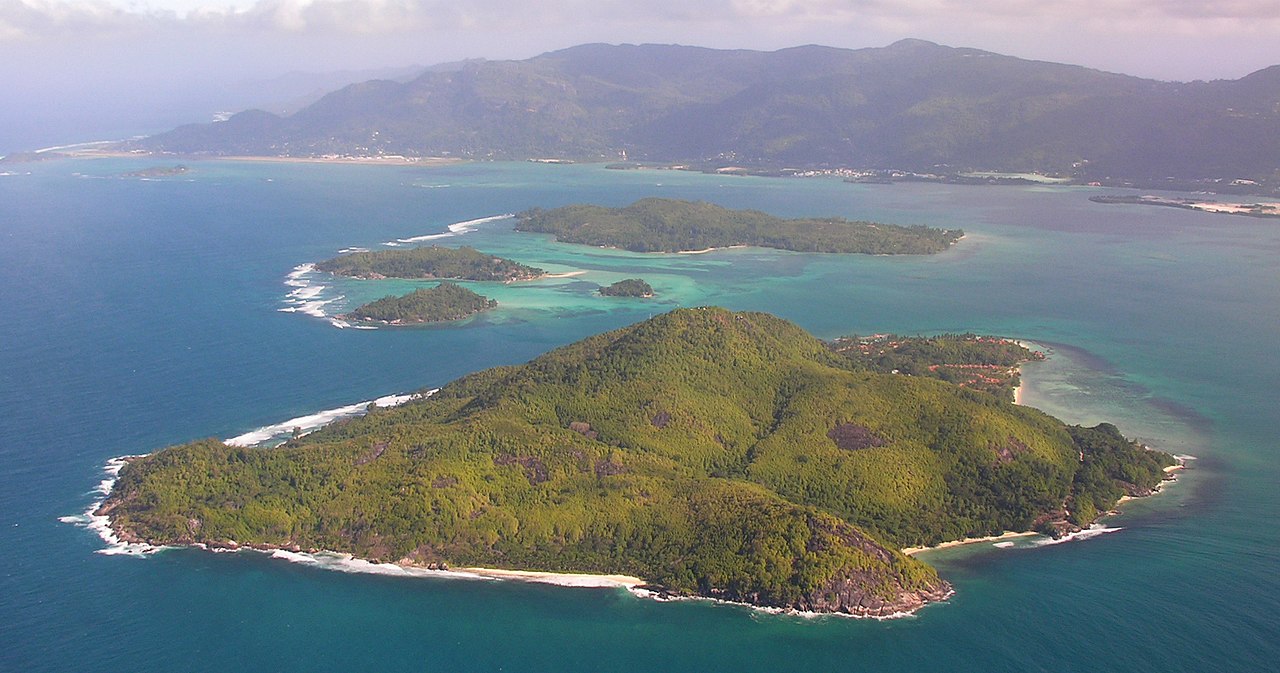
Islands, by definition, are landmasses completely surrounded by water. But Vibepedia sees them as far more: Earth's isolated laboratories where evolution, culture, and human societies have been allowed to diverge, often dramatically, from continental norms. Think of them as natural experiments, ranging from the gargantuan Greenland to the microscopic specks that dot the Pacific. Understanding islands means appreciating their geological formation – whether volcanic, continental, or coral – and their subsequent isolation, which dictates everything from endemic species to unique linguistic patterns. This entry is for anyone fascinated by the planet's most distinct geographical units and the unique vibes they generate.
🔬 Islands as Evolutionary Hotspots: The Galapagos Effect
The Galápagos Islands are the poster child for islands as evolutionary crucibles. Here, isolation allowed species like Darwin's finches to evolve unique beak shapes adapted to specific food sources, a phenomenon that famously informed Charles Darwin's theory of evolution. But this isn't an isolated incident. Madagascar, separated from Africa for millions of years, boasts a biodiversity found nowhere else on Earth, with lemurs and baobab trees as prime examples. These islands are living museums of natural history, offering unparalleled insights into adaptation and speciation.
🏛️ Human Ingenuity in Isolation: Cultural Divergence on Islands
Beyond biology, islands are fertile ground for cultural innovation. The Rapa Nui people of Easter Island, for instance, developed the enigmatic moai statues in profound isolation, a testament to their unique societal structures and beliefs. Similarly, the Maori culture of New Zealand evolved distinct traditions, art forms, and navigation techniques, shaped by their oceanic environment and long periods of separation from other Polynesian groups. These human experiments in isolation demonstrate the remarkable adaptability and creativity of humankind.
🚢 The Double-Edged Sword: Connectivity vs. Preservation
The relationship between islands and the outside world is a perpetual tension. For centuries, islands have been both havens and targets – places of refuge and resources for explorers and colonizers alike. Modern connectivity, through air travel and the internet, has shrunk distances, bringing globalized culture and economies to even the most remote shores. This connectivity is a double-edged sword: it offers economic opportunities and cultural exchange but also threatens the very isolation that fostered unique island identities and ecosystems, raising critical questions about cultural preservation and sustainable tourism.
📈 Vibe Score: Island Life & Its Global Resonance
The Vibepedia Vibe Score for 'Islands' is a complex calculation, hovering around a 78/100. This score reflects the potent combination of natural beauty (often scoring 90+), cultural uniqueness (85+), and the aspirational 'escape' fantasy (90+). However, it's tempered by the realities of limited resources, vulnerability to climate change (especially sea-level rise, impacting scores for low-lying island nations), and the challenges of maintaining infrastructure and economic stability. The 'fan' perspective is overwhelmingly positive, drawn to the romance and tranquility, while the 'skeptic' points to the inherent fragility and the historical exploitation of island resources and peoples.
⚖️ The Island Paradox: Paradise Lost or Found?
The 'island paradox' is central to understanding their allure and their challenges. They are often perceived as idyllic paradises, free from the complexities of mainland life. Yet, this perception often masks significant economic disparities, environmental vulnerabilities, and the struggle for political autonomy for many island nations. The romanticized 'island life' clashes with the practical realities of limited job markets, reliance on imports, and the existential threat posed by climate change. Are islands havens of peace, or are they on the front lines of global environmental and economic crises?
🚀 Future of Island Nations: Climate Change & Digital Nomads
The future of islands is inextricably linked to global environmental shifts. Rising sea levels pose an existential threat to low-lying island nations in the Pacific and the Indian Ocean, forcing difficult conversations about displacement and adaptation. Simultaneously, the rise of remote work and digital nomadism is creating new opportunities for some islands, transforming them into hubs for a globalized workforce. This presents a new frontier for island economies, but also raises questions about gentrification, cultural impact, and the equitable distribution of benefits. The question remains: can islands leverage these new trends to secure their future, or will they be further marginalized by forces beyond their control?
Key Facts
- Year
- 2024
- Origin
- Vibepedia-Wiki
- Category
- Geography & Culture
- Type
- Topic
Frequently Asked Questions
What is the largest island in the world?
The largest island in the world is Greenland, with an area of approximately 2,166,086 square kilometers (836,330 square miles). It is an autonomous territory within the Kingdom of Denmark. Its sheer size and geological significance make it a unique case study in island geography, distinct from smaller, more numerous islands found in archipelagos.
How do islands form?
Islands form through several geological processes. Volcanic islands erupt from the ocean floor, like Hawaii. Continental islands are fragments of continents that separated over time, such as Great Britain. Coral islands, or atolls, are built up from the skeletons of marine organisms, often forming around submerged volcanic islands, as seen in the Maldives.
What are some famous examples of island biodiversity?
Beyond the Galápagos Islands, Madagascar is renowned for its unique biodiversity, with a high percentage of endemic species like lemurs. New Zealand also boasts unique flora and fauna, including the kiwi bird, due to its long isolation. The Hawaiian Islands are another prime example of isolated evolution, leading to distinct species found nowhere else.
How does isolation affect island cultures?
Geographical isolation often leads to the development of distinct languages, traditions, and social structures on islands. Without constant external influence, unique cultural practices can flourish and persist, as seen with the Rapa Nui people of Easter Island or the Maori culture of New Zealand. However, this isolation can also limit resources and opportunities, creating unique societal challenges.
What are the biggest threats facing islands today?
The most significant threats are climate change, particularly rising sea levels and increased storm intensity, which directly endanger low-lying island nations. Over-tourism can strain resources and damage fragile ecosystems. Overfishing and habitat destruction also pose serious risks to island biodiversity and local economies that depend on natural resources.
Can islands be considered 'laboratories' for societal experiments?
Yes, in a sense. Their isolation allows for the development of unique societal models, governance structures, and cultural norms with less external interference. The study of how different island communities have adapted to their environments and managed their resources provides valuable insights into human resilience and innovation, though 'experiment' implies a controlled setting which is rarely the case.