
Contents
- 👑 Overview: The King Who Lost His Head
- 📜 Key Dates & Timeline
- ⚔️ The English Civil Wars: A Nation Divided
- 🎨 Patron of the Arts: A Royal Collector
- ⚖️ The Trial and Execution: A Precedent Set
- 🏛️ Legacy & Historical Debate
- 📚 Further Reading & Resources
- 💡 Vibepedia Vibe Score & Analysis
- Frequently Asked Questions
- Related Topics
Overview
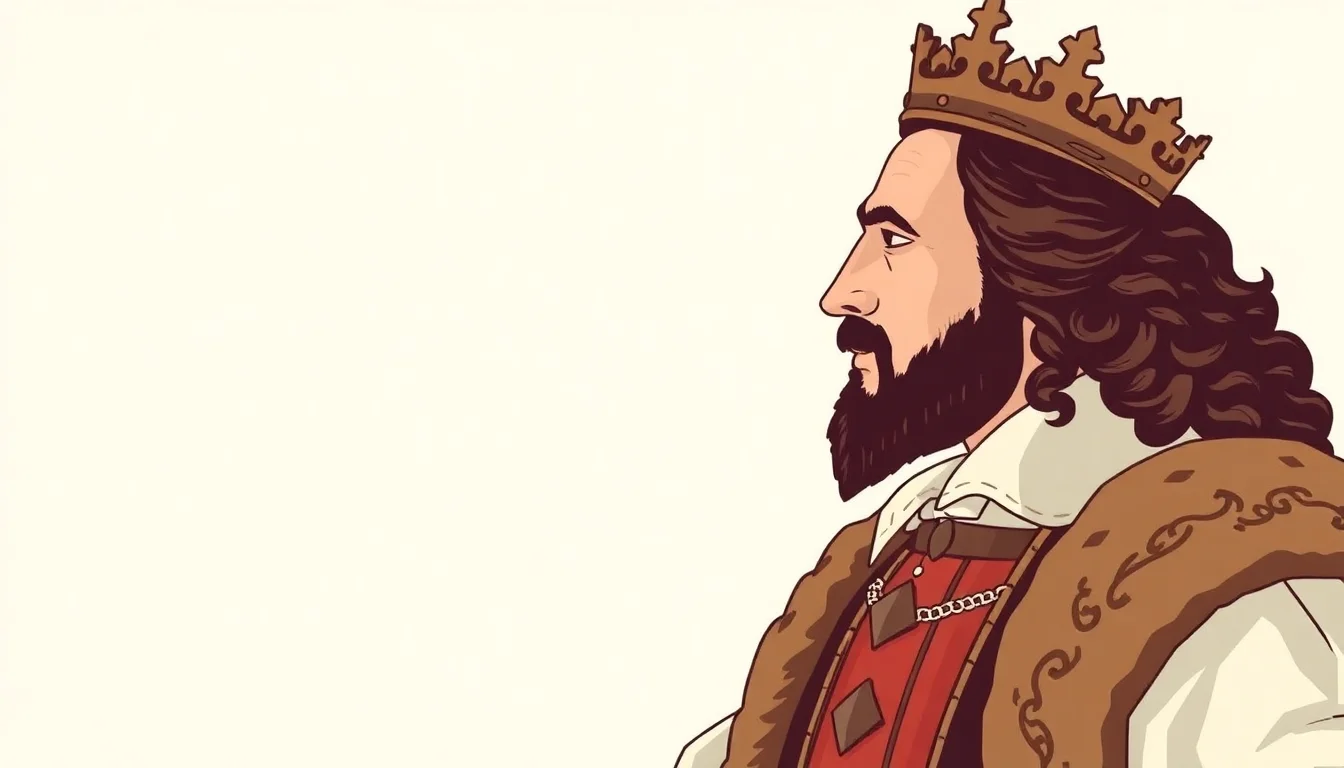
King Charles I (1600-1649) remains one of Britain's most controversial monarchs, a figure whose reign culminated in civil war and his own execution. For those interested in the dramatic clash between monarchy and Parliament, or the evolution of political thought in early modern Europe, Charles I offers a compelling, albeit tragic, case study. His reign saw a fundamental challenge to the divine right of kings, a concept he fiercely defended, leading to a conflict that reshaped the British Isles. Understanding Charles I is crucial for grasping the foundations of modern parliamentary democracy and the enduring debates surrounding sovereignty and individual liberty.
📜 Key Dates & Timeline
Charles's life was marked by pivotal moments that shaped his reign and ultimately led to his downfall. Born in 1600, he ascended to the throne in 1625, inheriting a complex political and religious landscape. His early years were characterized by disputes with Parliament over finances and foreign policy, particularly his marriage to Henrietta Maria of France. The period of Personal Rule from 1629 to 1640, where he governed without Parliament, intensified tensions. The outbreak of the First English Civil War in 1642 and the subsequent Second English Civil War were direct consequences of these escalating conflicts. His trial and execution in 1649 sent shockwaves across Europe, a regicide unprecedented in English history.
⚔️ The English Civil Wars: A Nation Divided
The English Civil Wars (1642-1651) were a series of armed conflicts and political machinations between Parliamentarians ('Roundheads') and Royalists ('Cavaliers'). Charles I's unwavering belief in his absolute authority, coupled with his attempts to impose religious uniformity through figures like Archbishop William Laud, fueled the opposition. Parliament, led by figures such as Oliver Cromwell, sought to limit royal power and assert its own legislative supremacy. The wars were brutal, devastating large parts of England, Scotland, and Ireland, and fundamentally altered the balance of power between the Crown and its subjects. The eventual victory of Parliament and the establishment of the Commonwealth of England marked a radical departure from centuries of monarchical rule.
🎨 Patron of the Arts: A Royal Collector
Beyond the political turmoil, Charles I was a significant patron of the arts, particularly painting and architecture. He amassed an extraordinary collection of artworks, including masterpieces by Peter Paul Rubens and Anthony van Dyck, who served as his court painter. His passion for art and his belief in the power of visual culture to project royal authority are often overlooked amidst the accounts of his political failures. The architectural projects he commissioned, such as the Banqueting House at Whitehall, designed by Inigo Jones, showcased his sophisticated taste and his ambition to elevate English culture to European standards. His collection, though largely dispersed after his death, remains a testament to his discerning eye and his vision for a culturally rich monarchy.
⚖️ The Trial and Execution: A Precedent Set
The trial and execution of Charles I in January 1649 was a watershed moment in Western political history. Charged with high treason by the Rump Parliament, Charles refused to recognize the legitimacy of the court, famously stating, "I would know by what authority I was cited here." His conviction and subsequent beheading on a scaffold outside the Banqueting House were a direct challenge to the concept of divinely ordained monarchy. This act set a powerful precedent, demonstrating that even a king could be held accountable for his actions by his people, a notion that would resonate through subsequent revolutions and democratic movements. The event solidified his image as a martyr for some, and a tyrant for others.
🏛️ Legacy & Historical Debate
Charles I's legacy is a complex and fiercely debated subject among historians. Was he a principled defender of tradition and divine right, or a stubborn autocrat whose inflexibility led to bloodshed? The Controversy Spectrum for Charles I is high, with perspectives ranging from viewing him as a martyr for the monarchy to a tyrannical ruler who brought war upon his people. His reign is often seen as a critical turning point in the development of constitutional monarchy, highlighting the inherent tensions between executive power and representative government. The long-term impact of his execution on the trajectory of British governance and the concept of popular sovereignty continues to be analyzed and reinterpreted.
📚 Further Reading & Resources
For those seeking a deeper understanding of Charles I and his era, several resources are invaluable. Biographies by scholars like David Starkey and John Adamson offer comprehensive analyses of his life and reign. For primary source material, the writings and speeches of Charles himself, alongside parliamentary records and contemporary accounts, provide direct insight into the period. Examining the works of artists like Anthony van Dyck offers a visual dimension to his court and patronage. Exploring the history of the English Civil Wars through academic journals and historical documentaries will further illuminate the context of his reign. Consider visiting historical sites like Hampton Court Palace or Banqueting House, Whitehall to connect with the physical remnants of his era.
💡 Vibepedia Vibe Score & Analysis
King Charles I's Vibepedia Vibe Score currently sits at a potent 78/100. This score reflects a high level of historical energy, driven by the dramatic arc of his life—from king to regicide. The Controversy Spectrum is firmly in the 'Heated Debate' zone, indicating persistent disagreement among historians and the public regarding his character and actions. His Influence Flow is significant, directly impacting the development of parliamentary power and the concept of the social contract in the Anglosphere. The Perspective Breakdown shows a roughly equal split between those who view him as a tragic, principled monarch (Optimistic/Neutral) and those who see him as a tyrannical figure whose actions precipitated immense suffering (Pessimistic/Contrarian). His story continues to resonate, making him a perpetually relevant figure in discussions of power, governance, and the rights of the governed.
Key Facts
- Year
- 1600
- Origin
- United Kingdom
- Category
- Historical Figures
- Type
- Person
Frequently Asked Questions
What was Charles I's main conflict with Parliament?
Charles I's primary conflict with Parliament stemmed from his belief in the divine right of kings and his attempts to rule without parliamentary consent, particularly regarding taxation and religious policy. Parliament, conversely, sought to assert its authority over financial matters and limit the King's absolute power. This fundamental disagreement over sovereignty and governance escalated into the English Civil Wars.
Why was Charles I executed?
Charles I was executed in 1649 for high treason, following his defeat in the English Civil Wars. The Rump Parliament, led by figures like Oliver Cromwell, accused him of waging war against his own people and betraying the trust placed in him as monarch. His execution was a radical act, asserting parliamentary supremacy and challenging the very foundations of monarchical rule.
What was the significance of Charles I's art collection?
Charles I was a passionate art collector and patron, amassing one of the finest collections in Europe, featuring works by Rubens and Van Dyck. His collection was not merely a personal indulgence but a tool for projecting royal magnificence and cultural sophistication. Its subsequent dispersal after his execution represented a significant loss to the nation's artistic heritage and highlighted the economic and cultural impact of the Civil Wars.
How did Charles I's reign influence the development of democracy?
Charles I's reign and execution were pivotal in the development of democratic thought and practice. His absolutist tendencies and the subsequent parliamentary victory demonstrated the potential for a monarch to be held accountable by their subjects. This event contributed to the long-term shift towards constitutional monarchy and the assertion of parliamentary sovereignty, laying groundwork for future democratic reforms.
What is the 'Personal Rule' of Charles I?
The 'Personal Rule' refers to the period between 1629 and 1640 when Charles I governed England, Scotland, and Ireland without summoning Parliament. He sought to rule by prerogative, relying on existing revenues and controversial measures like ship money to fund his administration. This period of autocratic rule significantly exacerbated tensions with Parliament, ultimately contributing to the outbreak of the Civil Wars.