
Contents
- 🎵 Origins & History
- ⚙️ How It Works
- 📊 Key Facts & Numbers
- 👥 Key People & Organizations
- 🌍 Cultural Impact & Influence
- ⚡ Current State & Latest Developments
- 🤔 Controversies & Debates
- 🔮 Future Outlook & Predictions
- 💡 Practical Applications
- 📚 Related Topics & Deeper Reading
- Frequently Asked Questions
- References
- Related Topics
Overview
The concept of Kundalini originates from ancient India, with its earliest discernible roots found in the Vedic literature, though the term itself and detailed practices appear more prominently in Tantric texts dating from the 6th to 13th centuries CE. Early Hindu traditions, particularly Shaivite and Shaktism lineages, conceptualized this potent energy as the divine feminine force, Shakti, residing in a dormant state at the base of the spine. By the 9th century, the Hatha Yoga Pradipika and other foundational Hatha Yoga texts began to integrate Kundalini awakening into their yogic methodologies, describing it as a crucial element for achieving Samadhi and spiritual realization. This integration marked a significant shift, making Kundalini a more accessible, albeit still esoteric, aspect of yogic practice beyond purely monastic or tantric circles. The imagery of a coiled serpent, representing latent power, became a pervasive symbol across these traditions.
⚙️ How It Works
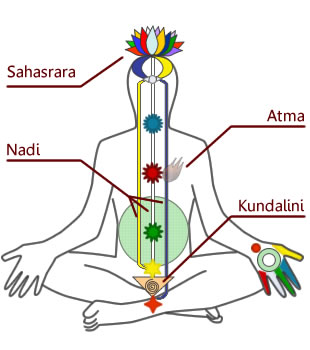
Kundalini is understood as a subtle energy that lies dormant at the Muladhara chakra, the root chakra located at the base of the spine. Its awakening is typically described as a process of activating this energy and guiding it upwards through the Sushumna Nadi, the central energetic channel that runs parallel to the spinal column. As Kundalini ascends, it is believed to pass through and purify each of the six higher chakras—Svadhisthana, Manipura, Anahata, Vishuddha, and Ajna—culminating at the Sahasrara chakra (crown chakra). This upward journey is often accompanied by intense physiological and psychological experiences, including sensations of heat, light, sound, and altered states of consciousness, culminating in a state of heightened awareness and spiritual bliss. The process is not merely physical but involves the harmonization of the prana (life force) and mind.
📊 Key Facts & Numbers
The concept of Kundalini is associated with a potent, latent energy, often described as having the potential to generate immense spiritual power. While precise quantifiable data is scarce due to its esoteric nature, practitioners report a wide range of experiences. Some describe the awakening as a distinct feeling of electric current running along the spine, a sensation reported by an estimated 10-20% of individuals who engage in intense spiritual practices. The number of yoga studios globally offering Kundalini-focused classes has surged by over 30% in the last decade, indicating growing interest. Texts like the Shakti Sangama Tantra detail specific mudras and bandhas believed to facilitate Kundalini's movement, with some traditions claiming over 100 different pranayama techniques can influence its flow. The energy is often associated with the Goddess Adi Parashakti, the supreme divine feminine in Shaktism.
👥 Key People & Organizations
Key figures in the historical development and dissemination of Kundalini teachings include Matsyendranath, a legendary yogi credited with founding Hatha Yoga and transmitting its esoteric knowledge, including Kundalini practices, around the 10th century. Later, Gorakhnath, a disciple of Matsyendranath, further codified these teachings within the Nath tradition. In the 20th century, Yogi Bhajan became a highly influential proponent, introducing Kundalini Yoga to the West starting in 1969 through his 3HO (Healthy, Happy, Holy Organization) and Kundalini Yoga International. Organizations like the International Kundalini Yoga Teachers Association (IKYTA) now play a significant role in standardizing training and promoting the practice globally. Modern interpretations also draw from the works of Swami Satyananda Saraswati and his Bihar School of Yoga.
🌍 Cultural Impact & Influence
Kundalini's influence extends far beyond its Indian origins, profoundly shaping global yoga and meditation practices. The widespread adoption of Kundalini Yoga by Yogi Bhajan in the 1970s brought these specific techniques, including mantra chanting, kriyas, and breathwork, to millions in North America and Europe. This has led to a broader cultural fascination with spiritual energy and consciousness exploration, influencing fields from psychology to wellness trends. The concept has also been integrated into various New Age spiritualities, often presented as a path to personal transformation and enlightenment. Its imagery, particularly the coiled serpent, has become an iconic symbol in popular culture, representing hidden potential and spiritual awakening, appearing in art, literature, and even film.
⚡ Current State & Latest Developments
In contemporary times, Kundalini remains a vibrant and active area of spiritual exploration. Kundalini Yoga continues to be taught globally through organizations like 3HO and IKYTA, with thousands of certified instructors. There's a growing interest in understanding the physiological and neurological correlates of Kundalini experiences, with some researchers at institutions like Stanford University exploring the brain activity during deep meditative states. Online platforms and YouTube channels dedicated to Kundalini teachings have seen a significant increase in subscribers, reaching millions worldwide. Emerging trends include the integration of Kundalini practices with other modalities like sound healing and somatic therapy, aiming to provide a more holistic approach to energy cultivation.
🤔 Controversies & Debates
The concept and practice of Kundalini awakening are not without controversy. Skeptics often question the empirical basis for subtle energy systems like chakras and nadis, viewing reported experiences as psychosomatic phenomena or misinterpretations of physiological responses. Critics of Yogi Bhajan's legacy have raised serious allegations regarding his personal conduct, leading to ongoing debates within the Kundalini Yoga community about how to address these historical issues. Furthermore, the intensity of Kundalini awakening can sometimes lead to challenging psychological states, including anxiety, paranoia, or dissociation, leading some to caution against unsupervised or forceful attempts at awakening the energy. The commercialization of Kundalini practices within the global wellness industry also draws criticism for potentially diluting its spiritual essence.
🔮 Future Outlook & Predictions
The future of Kundalini exploration appears poised for continued growth and integration. As scientific research into consciousness and neuroscience advances, we may see more empirical studies attempting to map the physiological effects of Kundalini practices, potentially bridging the gap between traditional understanding and modern science. There's a growing movement towards making Kundalini practices more accessible and inclusive, addressing past criticisms of cultural appropriation and exclusivity. Expect to see further hybridization with other wellness modalities, creating new forms of practice. The ongoing re-evaluation of historical figures like Yogi Bhajan will likely continue to shape the institutional landscape of Kundalini Yoga, potentially leading to greater transparency and accountability within its teaching organizations.
💡 Practical Applications
Kundalini practices offer a range of applications beyond purely spiritual pursuits. For individuals seeking stress reduction and improved mental clarity, meditation and pranayama techniques associated with Kundalini can be highly effective. Athletes and performers sometimes utilize breathwork and energy cultivation methods to enhance focus, stamina, and mind-body coordination. In therapeutic settings, some practitioners explore Kundalini-inspired exercises as a complementary approach for managing anxiety, depression, and trauma, by facilitating emotional release and somatic awareness. The emphasis on self-awareness and inner strength can also be applied to personal development, fostering resilience and a greater sense of purpose in daily life. Many find it a powerful tool for self-discovery and personal empowerment.
Key Facts
- Year
- Ancient origins, codified by 9th century CE
- Origin
- India
- Category
- philosophy
- Type
- concept
Frequently Asked Questions
What is Kundalini in simple terms?
Kundalini is often described as a dormant, powerful spiritual energy coiled at the base of your spine, like a sleeping serpent. When awakened through practices like yoga and meditation, it's believed to rise up through your energy centers, leading to heightened consciousness and spiritual growth. It's considered a form of divine feminine energy, Shakti, and its awakening is a central goal in many yogic and tantric traditions for achieving liberation.
How is Kundalini awakened?
Kundalini awakening is typically achieved through dedicated spiritual practices. These commonly include specific meditation techniques, pranayama (yogic breathing exercises), chanting of mantras, physical postures (asanas), and tantric rituals. Different lineages emphasize different methods, but the core idea is to purify the nadis (energy channels) and awaken the dormant energy at the base of the spine to ascend through the chakras.
What does it feel like to awaken Kundalini?
Experiences of Kundalini awakening vary widely and can be intense. Many report a sensation of electric current or heat running up the spine, tingling, vibrations, or a feeling of intense energy flow. Others describe visions, sounds, emotional releases, or profound states of bliss and expanded consciousness. Some describe it as a distinct feeling of electric current running along the spine, a sensation that can be both exhilarating and overwhelming.
Is Kundalini dangerous?
While Kundalini awakening is generally seen as a path to spiritual growth, it can be intense and, in some cases, lead to challenging experiences if not approached with proper guidance. Without adequate preparation or supervision from an experienced teacher, individuals might experience anxiety, fear, dissociation, or psychological distress. It's often advised to approach Kundalini practices gradually and with respect, ideally under the guidance of a qualified instructor to navigate the process safely.
What is the difference between Kundalini Yoga and other forms of yoga?
Kundalini Yoga, as popularized by Yogi Bhajan, is distinct in its dynamic breathwork, chanting, specific kriyas (sets of exercises), and focus on awakening Kundalini energy. While other yoga styles like Hatha Yoga or Vinyasa Yoga may also work with subtle energies, Kundalini Yoga explicitly targets the awakening and upward movement of Kundalini as its primary objective. It often involves more rapid and vigorous breath techniques and a strong emphasis on the spiritual and energetic aspects.
Can Kundalini be awakened without a guru?
While many traditions emphasize the importance of a guru or experienced teacher for guiding Kundalini awakening safely, it is possible for individuals to experience spontaneous awakenings or to cultivate this energy through diligent self-study and practice using established texts and online resources. However, the intensity and potential psychological effects mean that guidance is highly recommended to navigate the process effectively and avoid potential pitfalls. Relying solely on self-instruction carries a higher risk of misinterpretation or adverse reactions.
What is the role of the Goddess in Kundalini?
Kundalini is intrinsically linked to the divine feminine energy, known as Shakti, and is often identified with the supreme Goddess, such as Adi Parashakti in Shaktism. Kundalini is seen as the dormant potential of this divine feminine power within each individual. Its awakening is not just a personal spiritual journey but also a reconnection with the primordial creative force of the universe, embodying the transformative and liberating aspects of the Goddess.