
Contents
- 🌍 What is Landfill Waste?
- 📈 The Scale of the Problem
- ☣️ Environmental Impacts: Beyond the Smell
- 💡 Innovations & Solutions: A Glimmer of Hope
- ⚖️ Policy & Regulation: The Paper Trail
- 🛒 Consumer Choices: Your Role in the Equation
- 🏭 Industrial Waste: A Different Beast
- 💰 The Economics of Trash
- 🤔 Future Outlook: Where Do We Go From Here?
- Frequently Asked Questions
- Related Topics
Overview
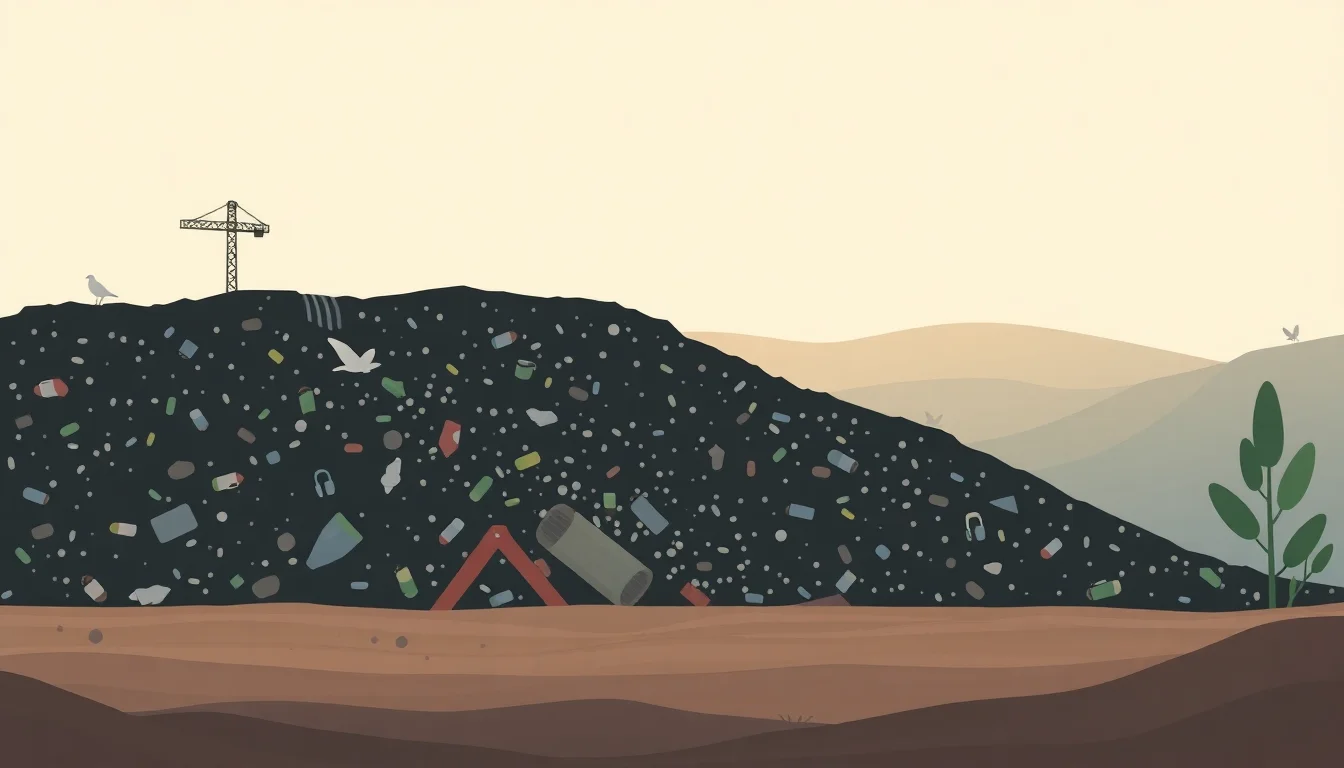
Landfill waste, at its most basic, refers to the solid waste materials that are disposed of in designated burial sites, commonly known as landfills. These sites are engineered to contain waste, preventing direct contact with the environment, but they are far from a perfect solution. Historically, landfills evolved from simple dumps to complex engineered facilities with liners, leachate collection systems, and gas capture technologies. However, the sheer volume of materials we discard daily means that even advanced landfills are finite resources, constantly filling up and requiring new sites to be established, often leading to Not In My Backyard conflicts.
📈 The Scale of the Problem
The sheer magnitude of global waste generation is staggering. In 2020, the World Bank reported that the world generated 2.24 billion tonnes of municipal solid waste, with projections indicating this could reach 3.40 billion tonnes by 2050 if current trends continue. This isn't just about household garbage; it encompasses commercial waste, construction debris, and more. The United States alone generates over 292 million tons of municipal solid waste annually, according to the EPA. This relentless accumulation strains infrastructure and demands constant management, making it a persistent, often overlooked, global challenge.
☣️ Environmental Impacts: Beyond the Smell
The environmental consequences of landfill waste extend far beyond unpleasant odors. As organic matter decomposes anaerobically, it produces methane (CH4), a potent greenhouse gas with a global warming potential over 25 times that of carbon dioxide (CO2) over a 100-year period. Landfills are a significant source of anthropogenic methane emissions. Furthermore, leachate, a toxic liquid formed when rainwater percolates through waste, can contaminate soil and groundwater if containment systems fail, posing risks to ecosystems and human health. The physical space occupied by landfills also represents a loss of valuable land that could be used for agriculture, housing, or conservation.
💡 Innovations & Solutions: A Glimmer of Hope
Fortunately, the crisis is spurring innovation. Advanced technologies are emerging to tackle landfill waste more effectively. Waste-to-Energy plants incinerate waste under controlled conditions to generate electricity, reducing landfill volume and producing power. Anaerobic digestion converts organic waste into biogas and nutrient-rich digestate. Meanwhile, sophisticated sorting and recycling technologies are improving the recovery rates of valuable materials, diverting them from landfills. Companies like What3words are even exploring AI-driven waste sorting to enhance efficiency. The focus is shifting from mere disposal to resource recovery and circular economy principles.
⚖️ Policy & Regulation: The Paper Trail
Governments worldwide grapple with the complexities of landfill waste through a patchwork of policies and regulations. In the US, the Resource Conservation and Recovery Act (RCRA) governs the management of solid and hazardous waste. The European Union has implemented directives like the Landfill Directive, aiming to reduce the amount of waste sent to landfills and promote recycling. These regulations often dictate landfill design standards, operational procedures, and post-closure care. However, enforcement can be inconsistent, and the effectiveness of policies often depends on local implementation and public buy-in, creating a varied regulatory Controversy Spectrum globally.
🛒 Consumer Choices: Your Role in the Equation
Individual consumer choices play a surprisingly significant role in the landfill crisis. The mantra of 'reduce, reuse, recycle' remains critical. By consciously reducing consumption, opting for durable goods, and repairing items instead of replacing them, we lessen the initial burden. Proper sorting of recyclables and compostables is paramount to maximizing diversion rates. Supporting businesses that prioritize Sustainable Packaging and offer take-back programs also contributes to a more circular economy. Even small behavioral changes, when aggregated across millions of people, can have a substantial impact on the volume of waste destined for landfills.
🏭 Industrial Waste: A Different Beast
Industrial waste presents a distinct set of challenges compared to municipal solid waste. It often includes hazardous materials, heavy metals, and chemical byproducts that require specialized treatment and disposal methods. Regulations like the Toxic Substances Control Act in the US aim to manage these substances. While some industrial waste can be recycled or repurposed, a significant portion still ends up in specialized hazardous waste landfills or requires complex remediation processes. The environmental risks associated with industrial waste are often more acute due to the toxicity and reactivity of the materials involved.
💰 The Economics of Trash
The economics of landfill waste are complex, involving costs for collection, transportation, tipping fees at landfills, and long-term monitoring. Landfill operators generate revenue through these fees, while municipalities bear the burden of managing waste services for their residents. The concept of 'externalities' is crucial here; the environmental damage caused by landfills is often not fully accounted for in the tipping fees, meaning society bears some of the cost. Conversely, the burgeoning Circular Economy sector, focused on recycling and resource recovery, presents new economic opportunities, creating jobs and value from materials previously considered waste.
🤔 Future Outlook: Where Do We Go From Here?
The future of landfill waste hinges on a fundamental shift in our societal relationship with materials. Will we continue to operate on a linear 'take-make-dispose' model, or will we fully embrace a circular economy where waste is minimized and resources are kept in use? The success of Extended Producer Responsibility schemes and the development of truly biodegradable materials will be key indicators. We must also consider the geopolitical implications, as waste management infrastructure and resource scarcity can exacerbate global inequalities. The ultimate question is whether we can innovate and collaborate quickly enough to avert a full-blown environmental catastrophe driven by our discarded possessions.
Key Facts
- Year
- 2023
- Origin
- Global
- Category
- Environmental Issues
- Type
- Environmental Concern
Frequently Asked Questions
What is the difference between a landfill and a dump?
A dump is an uncontrolled site where waste is simply discarded, posing significant environmental risks. A landfill, on the other hand, is an engineered facility designed with liners, leachate collection systems, and gas management to contain waste and minimize environmental harm. While landfills are a significant improvement over dumps, they are not a permanent solution and still present environmental challenges.
How much methane does a landfill produce?
Landfills are a major source of methane (CH4) emissions, a potent greenhouse gas. The amount produced varies based on the type of waste, moisture content, and age of the landfill. Globally, landfills contribute significantly to anthropogenic methane emissions, with estimates suggesting they are responsible for a substantial percentage of total methane released into the atmosphere each year.
What are the main environmental impacts of landfills?
The primary environmental impacts include the release of methane, a potent greenhouse gas contributing to climate change, and the potential for leachate to contaminate soil and groundwater. Landfills also occupy valuable land space and can negatively affect local ecosystems and biodiversity. The visual and olfactory pollution can also impact nearby communities.
Are waste-to-energy plants a good solution for landfill waste?
Waste-to-energy (WTE) plants can be a viable solution for reducing landfill volume and generating electricity. They are more efficient than traditional incineration and often incorporate advanced pollution control technologies. However, concerns remain regarding air emissions, the potential to disincentivize recycling if not managed properly, and the need for careful siting to avoid community opposition.
What is leachate and why is it dangerous?
Leachate is a toxic liquid formed when rainwater percolates through decomposing waste in a landfill. It contains a complex mixture of chemicals, heavy metals, and organic compounds. If landfill liners fail or leachate collection systems are inadequate, it can seep into the surrounding soil and contaminate groundwater sources, posing serious risks to human health and aquatic ecosystems.
How can individuals reduce their contribution to landfill waste?
Individuals can significantly reduce landfill waste by practicing the '3 Rs': Reduce consumption, Reuse items whenever possible, and Recycle correctly. This includes choosing products with minimal packaging, opting for durable goods, repairing items, and diligently sorting recyclables and compostables. Supporting businesses with sustainable practices also makes a difference.