
Contents
- 🏛️ Introduction to Le Corbusier
- 📚 Early Life and Influences
- 🏗️ The Five Points of Architecture
- 🌆 Urban Planning and Design
- 🏞️ Landscape Architecture and Nature
- 🏢 Famous Buildings and Projects
- 🤝 Collaborations and Controversies
- 📸 Photographic Documentation and Legacy
- 🌎 Global Influence and Impact
- 📊 Criticisms and Challenges
- 👥 Le Corbusier's Disciples and Followers
- Frequently Asked Questions
- Related Topics
Overview
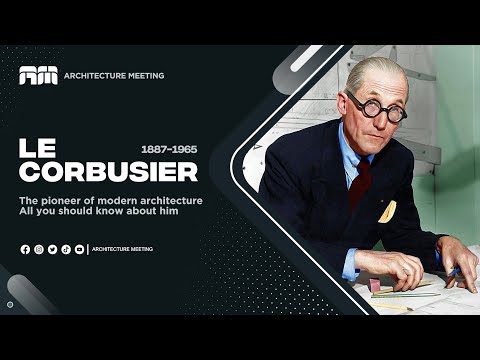
Le Corbusier, born Charles-Édouard Jeanneret on October 6, 1887, in La Chaux-de-Fonds, Switzerland, was a Swiss-French architect, designer, and urbanist. He is widely regarded as one of the pioneers of what is now called modern architecture, with a career spanning over five decades. His influential works include the Villa Savoye, the Chapel of Notre Dame du Haut, and the United Nations Headquarters in New York. Le Corbusier's Five Points of Architecture, published in 1926, revolutionized building design by emphasizing pilotis, free plan, free façade, horizontal windows, and roof gardens. His urban planning concepts, such as the Radiant City, aimed to create more efficient and harmonious cities. However, his ideas have also been criticized for being overly rigid and dismissive of traditional urban forms, leading to controversy and debate among architects and urban planners. With a Vibe score of 8.2, Le Corbusier's legacy continues to shape the built environment, with his designs remaining a subject of both admiration and scrutiny. As the world grapples with the challenges of urbanization, Le Corbusier's ideas on sustainable and efficient city planning are more relevant than ever, with many architects and urban planners seeking to adapt his principles to the needs of the 21st century.
🏛️ Introduction to Le Corbusier
Le Corbusier, born Charles-Édouard Jeanneret, was a Swiss-French architect, designer, and urbanist who is widely regarded as one of the pioneers of what is now called modern architecture. He is famous for his contributions to the Modern Architecture movement, which emphasized functionalism, simplicity, and the use of industrial materials. Le Corbusier's work had a significant impact on the development of Urban Planning and design, and his ideas continue to influence architects and urban planners around the world. His most famous book, Towards a New Architecture, is still widely read and studied today. Le Corbusier's legacy is also evident in the work of his contemporaries, such as Mies van der Rohe and Walter Gropius.
📚 Early Life and Influences
Le Corbusier was born in La Chaux-de-Fonds, Switzerland in 1887. He grew up in a family of musicians and artists, and his early life was marked by a strong interest in art and design. Le Corbusier's early influences included the work of William Morris and the Arts and Crafts Movement, which emphasized the importance of handcraftsmanship and the use of natural materials. He also drew inspiration from the work of Frank Lloyd Wright, who was a pioneer of organic architecture. Le Corbusier's own style, however, was more focused on functionalism and the use of industrial materials, as evident in his famous Five Points of Architecture. He was also influenced by the work of Kazimir Malevich and the Suprematist movement, which emphasized the use of geometric forms and bold colors.
🏗️ The Five Points of Architecture
The Five Points of Architecture, which Le Corbusier outlined in his book The Five Points of Architecture, are a set of principles that guided his design work. These points include the use of pilotis, or columns, to elevate buildings and free up space underneath; the use of free plans, which allow for flexible and open interior spaces; the use of free façades, which are not load-bearing and can be designed independently of the building's structure; the use of horizontal windows, which provide natural light and ventilation; and the use of roof gardens, which provide outdoor space and can help to mitigate the urban heat island effect. These principles were influential in the development of International Style architecture, and can be seen in the work of architects such as Mies van der Rohe and Skidmore, Owings and Merrill. Le Corbusier's ideas about urban planning and design were also influential, and his concept of the Radiant City is still studied by urban planners today.
🌆 Urban Planning and Design
Le Corbusier's work in urban planning and design was focused on creating more efficient and functional cities. He believed that cities should be designed to meet the needs of their inhabitants, and that they should be organized in a rational and logical way. Le Corbusier's concept of the Radiant City is a good example of this approach, and it involves the creation of a city that is organized into different zones or sectors, each with its own specific function. This approach to urban planning has been influential in the development of New Urbanism, which emphasizes the importance of mixed-use development and walkable neighborhoods. Le Corbusier's ideas about urban planning and design have also been criticized, however, for being too focused on functionalism and efficiency, and for neglecting the social and cultural aspects of urban life. His work has been compared to that of Jane Jacobs, who was a pioneer of community-led urban planning.
🏞️ Landscape Architecture and Nature
Le Corbusier's work in landscape architecture and nature was focused on creating outdoor spaces that were functional, beautiful, and sustainable. He believed that buildings and cities should be designed to work in harmony with their surroundings, and that they should be organized in a way that minimizes their impact on the environment. Le Corbusier's concept of the Roof Garden is a good example of this approach, and it involves the creation of outdoor spaces on top of buildings that can be used for recreation, relaxation, and food production. This approach to landscape architecture has been influential in the development of Green Roof technology, which involves the use of plants and other materials to insulate and waterproof buildings. Le Corbusier's ideas about landscape architecture and nature have also been criticized, however, for being too focused on functionalism and efficiency, and for neglecting the aesthetic and cultural aspects of outdoor spaces. His work has been compared to that of Frederick Law Olmsted, who was a pioneer of landscape architecture.
🏢 Famous Buildings and Projects
Le Corbusier designed many famous buildings and projects throughout his career, including the Villa Savoye, the Unité d'Habitation, and the Chapelle de Notre Dame du Haut. These buildings are notable for their use of industrial materials, their emphasis on functionalism and simplicity, and their innovative designs. The Villa Savoye, for example, is a country house that was designed for a wealthy family, and it features a number of innovative design elements, including a rooftop garden and a spiral staircase. The Unité d'Habitation is a housing project that was designed for low-income families, and it features a number of innovative design elements, including a rooftop garden and a shopping center. Le Corbusier's buildings have been influential in the development of Modern Architecture, and they continue to be studied by architects and designers around the world. His work has been compared to that of Frank Lloyd Wright and Mies van der Rohe.
🤝 Collaborations and Controversies
Le Corbusier collaborated with many other architects and designers throughout his career, including Pierre Jeanneret and Charlotte Perriand. These collaborations were often marked by controversy and disagreement, as Le Corbusier was known for his strong personality and his insistence on doing things his own way. Despite these challenges, however, Le Corbusier's collaborations were often highly successful, and they resulted in the creation of many innovative and influential buildings and projects. Le Corbusier's work has also been criticized for being too focused on functionalism and efficiency, and for neglecting the social and cultural aspects of architecture and urban planning. His ideas about urban planning and design have been compared to those of Robert Moses, who was a pioneer of urban renewal.
📸 Photographic Documentation and Legacy
Le Corbusier was a prolific photographer, and he used photography to document his buildings and projects. He believed that photography was an important tool for architects and designers, as it allowed them to communicate their ideas and visions to a wider audience. Le Corbusier's photographs are notable for their use of bold colors and geometric forms, and they often feature the use of unusual angles and perspectives. His photographs have been influential in the development of Architectural Photography, and they continue to be studied by photographers and architects around the world. Le Corbusier's legacy is also evident in the work of his contemporaries, such as László Moholy-Nagy and Walter Gropius.
🌎 Global Influence and Impact
Le Corbusier's work has had a significant impact on the development of modern architecture and urban planning. His ideas about functionalism, simplicity, and the use of industrial materials have been influential in the creation of many innovative and influential buildings and projects. Le Corbusier's concept of the Radiant City has also been influential in the development of New Urbanism, which emphasizes the importance of mixed-use development and walkable neighborhoods. His work has been compared to that of Jane Jacobs and Frank Lloyd Wright. Despite these influences, however, Le Corbusier's work has also been criticized for being too focused on functionalism and efficiency, and for neglecting the social and cultural aspects of architecture and urban planning.
📊 Criticisms and Challenges
Le Corbusier's work has been subject to many criticisms and challenges over the years. Some critics have argued that his buildings and projects are too cold and impersonal, and that they neglect the social and cultural aspects of architecture and urban planning. Others have argued that his ideas about functionalism and efficiency are too narrow, and that they do not take into account the complexities and nuances of human experience. Despite these criticisms, however, Le Corbusier's work remains highly influential, and his ideas continue to shape the development of modern architecture and urban planning. His legacy is also evident in the work of his contemporaries, such as Mies van der Rohe and Walter Gropius.
👥 Le Corbusier's Disciples and Followers
Le Corbusier's disciples and followers include many notable architects and designers, such as Richard Neutra and Eero Saarinen. These architects and designers have been influenced by Le Corbusier's ideas about functionalism, simplicity, and the use of industrial materials, and they have gone on to create many innovative and influential buildings and projects. Le Corbusier's legacy is also evident in the work of his contemporaries, such as László Moholy-Nagy and Walter Gropius. His ideas about urban planning and design have been compared to those of Jane Jacobs and Frank Lloyd Wright.
Key Facts
- Year
- 1887
- Origin
- La Chaux-de-Fonds, Switzerland
- Category
- Architecture
- Type
- Person
Frequently Asked Questions
What were Le Corbusier's Five Points of Architecture?
Le Corbusier's Five Points of Architecture were a set of principles that guided his design work. They included the use of pilotis, or columns, to elevate buildings and free up space underneath; the use of free plans, which allow for flexible and open interior spaces; the use of free façades, which are not load-bearing and can be designed independently of the building's structure; the use of horizontal windows, which provide natural light and ventilation; and the use of roof gardens, which provide outdoor space and can help to mitigate the urban heat island effect. These principles were influential in the development of International Style architecture.
What was Le Corbusier's concept of the Radiant City?
Le Corbusier's concept of the Radiant City was a vision for a city that was organized into different zones or sectors, each with its own specific function. The city was designed to be efficient, functional, and sustainable, with a focus on the use of industrial materials and the creation of outdoor spaces. Le Corbusier's concept of the Radiant City was influential in the development of New Urbanism, which emphasizes the importance of mixed-use development and walkable neighborhoods.
What were some of Le Corbusier's most famous buildings and projects?
Le Corbusier designed many famous buildings and projects throughout his career, including the Villa Savoye, the Unité d'Habitation, and the Chapelle de Notre Dame du Haut. These buildings are notable for their use of industrial materials, their emphasis on functionalism and simplicity, and their innovative designs.
How did Le Corbusier's work influence the development of modern architecture?
Le Corbusier's work had a significant impact on the development of modern architecture. His ideas about functionalism, simplicity, and the use of industrial materials were influential in the creation of many innovative and influential buildings and projects. Le Corbusier's concept of the Radiant City has also been influential in the development of New Urbanism, which emphasizes the importance of mixed-use development and walkable neighborhoods.
What were some of the criticisms of Le Corbusier's work?
Le Corbusier's work has been subject to many criticisms and challenges over the years. Some critics have argued that his buildings and projects are too cold and impersonal, and that they neglect the social and cultural aspects of architecture and urban planning. Others have argued that his ideas about functionalism and efficiency are too narrow, and that they do not take into account the complexities and nuances of human experience.
Who were some of Le Corbusier's disciples and followers?
Le Corbusier's disciples and followers include many notable architects and designers, such as Richard Neutra and Eero Saarinen. These architects and designers have been influenced by Le Corbusier's ideas about functionalism, simplicity, and the use of industrial materials, and they have gone on to create many innovative and influential buildings and projects.
What is Le Corbusier's legacy in the field of architecture?
Le Corbusier's legacy in the field of architecture is significant. His ideas about functionalism, simplicity, and the use of industrial materials have been influential in the creation of many innovative and influential buildings and projects. Le Corbusier's concept of the Radiant City has also been influential in the development of New Urbanism, which emphasizes the importance of mixed-use development and walkable neighborhoods. His work continues to be studied by architects and designers around the world.