
Contents
Overview
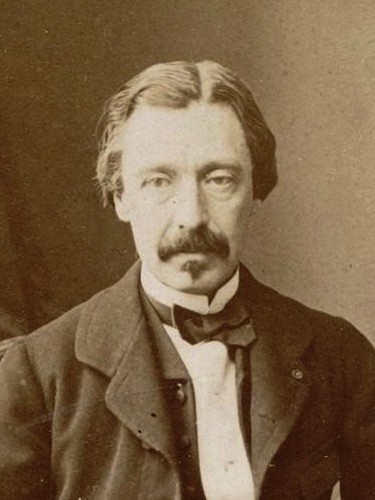
Born in Paris on September 18, 1819, Léon Foucault's scientific journey began not in a laboratory, but through a period of medical study. He initially pursued medicine, influenced by his father, a publisher, but a bout of tuberculosis led him to abandon this path and turn towards physics. His early scientific interests were shaped by his work as an assistant to Armand Fizeau, with whom he collaborated on improvements to the daguerreotype process, demonstrating an early aptitude for precise optical measurements. Foucault's independent career truly ignited in the 1840s and 1850s, a period of intense scientific discovery in France, marked by the work of luminaries like Armand Fizeau and Hippolyte Fizeau, who were also exploring the nature of light. His formal education included studies at the Collège Stanislas de Paris and the Paris Medical Faculty, though his most impactful learning occurred through hands-on experimentation and collaboration, particularly with Fizeau and later at institutions like the Paris Observatory.
⚙️ How It Works
The Foucault pendulum, Foucault's most enduring invention, operates on a deceptively simple principle rooted in Newtonian mechanics and the conservation of angular momentum. A heavy bob is suspended by a long wire, allowing it to swing freely in any vertical plane. As the Earth rotates beneath the pendulum, the plane of the pendulum's swing appears to shift relative to the Earth's surface. In the Northern Hemisphere, the pendulum's swing plane appears to rotate clockwise, completing a full circle in approximately 24 hours (though the exact time depends on latitude). This apparent rotation is not due to any external force acting on the pendulum itself, but rather the Earth's own rotation. Foucault first publicly demonstrated this effect in 1851 at the Panthéon in Paris, providing irrefutable visual evidence of Earth's spin to a captivated audience. His experiments on the speed of light involved a rotating mirror apparatus, a refinement of an earlier concept by Charles Wheatstone, which allowed for a far more accurate determination of light's velocity in different media.
📊 Key Facts & Numbers
Léon Foucault's scientific career, though spanning only about two decades of active research, yielded quantifiable breakthroughs. In 1851, he not only discovered eddy currents but also conducted his seminal Foucault pendulum experiment, which provided a direct, visual demonstration of Earth's rotation. By 1862, he achieved a remarkably accurate measurement of the speed of light, a figure only about 0.6% off the modern accepted value of 299,792 km/s. His work on the gyroscope also contributed to understanding rotational dynamics. Foucault was recognized with prestigious awards, including the Copley Medal in 1864, the highest honor awarded by the Royal Society of London, and was made an Officer of the Legion of Honour in France. His name is also inscribed on the Eiffel Tower, a testament to his significant contributions to French science.
👥 Key People & Organizations
Foucault's scientific endeavors were deeply intertwined with several key individuals and institutions. His early collaboration with Armand Fizeau was crucial in developing experimental techniques for measuring the speed of light and improving photographic processes. Foucault's later work was often conducted under the auspices of the Paris Observatory, where he served as a physicist, and the Journal des Débats, a prominent French newspaper that published his findings. He also held a professorship at the École Normale Supérieure (part of PSL University). His work on the pendulum was famously displayed at the Panthéon, a national monument. Foucault's scientific stature was recognized by his election as a Foreign Member of the Royal Society in 1864, the same year he received their Copley Medal.
🌍 Cultural Impact & Influence
The Foucault pendulum remains an enduring symbol of scientific inquiry and a popular exhibit in science museums worldwide, from the Smithsonian National Museum of Natural History to the Palais de la Découverte. Its elegant demonstration of Earth's rotation has educated millions, solidifying Foucault's place in popular scientific consciousness. His precise measurement of the speed of light was a critical step in understanding the fundamental constants of the universe and paved the way for later theories, including Albert Einstein's theories of relativity. The naming of the gyroscope and his foundational work on eddy currents also had ripple effects in fields ranging from navigation to electrical engineering. Foucault's legacy is one of making the invisible visible, translating abstract physical laws into tangible, observable phenomena that continue to inspire and educate.
⚡ Current State & Latest Developments
While Léon Foucault passed away in 1868, his scientific legacy is far from static. The Foucault pendulum continues to be a staple in science museums and educational institutions globally, with new installations and demonstrations occurring regularly. For instance, the Exploratorium in San Francisco features a prominent Foucault pendulum. Research into the precise measurement of physical constants, building on Foucault's work, continues with ever-increasing accuracy, utilizing advanced technologies like laser interferometry and atomic clocks. The study of rotational dynamics and inertial navigation systems, fields indirectly influenced by Foucault's work on gyroscopes and pendulums, are also active areas of development in aerospace and maritime technology. His name is also honored by the Foucault crater on the Moon.
🤔 Controversies & Debates
The primary 'controversy' surrounding Foucault's work, if it can be called that, is less about debate and more about historical nuance and attribution. While Foucault is credited with the public demonstration and popularization of the pendulum proving Earth's rotation, the underlying physical principle was understood by scientists like Jean-Bernard Foucault (no relation) and Guglielmo Libri earlier. However, Foucault's 1851 demonstration at the Panthéon was the first to make the effect so dramatically and publicly visible, thus securing his name in history. Furthermore, while Foucault is credited with naming the gyroscope, the device itself had been developed earlier by Léon Foucault (again, no relation) and Johann Bohnenberger. Foucault's contribution was in recognizing its potential as a scientific instrument for demonstrating rotational inertia.
🔮 Future Outlook & Predictions
The future of Foucault's legacy lies in the continued application and evolution of the principles he elucidated. The Foucault pendulum, while a historical demonstration, inspires new generations of scientists and engineers. Future developments might see even more sophisticated pendulum experiments designed for ultra-precise measurements of gravitational fields or seismic activity. The quest to measure the speed of light with ever-greater precision continues, driven by the demands of modern technologies like GPS and advanced telecommunications, building upon the foundational accuracy Foucault achieved. Furthermore, the study of rotational dynamics and inertial effects, areas Foucault touched upon, will remain critical for advancements in aerospace, robotics, and fundamental physics, potentially leading to new applications we can only speculate about today.
💡 Practical Applications
Foucault's inventions and discoveries have found numerous practical applications. The Foucault pendulum, beyond its educational value, is used in some contexts for precise timekeeping and as a sensitive instrument for detecting subtle changes in Earth's rotati
Key Facts
- Category
- science
- Type
- topic