
Contents
Overview
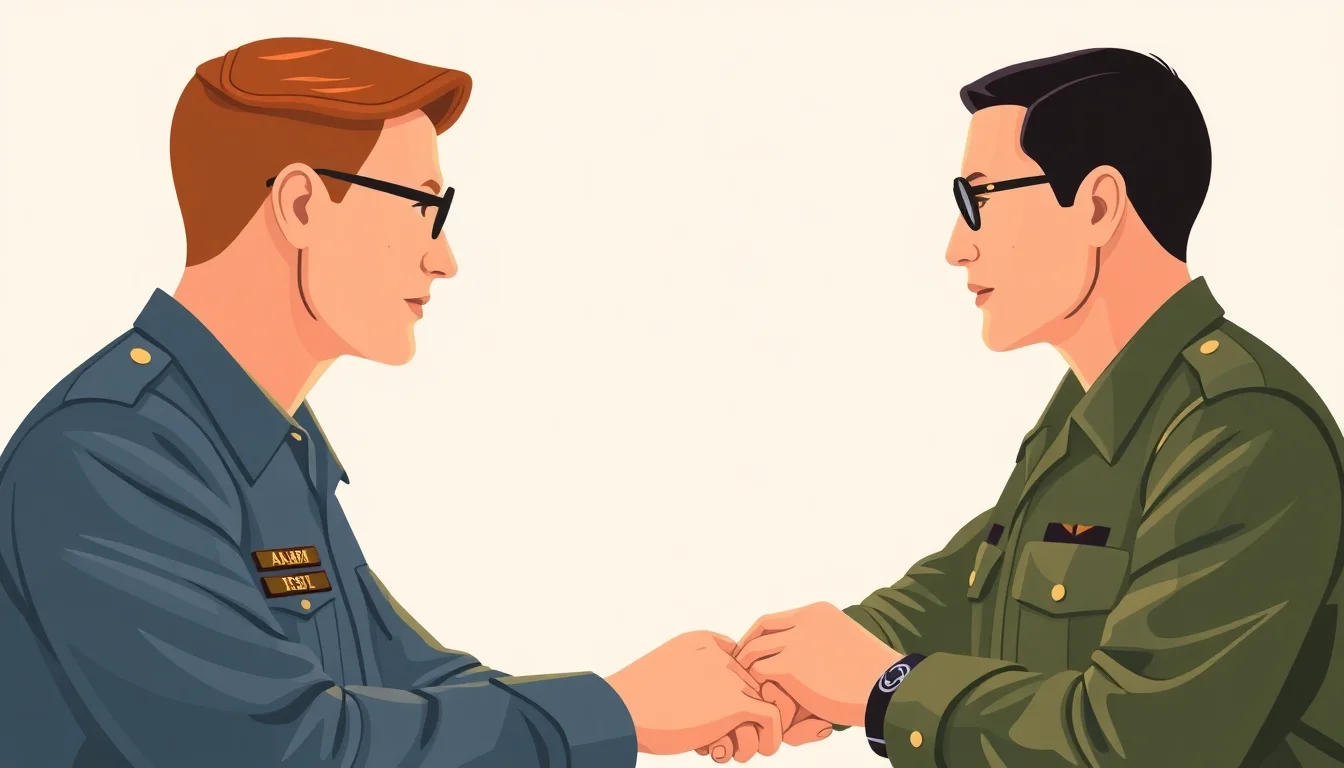
Military-civilian partnerships represent a dynamic and increasingly vital intersection of governmental defense apparatus and the private sector, non-governmental organizations (NGOs), and academic institutions. These collaborations are designed to leverage the unique capabilities, resources, and perspectives of both military and civilian entities to achieve shared objectives, ranging from humanitarian aid and disaster relief to complex security operations and technological innovation. Historically, such partnerships have evolved from ad-hoc arrangements to formalized strategies, particularly in post-conflict stabilization, reconstruction efforts, and the development of advanced defense technologies. The scale of these collaborations can be immense, involving billions of dollars in contracts and the coordinated efforts of thousands of personnel across diverse sectors. Understanding these partnerships is crucial for grasping the modern landscape of national security, international development, and the evolving role of the military in a globalized world.
🎵 Origins & History
The roots of military-civilian partnerships can be traced back to ancient times, where civilian populations supported military campaigns through logistics, supplies, and labor. The modern concept gained significant traction in the post-World War II era, particularly during the Cold War, with the rise of defense contractors and the increasing complexity of military operations. The Vietnam War highlighted the need for civilian expertise in areas like nation-building and psychological operations. Following the September 11th attacks in 2001, the urgency for robust partnerships intensified, especially in counter-terrorism, intelligence sharing, and stabilization efforts in places like Afghanistan and Iraq. Organizations like the United Nations and various NATO initiatives have formalized frameworks for such collaboration, recognizing that military might alone is insufficient for achieving lasting peace and security.
⚙️ How It Works
At their core, military-civilian partnerships function by delineating roles and responsibilities based on specialized expertise. The military typically provides security, command and control, and logistical reach, while civilian partners contribute technical skills (e.g., engineering, IT, medical), local knowledge, cultural understanding, and access to resources not available to the military. For instance, in disaster relief, military units might provide heavy lift transport and security, while Red Cross or Doctors Without Borders personnel offer medical care and humanitarian aid. In technological development, defense departments collaborate with aerospace and technology companies like Lockheed Martin or Raytheon Technologies to co-develop advanced weaponry, surveillance systems, and cyber defense capabilities, often through programs like DARPA's initiatives.
📊 Key Facts & Numbers
The financial scale of military-civilian partnerships is staggering. The US Agency for International Development (USAID) frequently partners with military commands for logistical support in crisis zones, with budgets often in the hundreds of millions for specific operations. Globally, the market for defense technology and services, heavily reliant on civilian industry, is projected to exceed $700 billion by 2025. Humanitarian aid operations, often supported by military logistics, involve billions more annually from governments and private donors.
👥 Key People & Organizations
Key figures in shaping military-civilian partnerships include policymakers, military leaders, and industry titans. Former Secretary of Defense Robert Gates was a strong proponent of leveraging private sector innovation for military advantage. CEOs of major defense contractors, such as Marillyn Hewson (former CEO of Lockheed Martin) and Thomas Kennedy (former CEO of Raytheon), have been instrumental in forging these industry-military ties. On the humanitarian front, leaders of NGOs like Peter Maurer (former President of the ICRC) have navigated complex relationships with military forces during conflict and disaster response. Academic institutions, such as Georgetown University's Center for Security and Emerging Technology, also play a crucial role in research and policy development.
🌍 Cultural Impact & Influence
The influence of military-civilian partnerships extends far beyond operational effectiveness. They have reshaped public perception of the military, sometimes portraying it as a benevolent force in disaster relief, and at other times raising concerns about the privatization of warfare. The technological advancements born from these collaborations, from GPS to the internet, have profoundly impacted civilian life. Furthermore, these partnerships foster a cross-pollination of ideas and cultures, potentially leading to greater understanding but also to the militarization of civilian spaces or the civilianization of military functions, blurring traditional boundaries and creating new societal norms.
⚡ Current State & Latest Developments
Military-civilian partnerships are increasingly focused on emerging threats and technologies. The North Atlantic Treaty Organization (NATO) is actively developing new frameworks for public-private cooperation in these domains. There's also a growing emphasis on partnerships for information warfare and countering disinformation campaigns, often involving social media platforms and data analytics firms. The ongoing conflicts in Ukraine and the Middle East have further underscored the need for agile and adaptable collaborations, integrating civilian expertise in areas like drone technology and battlefield medical support.
🤔 Controversies & Debates
Significant controversies surround military-civilian partnerships. The most prominent debate centers on the ethics and accountability of private military contractors (PMCs) in conflict zones, as exemplified by the actions of Blackwater Worldwide (now Academi) in Iraq. Critics argue that PMCs operate with less oversight than uniformed military personnel, potentially leading to abuses and undermining civilian control. Another area of contention is the revolving door between defense industries and government positions, raising concerns about undue influence and potential conflicts of interest. Debates also arise over the militarization of civilian technologies and the potential for surveillance creep facilitated by partnerships with tech giants like Google or Amazon.
🔮 Future Outlook & Predictions
The future of military-civilian partnerships is likely to be characterized by deeper integration and a greater reliance on advanced technologies. The lines between military and civilian roles may continue to blur, particularly in areas like cybersecurity and space exploration, where dual-use technologies are prevalent. There's also a growing trend towards internationalizing these partnerships, with multinational corporations and non-state actors playing larger roles in global security initiatives. The challenge will be to maintain ethical standards and accountability as these collaborations become more complex and pervasive.
💡 Practical Applications
Military-civilian partnerships have a wide array of practical applications. In humanitarian assistance and disaster relief (HADR), military logistics and personnel are crucial for delivering aid, establishing temporary infrastructure, and ensuring security in crisis-stricken regions, often working alongside organizations like the World Food Programme. In defense acquisition, partnerships with companies like Boeing and General Dynamics are essential for developing and producing advanced military hardware, from fighter jets to naval vessels. Furthermore, these collaborations are vital for intelligence gathering and analysis, involving partnerships with tech firms and data analytics companies. The development of technologies like GPS, initially a military project, is a prime example of how military innovation benefits civilian life through partnerships.
Key Facts
- Category
- movements
- Type
- concept