
Contents
Overview
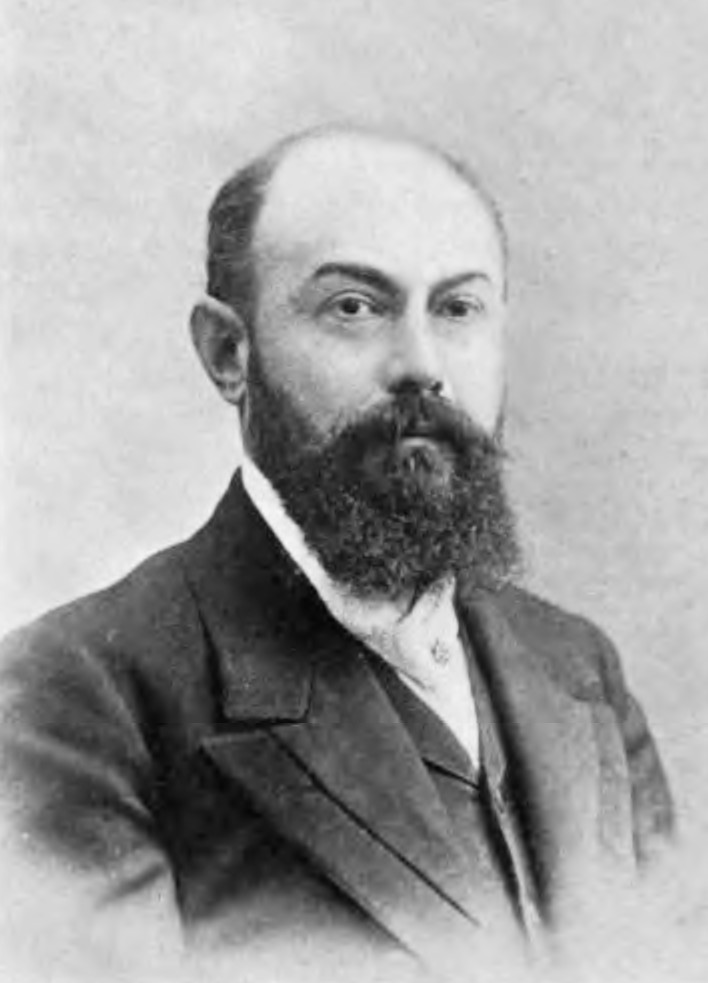
Pierre Janet (1859-1947) was a towering figure in early psychology, a French physician, philosopher, and psychotherapist whose groundbreaking work laid the foundation for understanding dissociation and traumatic memory. Alongside contemporaries like William James and Wilhelm Wundt, Janet is considered a founding father of modern psychology. He was among the first to systematically link past traumatic experiences to present-day psychological disturbances, a revolutionary concept at the time. His meticulous studies, particularly those involving induced somnambulism, provided empirical evidence for subconscious processes and altered states of consciousness, influencing generations of thinkers in psychology and psychiatry. Janet's extensive research and clinical observations, often conducted at the Pitié-Salpêtrière Hospital, offered a complex, nuanced view of the human psyche, predating and sometimes paralleling the work of Sigmund Freud. His legacy continues to resonate in contemporary discussions of trauma, memory, and consciousness.
🎵 Origins & History
Pierre Janet's father, Jules Janet, was a respected philosopher. Janet pursued a rigorous academic path, graduating from the prestigious École Normale Supérieure and later earning a medical degree from the University of Paris. His early career was marked by clinical work at the Pitié-Salpêtrière Hospital in Paris, a renowned institution that had previously housed luminaries like Jean-Martin Charcot. It was here, amidst the study of neurological and psychological disorders, that Janet began developing his theories on dissociation, subconscious processes, and the impact of trauma. His doctoral thesis, "L'automatisme psychologique" (Psychological Automatism), is widely considered a foundational text in the study of dissociation and subconscious phenomena, establishing him as a key figure in the nascent field of psychology.
⚙️ How It Works
Janet's core contribution lies in his detailed exploration of "dissociation," a concept he used to explain a range of psychological phenomena. He termed a range of psychological phenomena "psychasthenia." He proposed that the mind, particularly under stress or trauma, could fragment, leading to "subconscious automatisms" – actions or thoughts that occur outside of conscious awareness and control. Janet meticulously studied patients who exhibited these automatisms, often inducing states of somnambulism or hypnosis to access memories and experiences that were seemingly "lost" to the conscious mind. He posited that these dissociated memories, particularly those linked to traumatic events, could manifest as physical symptoms or psychological distress, a direct precursor to modern trauma-informed therapies. His "level of psychic tension" theory suggested that individuals with lower levels of this tension were more prone to dissociation and the development of psychasthenic symptoms.
📊 Key Facts & Numbers
Pierre Janet's prolific career produced a significant body of work, including seminal publications. He was appointed professor at the Collège de France in 1904, a position he held for over two decades, solidifying his academic standing. Throughout his career, he supervised and influenced numerous students and colleagues, contributing to a vibrant intellectual environment in French psychology. By the time of his death, he had established himself as one of the most cited psychologists of his era, with his work being translated and discussed internationally. His research on dissociation is estimated to have influenced a substantial number of subsequent academic papers and books, underscoring his enduring impact.
👥 Key People & Organizations
Janet's intellectual landscape was shaped by his interactions with prominent figures of his time. He studied under Jean-Martin Charcot at the Pitié-Salpêtrière Hospital, a formative experience that influenced his approach to hysteria and hypnosis. While often compared to Sigmund Freud, Janet maintained a distinct theoretical framework, focusing more on the fragmentation of consciousness and the role of psychic tension rather than solely on psychosexual development. His contemporaries at the University of Paris and the École Normale Supérieure formed a crucial academic network. Janet also served as president of the Société Française de Psychologie, a key organization that fostered psychological research in France. His father, Jules Janet, was also a philosopher, providing an early intellectual foundation.
🌍 Cultural Impact & Influence
Janet's influence on the fields of psychology and psychotherapy is profound, though sometimes overshadowed by Sigmund Freud in popular discourse. His pioneering work on dissociation directly informed the development of dissociative identity disorder (DID) and trauma-informed care. Therapies that address fragmented memories and subconscious processes owe a significant debt to Janet's early clinical observations and theoretical frameworks. His emphasis on the continuity between normal and pathological mental states, and the impact of "fixed ideas" (idées fixes), provided a bridge between philosophical inquiry and empirical psychological research. The concept of "psychasthenia," which he described as a nervous disorder characterized by obsessions, compulsions, and a feeling of exhaustion, foreshadowed later understandings of anxiety disorders. His work also touched upon the philosophy of consciousness and the nature of the self, influencing existentialist thinkers and phenomenologists.
⚡ Current State & Latest Developments
While Pierre Janet passed away in 1947, his theories remain remarkably relevant in the 21st century. Contemporary research in neuroscience and psychology continues to validate his insights into the brain's response to trauma and the mechanisms of dissociation. Fields like trauma-informed care and EMDR therapy echo Janet's understanding of how traumatic memories are stored and can be processed. The ongoing exploration of consciousness, memory consolidation, and the subconscious mind at institutions like Stanford University and Yale University often revisits Janet's early conceptualizations. His work is increasingly being re-examined and integrated into modern psychotherapeutic approaches, particularly those dealing with complex trauma and dissociative disorders.
🤔 Controversies & Debates
A significant debate surrounding Janet's legacy concerns his relationship with Sigmund Freud. While both explored the unconscious mind, Janet's focus on dissociation and the fragmentation of consciousness differed from Freud's emphasis on repressed sexual drives and the Oedipus complex. Some scholars argue that Freud appropriated or downplayed Janet's earlier findings, particularly concerning hysteria and dissociation. Another area of discussion is the clinical efficacy and theoretical underpinnings of "psychasthenia," a term Janet coined. While widely accepted in his time, it has largely been superseded by diagnostic categories like OCD and GAD in the DSM. The extent to which Janet's work was truly independent or influenced by his contemporaries, particularly Charcot, also remains a subject of scholarly inquiry.
🔮 Future Outlook & Predictions
The future outlook for Janet's theories is one of renewed appreciation and integration. As neuroscience advances, researchers are better equipped to empirically test and refine Janet's hypotheses about dissociation and memory fragmentation. The increasing recognition of the pervasive impact of trauma across various psychological conditions suggests that Janet's early work on traumatic memory will continue to be a vital reference point. Future research may focus on identifying the specific neural correlates of the "psychic tension" Janet described and exploring how interventions can modulate these processes. Furthermore, his philosophical contributions to understanding the self and consciousness may find new relevance in interdisciplinary dialogues between psychology, neuroscience, and artificial intelligence, particularly in understanding complex cognitive architectures.
💡 Practical Applications
Janet's work has direct practical applications in clinical psychology and psychotherapy. His theories are fundamental to understanding and treating conditions involving dissociation, such as dissociative identity disorder, depersonalization-derealization disorder, and PTSD. Therapists utilize Janet's insights to recognize "subconscious automatisms" and "fixed ideas" in patients, guiding interv
Key Facts
- Category
- philosophy
- Type
- topic