
Contents
- 👁️🗨️ What Radiologists Actually Do
- 🔬 The Tools of the Trade: Beyond X-Rays
- 🏥 Where You'll Encounter Radiologists
- 📈 The Evolution of Medical Imaging
- 💡 Key Skills and Training
- ⚖️ Radiologists vs. Other Medical Specialists
- 🚀 The Future of Radiology
- ❓ Frequently Asked Questions
- Frequently Asked Questions
- Related Topics
Overview
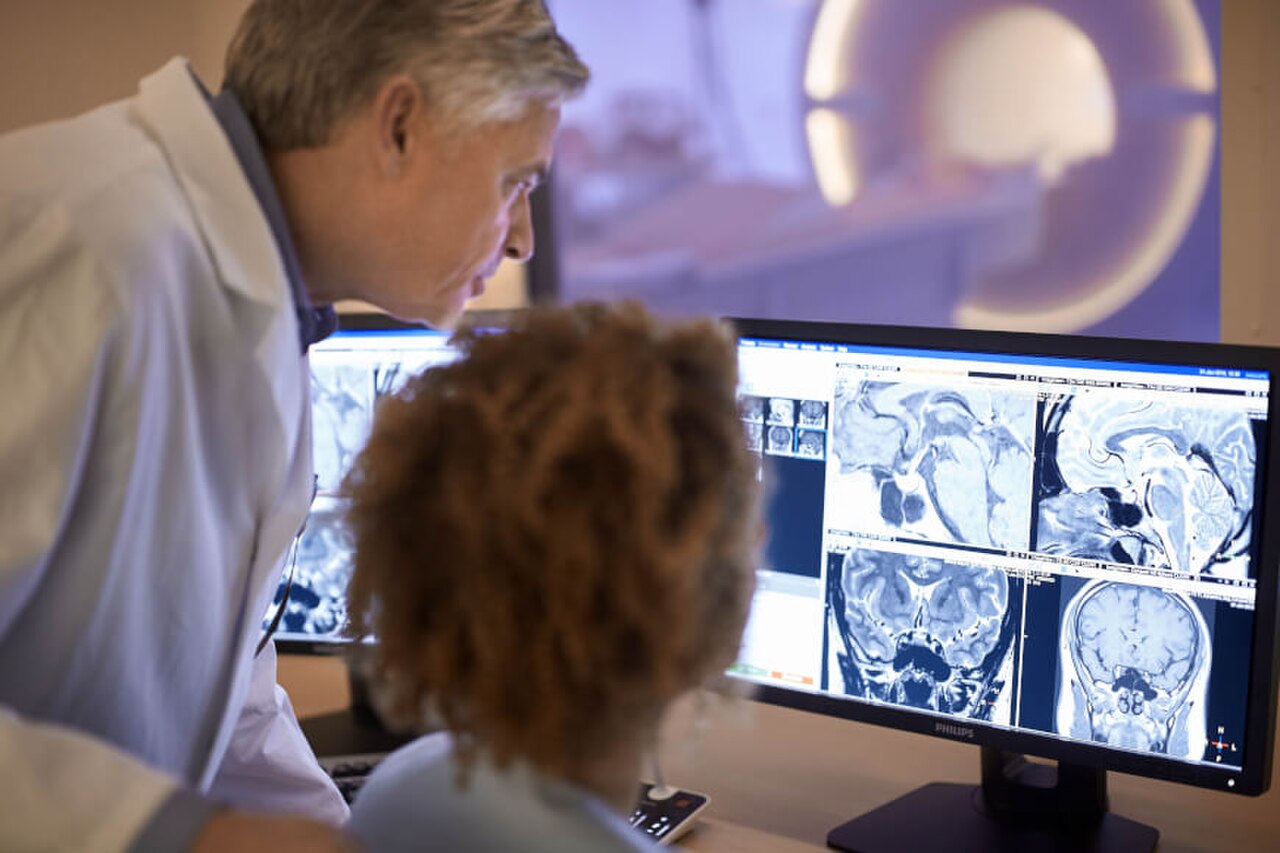
Radiologists are the unsung heroes of modern medicine, interpreting the complex visual data generated by advanced imaging technologies to pinpoint disease and guide therapeutic interventions. Far from simply looking at X-rays, they are diagnosticians who analyze everything from subtle anomalies in a Computed Tomography to the intricate vascular networks visualized by Magnetic Resonance Imaging. Their expertise is crucial for identifying conditions like tumors, fractures, infections, and blockages, often before they become clinically apparent. This visual diagnosis forms the bedrock for treatment plans developed by other physicians, making radiologists indispensable members of the healthcare team.
🔬 The Tools of the Trade: Beyond X-Rays
The modern radiologist's toolkit extends far beyond the traditional X-ray. They master a spectrum of imaging modalities, each offering unique insights. Ultrasonography uses sound waves to image soft tissues and monitor blood flow, while Computed Tomography provide detailed cross-sectional views. Magnetic Resonance Imaging excels at visualizing soft tissues and neurological structures without ionizing radiation. Positron Emission Tomography track metabolic activity, invaluable for cancer detection. Furthermore, Interventional Radiology leverages these tools for minimally invasive procedures, such as angioplasty or biopsies, performed under real-time imaging guidance.
🏥 Where You'll Encounter Radiologists
You'll most commonly encounter the work of radiologists in hospitals and outpatient imaging centers, though their interpretations are vital across all healthcare settings. When you undergo an imaging study, it's a radiologist who meticulously reviews the resulting images, often within hours. They collaborate closely with referring physicians—surgeons, oncologists, neurologists, and primary care doctors—providing detailed reports that inform critical treatment decisions. Their insights are also essential in emergency departments, where rapid diagnosis can be life-saving, and in specialized clinics focusing on areas like cardiology or oncology.
📈 The Evolution of Medical Imaging
The field of radiology has undergone a dramatic transformation since its inception with Wilhelm Röntgen's discovery of X-rays in 1895. Early radiography, a revolutionary diagnostic tool in its own right, has since been augmented by a cascade of technological advancements. The development of Computed Tomography in the 1970s, followed by Magnetic Resonance Imaging in the 1980s, and the increasing sophistication of Nuclear Medicine techniques like PET, have continuously expanded the diagnostic capabilities. This relentless innovation has shifted radiology from a descriptive science to a highly quantitative and interventional specialty.
💡 Key Skills and Training
Becoming a radiologist requires a rigorous educational path. It begins with a bachelor's degree, typically in a science-related field, followed by four years of medical school to earn an MD or DO degree. After medical school, aspiring radiologists complete a one-year internship, then a four-year residency in diagnostic radiology. Many then pursue further subspecialty training through fellowships, which can last one to two years, focusing on areas like Neuroradiology, Musculoskeletal Radiology, or Pediatric Radiology. Board certification by the American Board of Radiology is the standard for demonstrating expertise.
⚖️ Radiologists vs. Other Medical Specialists
Radiologists occupy a unique niche within medicine, acting as diagnosticians and image-guided proceduralists. Unlike Surgical Specialties who perform direct interventions, or Pathology who analyze tissues microscopically, radiologists interpret visual data from within the body. While Oncology and Neurology rely heavily on radiological findings, radiologists themselves are the primary interpreters of these images. Their role is distinct from Radiologic Technologists, who operate the imaging equipment and acquire the images under the radiologist's direction.
🚀 The Future of Radiology
The future of radiology is being shaped by artificial intelligence (AI) and machine learning. AI algorithms are increasingly being developed to assist radiologists in detecting subtle abnormalities, automating routine tasks, and improving workflow efficiency. Radiomics, the extraction of quantitative features from medical images, promises to unlock new diagnostic and prognostic information. Furthermore, advancements in imaging hardware and software continue to enhance resolution and speed. The integration of AI is not expected to replace radiologists but rather to augment their capabilities, allowing them to focus on more complex cases and patient care.
❓ Frequently Asked Questions
Radiologists are medical doctors specializing in interpreting medical images to diagnose and treat diseases. They use technologies like X-rays, CT scans, MRI, and ultrasound. Their work is crucial for nearly every medical specialty, providing the visual evidence needed for accurate diagnoses and effective treatment plans. They collaborate with referring physicians, offering expert analysis and guidance. The field is rapidly evolving with AI and new imaging techniques, promising even greater diagnostic precision in the future.
Key Facts
- Year
- 1895
- Origin
- Discovery of X-rays by Wilhelm Conrad Röntgen
- Category
- Medical Professions
- Type
- Profession
Frequently Asked Questions
What is the difference between a radiologist and a radiologic technologist?
A radiologic technologist operates the imaging equipment (like X-ray machines or MRI scanners) and captures the images. A radiologist is a medical doctor who interprets these images to diagnose conditions and guide treatment. The technologist performs the technical acquisition, while the radiologist provides the medical interpretation and diagnosis.
Do radiologists perform surgery?
While some radiologists specialize in Interventional Radiology, which involves minimally invasive procedures guided by imaging (like biopsies or angioplasty), they do not perform traditional open surgeries. Their procedures are typically less invasive and focused on diagnosis or targeted treatment using imaging guidance.
How long does it take to become a radiologist?
The path is extensive: four years of undergraduate study, four years of medical school, a one-year internship, and a four-year radiology residency. Many then complete one to two years of fellowship training in a subspecialty. In total, it typically takes 13-15 years of education and training after high school.
What are the main subspecialties within radiology?
Major subspecialties include Neuroradiology (brain, spine, head, neck), Musculoskeletal Radiology (bones, joints, muscles), Abdominal Imaging (organs in the abdomen and pelvis), Thoracic Imaging (chest and lungs), Breast Imaging (mammography and related studies), Pediatric Radiology (imaging in children), and Nuclear Medicine (using radioactive tracers).
How does AI impact the role of a radiologist?
AI is increasingly used as a tool to assist radiologists, not replace them. It can help automate tasks, detect subtle findings that might be missed, and improve workflow efficiency. This allows radiologists to focus more on complex diagnoses, interventional procedures, and direct patient consultation, enhancing their diagnostic capabilities.
Can a radiologist diagnose a condition without seeing the patient?
Yes, radiologists primarily diagnose conditions by interpreting medical images. They receive referrals from other physicians who have examined the patient. The radiologist's report then guides the referring physician in managing the patient's care. While they don't typically conduct direct patient examinations, their diagnostic accuracy is paramount.