
Vibepedia

Rage Against The Machine | Vibepedia

hard-rock rap-metal funk-metal activist-rock 90s-alt-rock
Rage Against The Machine | Vibepedia

Rage Against the Machine (RATM), formed in Los Angeles in 1991, stands as one of the most potent and uncompromising voices in modern rock music. Comprised of…

Contents

  1. Origins and Formation
  2. Discography and Musical Evolution
  3. Activism and Legacy
  4. Cultural Resonance
  5. Frequently Asked Questions
  6. Related Topics

Overview

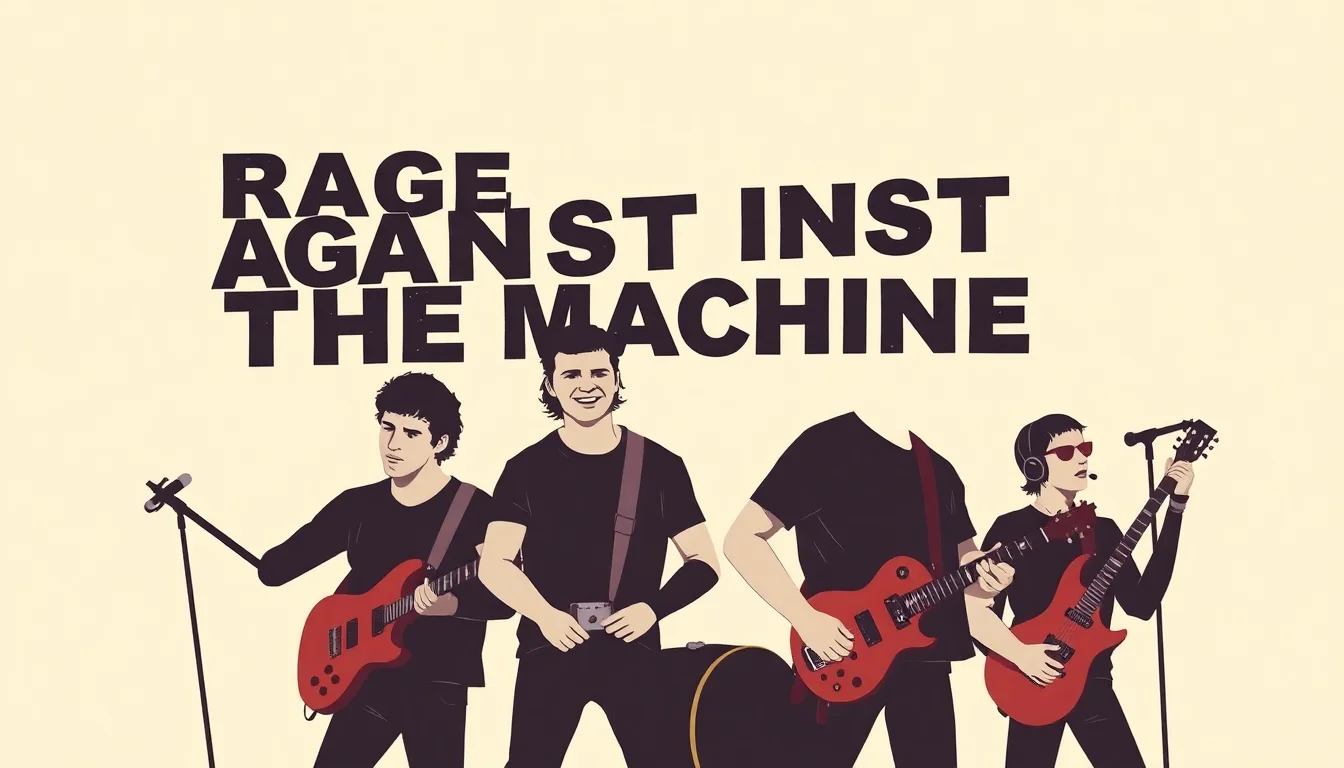
Rage Against the Machine (RATM), formed in Los Angeles in 1991, stands as one of the most potent and uncompromising voices in modern rock music. Comprised of Zack de la Rocha (vocals), Tom Morello (guitar), Tim Commerford (bass), and Brad Wilk (drums), the band fused aggressive, punk-inflected hard rock with funk rhythms and de la Rocha's searing, politically radical lyrical critiques. Their music became an anthem for a generation disillusioned with corporate power, government corruption, and social injustice, achieving massive mainstream success while steadfastly refusing to compromise their message.

Their debut album, [[rage-against-the-machine-album|Rage Against the Machine]] (1992), immediately established their sonic blueprint and ideological stance. Tracks like "[[killing-in-the-name|Killing in the Name]]" became instant classics, celebrated for their raw power and defiant spirit. Subsequent albums, including [[evil-empire|Evil Empire]] (1996) and [[the-battle-of-los-angeles|The Battle of Los Angeles]] (1999), further solidified their reputation, earning critical acclaim and commercial success, with "[[sleep-now-in-the-fire|Sleep Now in the Fire]]" and "[[guerrilla-radio|Guerrilla Radio]]" becoming signature anthems. The band's live performances were legendary for their intensity and de la Rocha's impassioned activism, often seeing members engaging in protests and political actions.

Origins and Formation

Emerging from the fertile Los Angeles scene of the early 1990s, Rage Against the Machine coalesced around a shared desire to inject radical politics directly into the mainstream rock landscape. Zack de la Rocha, having previously fronted the hardcore punk band [[inside-out|Inside Out]], brought his sharp lyrical focus and political fervor. Tom Morello, a classically trained guitarist, developed his signature, experimental guitar techniques, often employing effects pedals and unconventional methods to create sounds akin to turntables or synthesizers. Tim Commerford's propulsive bass lines and Brad Wilk’s powerful, groove-oriented drumming formed the unshakable rhythmic foundation, drawing heavily from [[funk|funk]] and [[hip-hop|hip-hop]] influences. Their early material, refined through relentless touring, quickly garnered attention for its potent blend of aggression and intellectual rigor, setting them apart from their contemporaries in the burgeoning [[alternative-rock|alternative rock]] scene.

Discography and Musical Evolution

The band's discography, though relatively small, is remarkably consistent in its quality and message. Their self-titled debut, [[rage-against-the-machine-album|Rage Against the Machine]] (1992), produced by [[garret-shave-down|Garret Shave Down]], was a critical and commercial breakthrough, propelled by the rebellious energy of "[[killing-in-the-name|Killing in the Name]]". [[Evil Empire]] (1996) saw them refine their sound and deepen their political commentary, featuring tracks like "Bulls on Parade" and "[[people-of-the-sun|People of the Sun]]". [[The Battle of Los Angeles]] (1999), their third studio album, achieved even greater commercial success, debuting at number one on the Billboard 200 and earning a Grammy for Best Rap Rock Album for "[[guerrilla-radio|Guerrilla Radio]]". Their final studio album, [[renegrade-immortal|Renegades]] (2000), consisted entirely of cover songs, reinterpreted through the RATM lens, showcasing their diverse influences from [[hip-hop|hip-hop]] to [[punk-rock|punk rock]] and [[funk|funk]]. The band’s sonic innovation, particularly Morello's distinctive guitar work, has been widely emulated, influencing countless [[hard-rock|hard rock]] and [[nu-metal|nu-metal]] bands.

Activism and Legacy

Rage Against the Machine’s legacy extends far beyond their musical output. They consistently used their platform to advocate for social and political causes, aligning themselves with movements like the Zapatista uprising in Chiapas, Mexico, and supporting organizations such as [[audioslave|Free Mandela]] and the [[cypress-hill|American Indian Movement]]. Their refusal to be an apolitical entity in the music industry made them a polarizing but ultimately inspirational force. While internal tensions, primarily concerning Zack de la Rocha’s desire for a more politically focused solo career, led to the band’s dissolution in 2000, their impact remains undeniable. Their music continues to resonate with new generations of listeners grappling with similar societal issues, solidifying their status as musical revolutionaries and cultural touchstones. The band reunited for tours in 2007-2011 and again in 2019 for a series of highly anticipated shows, demonstrating the enduring demand for their message and music.

Cultural Resonance

The band's cultural impact is immeasurable. They proved that a heavy, aggressive sound could coexist with intelligent, radical political discourse and achieve massive mainstream appeal, a feat few bands have replicated. Their music became the soundtrack to protests and demonstrations worldwide, a testament to its raw, anthemic power. Tom Morello’s innovative guitar playing, which incorporated scratching techniques and unique effects, redefined what was possible with the instrument and earned him widespread acclaim. The band’s unwavering commitment to their ideals, even when it meant alienating potential commercial opportunities, cemented their reputation as authentic and uncompromising artists. Their influence can be traced through numerous artists across genres, from [[linkin-park|Linkin Park]] and [[system-of-a-down|System of a Down]] to more contemporary acts who seek to blend political consciousness with powerful rock music.

Key Facts

Year
1991-2000, 2007-2011, 2019-2022
Origin
Los Angeles, California, USA
Category
music
Type
artist

Frequently Asked Questions

What is Rage Against the Machine's most famous song?

While subjective, "Killing in the Name" is arguably their most iconic and widely recognized song due to its raw power and controversial lyrics.

Why did the band break up multiple times?

The band has cited creative differences, de la Rocha's desire to pursue solo projects focused on activism, and the intensity of their political mission as reasons for their intermittent hiatuses and reunions.

What are some bands influenced by Rage Against the Machine?

Numerous bands have cited RATM as an influence, including Linkin Park, System of a Down, Muse, and many others in the rock, metal, and rap-rock genres.

What does 'Rage Against the Machine' mean?

It's a metaphor for directing intense anger and opposition towards oppressive societal systems, governments, and institutions.