
Contents
Overview
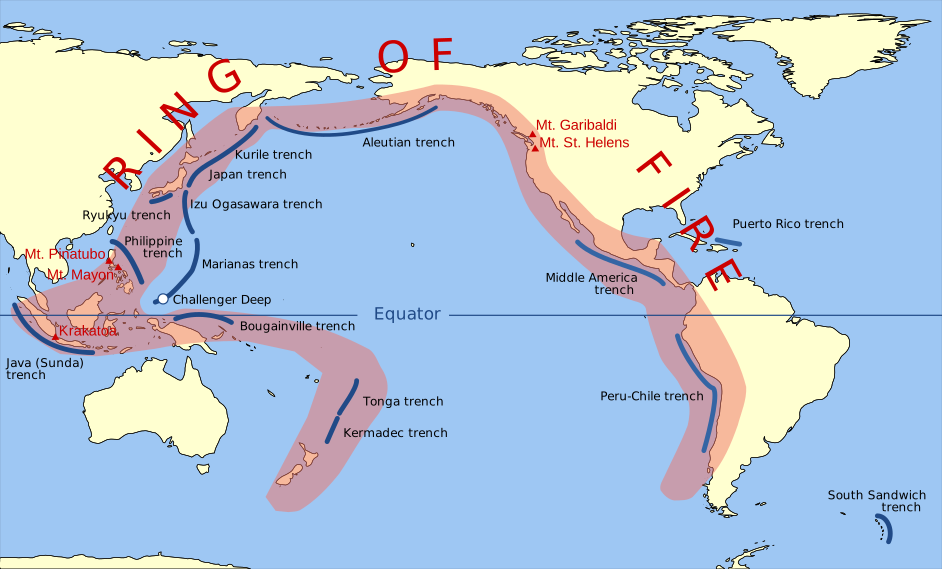
The Ring of Fire is a zone of intense seismic and volcanic activity that surrounds the Pacific Ocean. The Ring of Fire passes through several countries, including the United States, Japan, the Philippines, and Indonesia, and is home to some of the most active and dangerous volcanoes in the world, such as Mount St. Helens and Mount Fuji. The Ring of Fire is a significant geological feature that has shaped the landscape of the Pacific region and continues to pose a threat to the people living in the surrounding areas. With its unique combination of geological processes, the Ring of Fire is an important area of study for volcanologists and seismologists, who seek to understand the underlying mechanisms that drive its activity.
🌋 Origins & History
The Ring of Fire has a long and complex history, with its origins dating back millions of years to the formation of the Pacific Ocean. The Ring of Fire is thought to have formed as a result of the subduction of different tectonic plates at convergent boundaries around the Pacific Ocean. This process has created a zone of intense seismic and volcanic activity, with many volcanoes and earthquakes occurring in the region.
🌊 How It Works
The Ring of Fire is a complex geological system, with many different factors contributing to its activity. The subduction of tectonic plates at convergent boundaries is the primary driver of the Ring of Fire's activity, with the movement of these plates causing the Earth's crust to deform and create zones of high pressure and stress. This can lead to the formation of volcanoes and the occurrence of earthquakes, as well as the creation of mountain ranges and other geological features.
📊 Key Facts & Numbers
The Ring of Fire is around 40,000 km long, and up to 500 km wide, making it one of the largest geological features on Earth. The Ring of Fire is a significant source of geothermal energy.
👥 Key People & Organizations
The Ring of Fire has been studied by many different people and organizations, including volcanologists, seismologists, and geologists. The Ring of Fire is also home to many different organizations, including the United States Geological Survey and the International Seismological Centre.
🌍 Cultural Impact & Influence
The Ring of Fire has had a significant impact on the culture and society of the regions surrounding it. The Ring of Fire has been the site of many different myths and legends, with many indigenous cultures having stories and legends about the volcanoes and earthquakes in the region.
⚡ Current State & Latest Developments
The current state of the Ring of Fire is one of ongoing activity, with many different volcanoes and earthquakes occurring in the region. The Ring of Fire is constantly changing, with new volcanoes forming and old ones becoming dormant.
🤔 Controversies & Debates
The Ring of Fire is a topic of ongoing debate and controversy, with many different opinions and perspectives on its activity and impact. Some people believe that the Ring of Fire is a significant threat to the environment and human health, while others see it as a natural and necessary part of the Earth's geological system.
🔮 Future Outlook & Predictions
The future outlook for the Ring of Fire is one of ongoing activity and change, with many different volcanoes and earthquakes expected to occur in the region. The Ring of Fire is a significant geological feature that will continue to shape the landscape of the Pacific region.
💡 Practical Applications
The Ring of Fire has many different practical applications, including the generation of geothermal energy.
Key Facts
- Category
- nature
- Type
- topic