
Contents
Overview
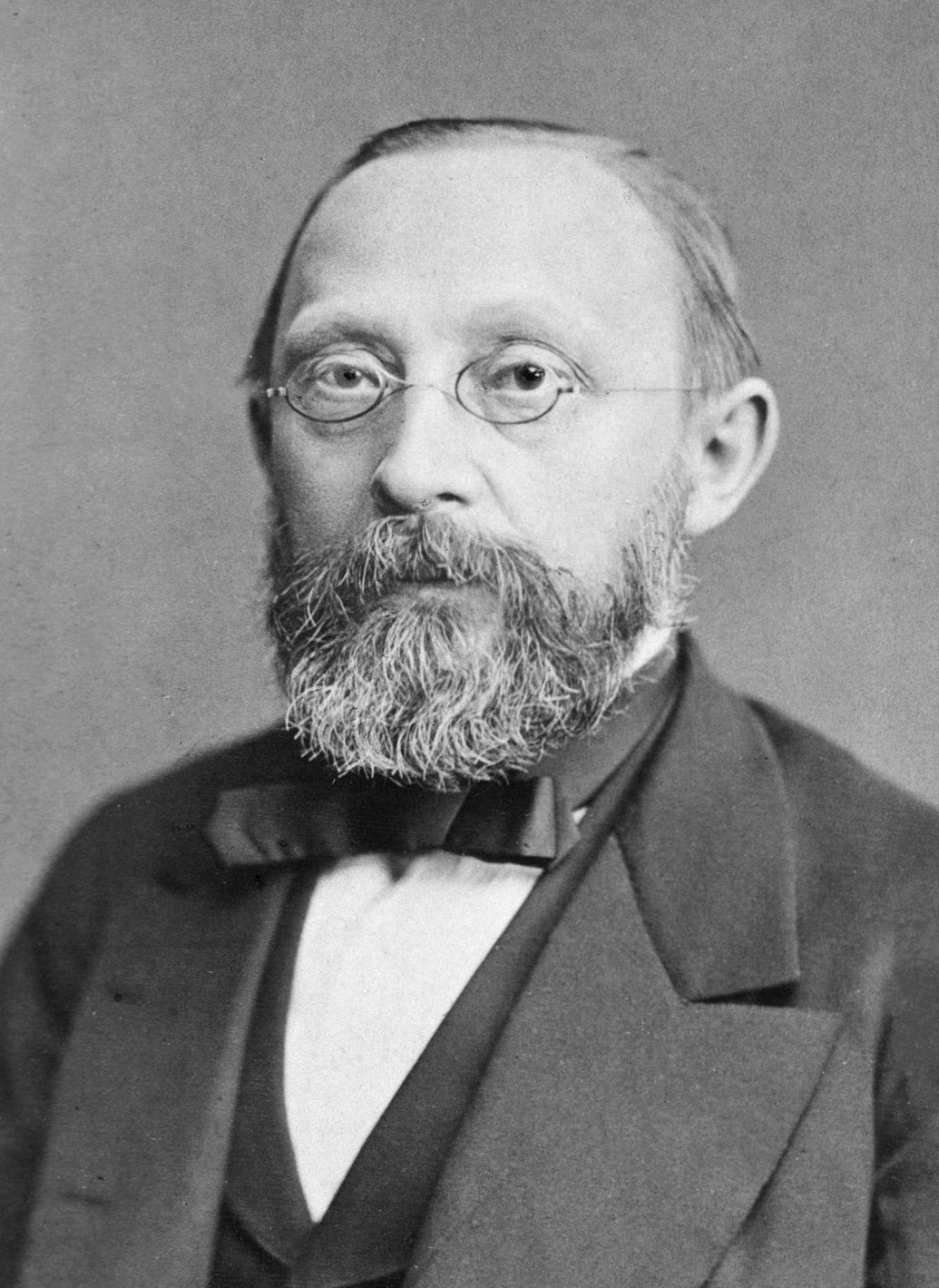
Rudolf Virchow (1821-1902) was a titan of 19th-century science and public life, a German physician, pathologist, anthropologist, and politician renowned as the 'father of modern pathology.' His revolutionary concept of cellular pathology, articulated in his Cellularpathologie, posited that disease arises from the disruption of cells, a paradigm shift from earlier humoral theories. Beyond the microscope, Virchow was a fervent social reformer, famously declaring 'Medicine is a social science, and politics is nothing else but medicine on a large scale.' His investigations into typhus epidemics in Upper Silesia (1847-1848) directly informed his advocacy for public health and sanitation, linking individual well-being to societal structures. A formidable intellectual and activist, Virchow's legacy spans cellular biology, public health policy, and political reform, cementing his status as a foundational figure in modern medicine and social thought.
🎵 Origins & History
Rudolf Virchow was born in the Pomeranian town of Schivelbein, now Świdwin, Poland. He studied at the Friedrich Wilhelm University in Berlin, where he studied under Johannes Peter Müller. Virchow's early work at the Charité Hospital in Berlin provided the crucible for his most significant discoveries. His investigations into the typhus epidemic that swept through Upper Silesia between 1847 and 1848 directly informed his advocacy for public health and sanitation.
⚙️ How It Works
Virchow's most profound contribution, cellular pathology, fundamentally altered the understanding of disease. He posited that disease is a manifestation of cellular dysfunction or abnormality. This meant that illness wasn't a systemic imbalance of humors, as previously believed, but a localized or widespread derangement at the cellular level. His seminal work, Cellularpathologie, meticulously detailed how pathological processes like inflammation, degeneration, and tumor formation originated from cellular changes. This microscopic perspective provided a tangible, observable basis for diagnosing and treating diseases, moving medicine from speculative theory to empirical science, heavily influencing later fields like oncology and genetics.
📊 Key Facts & Numbers
Virchow's career spanned an era of immense scientific and social change. As a politician, he served in the Prussian House of Representatives from 1862 to 1866 and later in the Reichstag of the German Empire from 1880 to 1893, where he championed public health initiatives. He received over 50 honorary doctorates and memberships from prestigious institutions worldwide, including the Royal Society in London, and was awarded the Copley Medal in 1893, one of science's highest honors, recognizing his lifetime of achievement.
👥 Key People & Organizations
Beyond his own prodigious output, Virchow was a central figure in the scientific and political landscape of his time. He was a student and colleague of Johannes Peter Müller, a leading figure in German physiology. His political activism often placed him in opposition to conservative forces, notably clashing with Otto von Bismarck on matters of public health and military hygiene. Virchow's family also played a role; his son, Hans Virchow, became a noted anatomist, continuing the family's scientific legacy. He was a key figure in the founding of the German Society of Pathology in 1871, an organization that continues to shape the field today. His intellectual circle included prominent scientists and thinkers across Europe, solidifying his position as a nexus of scientific advancement.
🌍 Cultural Impact & Influence
Virchow's influence extended far beyond the laboratory and lecture hall. His declaration that 'Medicine is a social science, and politics is nothing else but medicine on a large scale' became a rallying cry for public health advocates and social reformers. His work on sanitation and disease prevention in response to the Upper Silesian typhus epidemic laid the groundwork for modern public health systems in Germany and beyond, directly impacting urban planning and public policy. His anthropological studies also contributed to the understanding of human diversity and evolution, though some of his interpretations later faced scrutiny. The very concept of a 'disease' as a cellular process, rather than a moral failing or miasma, profoundly reshaped societal attitudes towards illness and the afflicted, fostering a more scientific and less stigmatizing approach, a vital precursor to the work of later public health pioneers like Jonas Salk.
⚡ Current State & Latest Developments
While Virchow's foundational principles of cellular pathology remain cornerstones of modern medicine, their application and interpretation continue to evolve. Contemporary research in fields like epigenetics and systems biology builds upon his cellular focus by examining how external factors and complex cellular interactions influence disease. His advocacy for public health remains acutely relevant, particularly in the face of global health challenges such as pandemics and health disparities, underscoring the enduring importance of his 'social medicine' perspective. Ongoing debates in medical ethics and policy often reference his early calls for evidence-based governance and equitable healthcare access, demonstrating the persistent resonance of his ideas in the 21st century.
🤔 Controversies & Debates
Virchow's assertion of 'omnis cellula e cellula' was revolutionary but not without its critics or limitations. Some early interpretations of his work, particularly regarding the origins of cancer, were later refined by discoveries in molecular biology and genetics. His political stances, while progressive for his era, also drew opposition; his liberal views and critiques of Prussian militarism sometimes put him at odds with powerful figures like Otto von Bismarck. Furthermore, while he championed scientific objectivity, his anthropological writings have been subject to re-evaluation through the lens of modern critical theory, with some scholars questioning certain classifications and interpretations of human variation prevalent in the 19th century.
🔮 Future Outlook & Predictions
The future of Virchow's legacy lies in the continued integration of his cellular and social perspectives. As artificial intelligence and big data analytics increasingly inform medical diagnosis and public health strategies, Virchow's emphasis on empirical observation and systemic understanding becomes even more critical. Future research will likely continue to explore the intricate interplay between cellular mechanisms and environmental factors, further validating his holistic approach. His political activism also serves as a model for scientists engaging with policy, suggesting a growing trend of interdisciplinary collaboration to address complex global challenges, from climate change impacts on health to equitable distribution of medical resources.
💡 Practical Applications
Virchow's work has direct and profound practical applications across numerous fields. His concept of cellular pathology is the bedrock of modern diagnostics, enabling physicians to identify diseases like cancer, inflammation, and infectious agents at the cellular level through biopsies and microscopic examination. His public health advocacy directly led to the implementation of sanitation laws, improved water systems, and public health infrastructure in cities, dramatically reducing mortality rates from infectious diseases. In anthropology, his meticulous studies contributed to the classification and understanding of skeletal remains, aiding in forensic science and archaeological research. The principles of evidence-based medicine and social determinants of health, which he pioneered, are now standard practice in healthcare systems globally.
Key Facts
- Category
- science
- Type
- topic