
Contents
Overview
A stereotype is a widely held but fixed and oversimplified image or idea of a particular type of person or thing. These cognitive shortcuts, rooted in our brains' need to quickly categorize information, allow us to process the world more efficiently by drawing on pre-existing beliefs rather than analyzing every new encounter from scratch. While often born from genuine observations, stereotypes tend to generalize these observations to entire groups, leading to potentially inaccurate and harmful generalizations about personality, abilities, and behaviors. They can manifest explicitly, as conscious beliefs, or implicitly, operating beneath our awareness. The accuracy of stereotypes is a subject of ongoing debate, with some research suggesting they can sometimes reflect statistical realities, particularly in areas like gender, while others highlight their resistance to evidence and their role in perpetuating prejudice. Understanding stereotypes is crucial for navigating social interactions and recognizing the subtle ways our minds can lead us astray.
🎵 Origins & History
The concept of stereotyping, though the term itself is relatively modern, has deep historical roots stretching back to ancient societies that relied on categorization for survival and social order. Early forms of generalization can be seen in tribal identities and the creation of 'us vs. them' narratives. The term 'stereotype' was popularized by journalist Walter Lippmann in his 1922 book, Public Opinion, where he described them as 'pictures in our heads.' Lippmann argued that these mental shortcuts were necessary due to the overwhelming complexity of the modern world, but also cautioned about their potential to distort reality and lead to prejudice. Precursors to Lippmann's work include early psychological studies on social perception and group biases, laying the groundwork for understanding how collective beliefs are formed and transmitted across generations, often through oral traditions, literature, and later, mass media like radio and film.
⚙️ How It Works
At its core, stereotyping is a cognitive process driven by the brain's attempt to simplify information processing. Stereotypes are cognitive shortcuts that allow us to process the world more efficiently. When encountering a person or group, our minds quickly access pre-existing schemas or mental frameworks associated with that category. This involves a form of categorization, where individuals are placed into groups based on perceived shared characteristics, such as race, gender, nationality, or profession. This categorization then triggers associated beliefs, expectations, and even emotional responses. For instance, if someone holds a stereotype that a particular profession is 'lazy,' they might interpret a member of that profession's actions through that lens, overlooking evidence to the contrary. Stereotypes can lead to confirmation bias, where individuals seek out or interpret information in a way that confirms their existing stereotypes, making them remarkably resistant to change.
📊 Key Facts & Numbers
Studies suggest that a significant portion of people acknowledge that their held stereotypes are often inaccurate. Research by the American Psychological Association indicates that implicit biases, a form of unconscious stereotyping, can influence decisions in areas like hiring and law enforcement, with studies showing disparities in outcomes for minority groups. Globally, stereotypes contribute to significant social and economic disparities. Stereotypes can manifest explicitly, as conscious beliefs, or implicitly, operating beneath our awareness.
👥 Key People & Organizations
Key figures in the study of stereotypes include Walter Lippmann, who described them as 'pictures in our heads,' and Gordon Allport, whose 1954 book The Nature of Prejudice remains a foundational text in understanding intergroup relations and the psychological underpinnings of prejudice. Social psychologists like Sheldon Cohen and Claude Steele have extensively researched stereotype threat, the fear of confirming negative stereotypes about one's group. Organizations such as the Southern Poverty Law Center actively track and combat hate groups and the spread of harmful stereotypes through education and advocacy. Academic institutions worldwide, including Stanford University and the University of Oxford, host research centers dedicated to social cognition and prejudice.
🌍 Cultural Impact & Influence
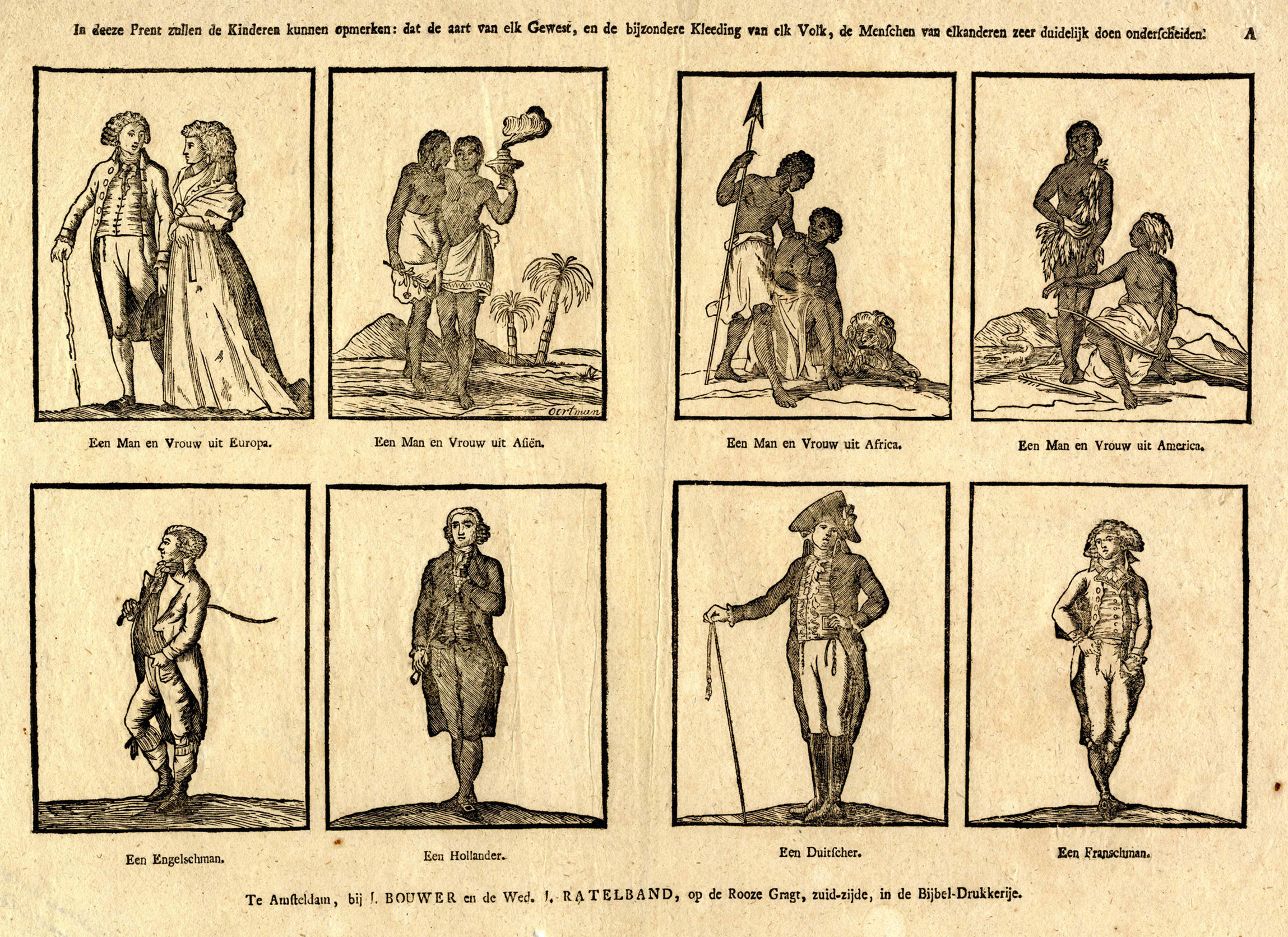
Stereotypes have profoundly shaped cultural narratives, influencing everything from literature and film to political discourse and everyday social interactions. They are often employed by artists and storytellers to create shorthand for character archetypes, such as the 'wise old man' or the 'damsel in distress,' allowing audiences to quickly grasp character roles. However, this can also lead to the perpetuation of harmful tropes, like the 'model minority' myth or the 'angry black woman' stereotype, which oversimplify complex realities and can have damaging real-world consequences. Early Hollywood films often relied on racist caricatures of various ethnic groups. Conversely, contemporary media increasingly seeks to challenge and subvert these ingrained beliefs, aiming for more nuanced and diverse representations.
⚡ Current State & Latest Developments
In the current digital age, stereotypes are both amplified and challenged at an unprecedented scale. Social media platforms like Twitter and Facebook can rapidly spread generalizations, but they also provide spaces for marginalized groups to share their experiences and counter dominant narratives. AI algorithms, trained on vast datasets, can inadvertently embed and perpetuate societal stereotypes, as seen in biased image recognition or predictive policing software. Efforts are underway to develop more equitable AI, with organizations like Google AI and Microsoft Research investing in fairness and bias mitigation techniques. The ongoing discourse around identity politics and social justice movements continues to highlight the pervasive nature of stereotypes and the urgent need for critical awareness and systemic change.
🤔 Controversies & Debates
The most significant controversy surrounding stereotypes is their inherent tension between cognitive efficiency and social harm. While they can serve as useful mental shortcuts, their tendency to overgeneralize and ignore individual differences makes them a primary driver of prejudice, discrimination, and systemic inequality. Debates rage over the extent to which stereotypes are innate or learned, and whether they can ever be truly 'accurate' or merely reflect statistical probabilities that are then weaponized. Critics argue that even seemingly 'positive' stereotypes, like those about Asian academic prowess, can create undue pressure and mask individual struggles. Furthermore, the distinction between conscious explicit stereotypes and unconscious implicit stereotypes raises complex questions about accountability and the possibility of genuine change. The accuracy of stereotypes is a subject of ongoing debate. The distinction between conscious explicit stereotypes and implicit biases is significant in understanding their impact.
🔮 Future Outlook & Predictions
The future of stereotypes will likely be shaped by advancements in artificial intelligence, continued social activism, and evolving educational approaches. As AI becomes more sophisticated, there's a dual potential: either it will become a powerful tool for identifying and mitigating human biases, or it will amplify existing stereotypes through biased data. Futurists predict that increased global interconnectedness and exposure to diverse cultures may gradually erode simplistic generalizations, but this process is slow and fraught with resistance. Educational initiatives focusing on critical thinking and media literacy are crucial for equipping future generations to deconstruct stereotypes. Ultimately, the trajectory depends on our collective willingness to confront uncomfortable truths about our own cognitive biases and actively work towards more equitable and nuanced perceptions of others.
💡 Practical Applications
Stereotypes have numerous practical applications, albeit often unintentional ones. In marketing and advertising, understanding common stereotypes can be used to create relatable (or, controversially, exploitative) campaigns that resonate with target demographics. In law enforcement and security, profiling, which relies heavily on stereotypes, is used to identify potential threats, though this practice is highly controversial due to its discriminatory potential. In education, teachers must be aware of their own stereotypes to avoid unconsciously influencing student performance, a concept central to stereotype threat research. Even in everyday social interactions, we use stereotypes to make rapid judgments about others, influencing everything from who we approach at a party to how we interpret someone's intentions.
Key Facts
- Category
- culture
- Type
- topic