
Contents
Overview
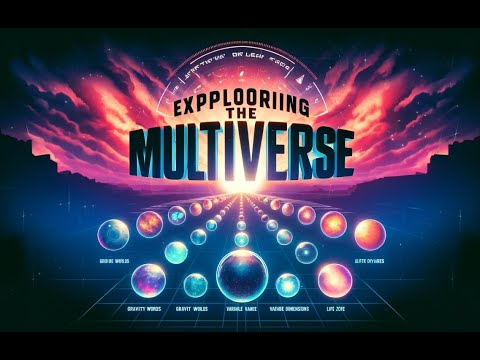
The concept of the String Theory Landscape emerged from the intricate mathematics of string theory, a candidate for a theory of everything that describes fundamental particles as tiny vibrating strings. Pioneered by physicists like Leonard Susskind and Lee Smolin, the "landscape" metaphor, borrowed from evolutionary biology's fitness landscapes, illustrates the vast array of possible vacuum states or configurations of extra dimensions predicted by string theory. Each of these vacua could represent a distinct universe within a larger multiverse, a notion that has profoundly impacted cosmological thought, challenging earlier ideas of a single, unique universe as explored in discussions about the nature of reality.
⚙️ How It Works
At its core, the String Theory Landscape arises from the fact that string theory requires more than the four spacetime dimensions we perceive. These extra dimensions can be "compactified" or curled up in an enormous number of ways, estimated to be as high as 10^500. Each unique compactification leads to a different set of physical laws and fundamental constants in the resulting effective four-dimensional universe. This vast collection of possibilities, akin to different valleys in a complex energy landscape, means that our universe's specific properties, such as the value of the cosmological constant, might not be a unique outcome but rather a selection from an immense set, a concept that has been debated extensively on platforms like Reddit.
🌍 Cultural Impact
The String Theory Landscape has sparked considerable debate and captured the public imagination, influencing discussions in popular science books like Leonard Susskind's "The Cosmic Landscape" and articles in publications such as Scientific American. It offers a potential solution to the fine-tuning problem in physics, suggesting that the seemingly perfect conditions for life in our universe are not a coincidence but a consequence of our existence within a multiverse where only life-permitting universes are observed. This idea has been explored in various contexts, from academic discussions to more speculative interpretations, and has been a subject of interest on platforms like Medium.
🔮 Legacy & Future
The ongoing exploration of the String Theory Landscape continues to push the boundaries of theoretical physics and cosmology. While the sheer number of possible universes presents challenges for making testable predictions, it also opens up new avenues for understanding fundamental questions about our existence. Researchers are actively investigating ways to constrain the landscape and explore its implications for phenomena like dark matter and the nature of spacetime. The concept remains a vibrant area of research, influencing our understanding of the cosmos and its potential diversity, a topic that continues to be discussed on academic forums and in scientific publications.
Key Facts
- Year
- 1997-present
- Origin
- Theoretical physics
- Category
- science
- Type
- concept
Frequently Asked Questions
What is the String Theory Landscape?
The String Theory Landscape refers to the vast collection of possible vacuum states predicted by string theory. Each vacuum state represents a different possible universe with its own unique set of physical laws and fundamental constants. The term 'landscape' is used because these vacua can be visualized as valleys in a complex energy landscape.
How does the String Theory Landscape arise?
It arises from the fact that string theory requires extra spatial dimensions (beyond the four we experience). These extra dimensions can be 'compactified' or curled up in an enormous number of different ways. Each distinct way of compactifying these dimensions leads to a different set of physical laws and constants in the lower-dimensional effective theory, creating the 'landscape' of possibilities.
What is the significance of the String Theory Landscape for our universe?
The landscape offers a potential explanation for the 'fine-tuning' problem, where the fundamental constants of our universe appear to be precisely set for life to exist. The idea is that if there are countless universes with varying constants, it's not surprising that we find ourselves in one that supports life, as we could not exist to observe it otherwise. This is related to the anthropic principle.
Is the String Theory Landscape scientifically testable?
This is a major point of debate. Critics argue that the vastness of the landscape and the inaccessibility of other universes make it difficult, if not impossible, to make testable predictions. Supporters, however, are exploring potential indirect observational signatures or theoretical constraints that could lend support to the idea.
Who were the key figures in developing the concept of the String Theory Landscape?
Key figures include Leonard Susskind, who is credited with coining the term 'landscape' in this context, and Lee Smolin, who applied the concept to cosmology. Other significant contributors to string theory and its implications for the landscape include physicists like Shamit Kachru, Renata Kallosh, Andrei Linde, and Michael Douglas.
References
- en.wikipedia.org — /wiki/String_theory_landscape
- news.stanford.edu — /stories/2018/09/string-theory-landscape
- scientificamerican.com — /article/the-string-theory-landscape/
- reddit.com — /r/StringTheory/comments/1mmwyp5/what_is_the_landscape_of_string_theory/
- cerncourier.com — /a/lost-in-the-landscape/
- templeton.org — /grant/deconstructing-the-string-landscape
- ui.adsabs.harvard.edu — /abs/2019Univ....5..176D/abstract
- medium.com — /@sabit.hasan006/the-marvels-of-the-string-theory-landscape-unlocking-the-secret