
Contents
Overview
The conceptual roots of dividing markets for strategic advantage stretch back to early 20th-century advertising and sales practices. Early pioneers like Wendell R. Smith articulated the need for market differentiation in his seminal 1956 Harvard Business Review article, "Product Differentiation and Market Segmentation as Alternative Marketing Strategies." Smith argued that instead of merely producing a single product for an undifferentiated mass market, companies could achieve greater success by developing multiple products tailored to distinct market segments. This marked a significant departure from the mass-marketing era championed by figures like John E. Kennedy and his "reason-why" advertising, which focused on universal appeals. By the 1960s and 70s, with the rise of consumer research and more sophisticated data analysis, segmentation became a standard practice, moving beyond simple demographic splits to incorporate psychographic and behavioral factors, as advocated by researchers like Joseph T. Plummer with his pioneering SRI International's VALS program.
⚙️ How It Works
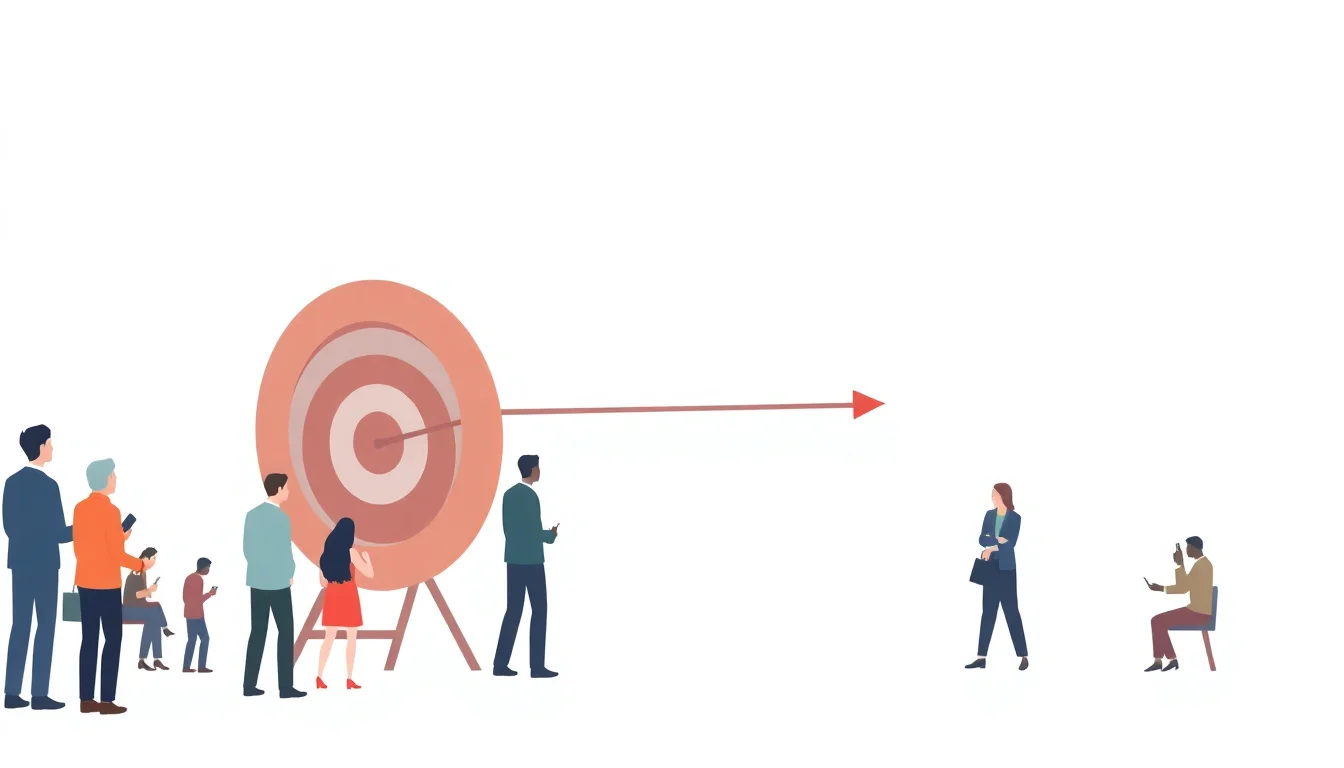
At its core, target market segmentation operates by identifying distinct groups within a larger market based on shared attributes. The process typically begins with market research to gather data on potential customers, which is then analyzed to reveal patterns. Common segmentation bases include demographics (age, income, gender, education), psychographics (lifestyle, values, personality traits), behavioral segmentation (purchase history, brand loyalty, usage rate), and geographic segmentation (location, climate, population density). Once segments are identified, businesses evaluate their attractiveness based on size, growth potential, profitability, and accessibility. The most promising segments are then selected as target markets, and a tailored marketing mix—comprising product, price, place, and promotion—is developed to appeal specifically to the needs and desires of that segment. For instance, a clothing brand might segment its market into "budget-conscious students," "fashion-forward professionals," and "comfort-seeking seniors," developing distinct product lines and advertising campaigns for each.
📊 Key Facts & Numbers
Globally, an estimated 80% of companies utilize some form of market segmentation in their marketing strategies. The global market for marketing analytics, which underpins segmentation efforts, was valued at approximately $7.5 billion in 2022 and is projected to reach over $20 billion by 2030, growing at a compound annual growth rate (CAGR) of around 13%. In the U.S., over 90% of marketers report using demographic segmentation, while 75% employ behavioral segmentation. Companies that effectively segment their markets can see a 10-15% increase in sales and a 5-10% improvement in profit margins. For example, Amazon’s recommendation engine, a sophisticated form of behavioral segmentation, reportedly drives over 35% of its total sales. Furthermore, a study by Accenture found that 41% of consumers have switched providers due to a lack of personalization, highlighting the financial imperative for effective segmentation.
👥 Key People & Organizations
Key figures in the development of market segmentation include Wendell R. Smith, whose 1956 article laid the theoretical groundwork. Joseph T. Plummer was instrumental in developing psychographic segmentation with the SRI International's VALS framework, which categorized consumers based on their values and lifestyles. Major organizations like Accenture, Deloitte, and McKinsey & Company regularly publish research and consulting frameworks on segmentation strategies for their corporate clients. Technology companies such as Salesforce and Adobe provide the software platforms (e.g., Salesforce Marketing Cloud, Adobe Experience Cloud) that enable businesses to collect, analyze, and act on segmentation data at scale. Consumer research firms like Nielsen and Gartner also play a crucial role in providing the data and insights necessary for effective segmentation.
🌍 Cultural Impact & Influence
Target market segmentation has profoundly reshaped consumer culture and business operations, moving marketing from a broadcast model to a personalized dialogue. It underpins the hyper-targeted advertising prevalent on platforms like Facebook and Google, where user data is meticulously segmented to deliver tailored ads. This has led to an expectation among consumers for personalized experiences, influencing everything from product recommendations on Netflix to curated news feeds on Twitter. The ability to reach niche audiences has also fostered the growth of specialized brands and subcultures, from artisanal coffee roasters catering to "coffee connoisseurs" to niche fashion labels serving specific subcultures. However, this precision also raises concerns about filter bubbles and the potential for manipulative marketing practices, as seen in debates surrounding political advertising on social media.
⚡ Current State & Latest Developments
The current landscape of target market segmentation is increasingly dominated by data analytics and artificial intelligence (AI). Real-time segmentation, powered by machine learning algorithms, allows companies to adjust their strategies dynamically based on immediate consumer behavior. The integration of AI enables more sophisticated predictive segmentation, anticipating future needs and preferences rather than just reacting to past behavior. Platforms are evolving to offer more granular segmentation capabilities, incorporating data from an ever-wider array of sources, including IoT devices and social media sentiment analysis. The focus is shifting towards micro-segmentation and even individualized marketing, where each customer is treated as a unique segment. Companies like Netflix and Spotify are prime examples, continuously refining their algorithms to offer highly personalized content recommendations, demonstrating the cutting edge of behavioral segmentation in 2024.
🤔 Controversies & Debates
The practice of target market segmentation is not without its critics and controversies. A primary concern is the potential for discriminatory practices, where certain segments might be excluded from offers or targeted with predatory products, particularly concerning vulnerable populations. The extensive data collection required raises significant privacy concerns, leading to regulations like the GDPR in Europe and the CCPA in the U.S. Skeptics also question the true effectiveness of some segmentation models, arguing that they can oversimplify complex human behavior and lead to stereotyping. Furthermore, the pursuit of hyper-personalization can sometimes feel intrusive or "creepy" to consumers, leading to backlash and a desire for more authentic, less data-driven interactions. The debate continues on where to draw the line between effective targeting and invasive surveillance.
🔮 Future Outlook & Predictions
The future of target market segmentation points towards even greater personalization, driven by advancements in AI, machine learning, and big data analytics. Expect a move towards predictive and prescriptive segmentation, where AI not only identifies segments but also dictates the optimal marketing actions for each. The rise of the metaverse and immersive digital environments will create new frontiers for segmentation, based on virtual behaviors and preferences. Ethical considerations and data privacy will remain paramount, likely leading to more transparent data usage policies and consumer control over their information. Companies that can master AI-driven, privacy-compl
Key Facts
- Category
- concepts
- Type
- topic