
Contents
Overview
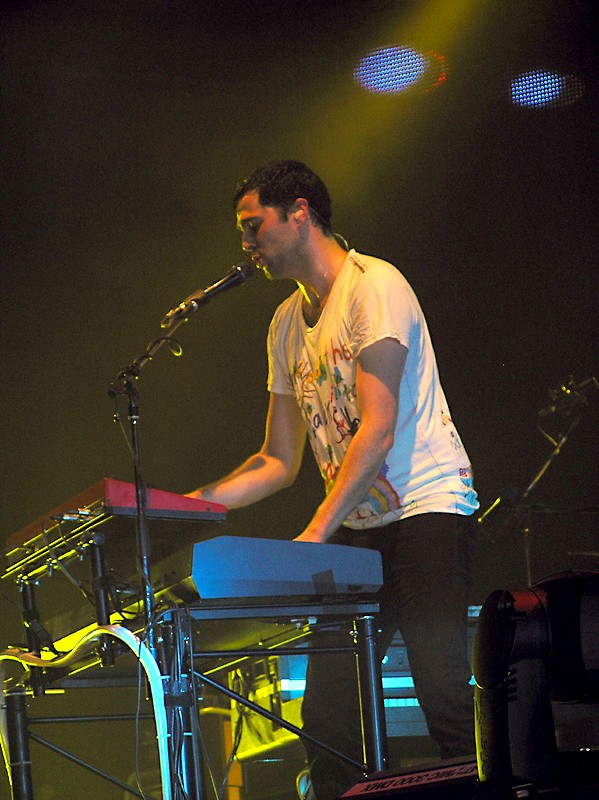
Tim Rice Oxley is a British musician, songwriter, and producer, most widely recognized as the principal songwriter and keyboardist for the acclaimed alternative rock band Keane. Born on June 2, 1976, in Oxford, England, Oxley's distinctive piano-driven melodies and anthemic songwriting have been central to Keane's global success, selling over 12 million albums worldwide. He co-founded the band in 1995, initially as a cover band called Cherry Orchard, before evolving into the chart-topping act known today. Beyond Keane, Oxley also formed the folk-rock side project Mt. Desolation with bandmate Jesse Quin in 2010, further showcasing his versatile musicality. His compositional style, characterized by its emotional depth and grandiosity, has cemented his reputation as a significant figure in 21st-century popular music.
🎵 Origins & Early Years
Timothy James Rice Oxley emerged from Oxford, England, on June 2, 1976, a city steeped in academic and cultural history. His early musical education began at Tonbridge School, where he honed his instrumental skills. This foundation was further solidified during his time at University College London (UCL), where he studied Classics. It was during these formative years, specifically in 1995, that the seeds of what would become Keane were sown. Initially forming with Tom Chaplin, Dominic Scott, and Richard Hughes as a cover band named Cherry Orchard, the group's trajectory shifted dramatically as Oxley's original compositions began to take center stage, moving them away from the typical guitar-centric indie sound of the era.
⚙️ The Keane Blueprint
Oxley's role as the primary songwriter and keyboardist for Keane is the bedrock of the band's identity. Eschewing the guitar-heavy sound prevalent in the late 1990s and early 2000s, Oxley championed the piano as the lead instrument, a bold move that defined Keane's signature sound. His compositions, such as the breakthrough hit 'Somewhere Only We Know' from their 2004 debut album Hopes and Fears, are characterized by sweeping piano arpeggios, powerful vocal melodies delivered by Tom Chaplin, and emotionally resonant lyrics. This distinct approach allowed Keane to carve out a unique space in the alternative rock landscape, earning them critical acclaim and a devoted global fanbase.
📊 Chart Dominance & Global Reach
The success of Keane, largely driven by Oxley's songwriting, translated into significant commercial achievements. Their debut album, Hopes and Fears, released in 2004, achieved multi-platinum status in the UK and charted highly internationally, selling over 2.5 million copies in the UK alone. Subsequent albums like Under the Iron Sky (2006) and Perfect Symmetry (2008) continued this trend, with Keane topping charts in numerous countries, including the UK, Australia, and Germany. The band's ability to consistently deliver anthemic, piano-led tracks resonated with a broad audience, leading to global sales exceeding 12 million albums and numerous sold-out stadium tours.
👥 Key Collaborators & Projects
Beyond his central role in Keane, Tim Rice Oxley has explored his musicality through various collaborations and side projects. In 2010, he joined forces with Keane bandmate Jesse Quin to form Mt. Desolation. This folk-rock project offered a different sonic palette, featuring acoustic guitars and a more stripped-back, pastoral feel, contrasting with Keane's grander arrangements. Oxley has also been involved in production work for other artists, contributing his distinctive touch to their recordings. His willingness to venture into different musical territories demonstrates a broad creative ambition beyond the established Keane sound.
🌍 Cultural Resonance & Influence
The impact of Tim Rice Oxley's songwriting on the cultural landscape is undeniable, particularly his role in popularizing the piano as a lead instrument in mainstream rock music during the 2000s. At a time when guitar-driven bands dominated the charts, Keane's piano-centric anthems offered a refreshing alternative, influencing a generation of musicians who might have otherwise overlooked the instrument's potential in a rock context. Tracks like 'Everybody's Changing' and 'Is This the Last Time' became ubiquitous, embedding themselves in popular culture through radio play, film soundtracks, and television placements. This widespread adoption of his compositions solidified Keane's status as a significant force in 21st-century music.
⚡ Current Endeavors & Evolution
As of 2024, Tim Rice Oxley remains an active member of Keane, with the band continuing to tour and release new material. Their 2024 album, The Light Behind the Eyes, marked a return to their signature sound, receiving positive reviews and demonstrating the enduring appeal of Oxley's songwriting. He has also continued to engage with his solo work and production interests, hinting at further creative explorations. The band's sustained presence in the music industry, nearly three decades after their formation, speaks to the lasting power of their music and Oxley's consistent artistic vision.
🤔 Creative Process & Critiques
Oxley's compositional style, while widely celebrated for its emotional depth and melodic strength, has also drawn scrutiny. Some critics have pointed to a perceived similarity across some of his songs, labeling Keane's sound as formulaic or overly sentimental. However, proponents argue that this consistency is precisely what defines their unique appeal and allows for a deep emotional connection with their audience. The reliance on piano, while a defining characteristic, has also led to comparisons with artists like Ben Folds and Coldplay's earlier work, though Oxley's specific brand of anthemic, soaring melody remains distinctly his own. The debate often centers on whether their sound represents a refined signature or a creative limitation.
🔮 Future Trajectories
The future for Tim Rice Oxley appears to be a continued exploration of his established strengths while remaining open to new sonic territories. With Keane showing no signs of slowing down, further albums and tours are likely, solidifying their legacy. The success of The Light Behind the Eyes suggests a strong creative partnership with Tom Chaplin and Jesse Quin that can still produce compelling new work. It's also plausible that Oxley might delve further into production for emerging artists or revisit the Mt. Desolation project, offering fans a broader spectrum of his musical output. The enduring appeal of his songwriting suggests a continued relevance in the evolving music industry.
💡 Songwriting Methodology
Tim Rice Oxley's songwriting methodology is deeply rooted in melody and emotional resonance, often beginning with a piano motif. He has spoken about how chord progressions and piano patterns frequently serve as the initial spark for a song, with lyrics and vocal melodies developing around this core structure. This approach is evident in tracks like 'Somewhere Only We Know', where the iconic piano riff forms the song's backbone. His lyrical themes often explore introspection, longing, and hope, contributing to the universally relatable nature of Keane's music. The collaborative dynamic within Keane, particularly with Tom Chaplin on vocals and Jesse Quin on bass and production, further refines these initial ideas into polished, impactful songs.
Key Facts
- Category
- person
- Type
- person