
Contents
Overview
The genesis of troubadour poetry is firmly rooted in the Occitania region. While precursors existed in earlier vernacular poetry, the troubadours coalesced into a distinct school, characterized by their use of the Old Occitan language and a sophisticated lyrical style. This tradition rapidly spread, influencing poetic developments in the Italian Peninsula, the Iberian Peninsula, and Northern France. Key figures like William IX of Aquitaine, often cited as the first troubadour, set a precedent for noble patronage and participation in this art form. The 'classical' period, spanning the late 12th and early 13th centuries, saw the refinement of themes like courtly love and the development of complex poetic forms. The art began its decline in the 14th century, with the Black Death in 1348 marking a significant turning point, ultimately leading to its extinction.
⚙️ How It Works
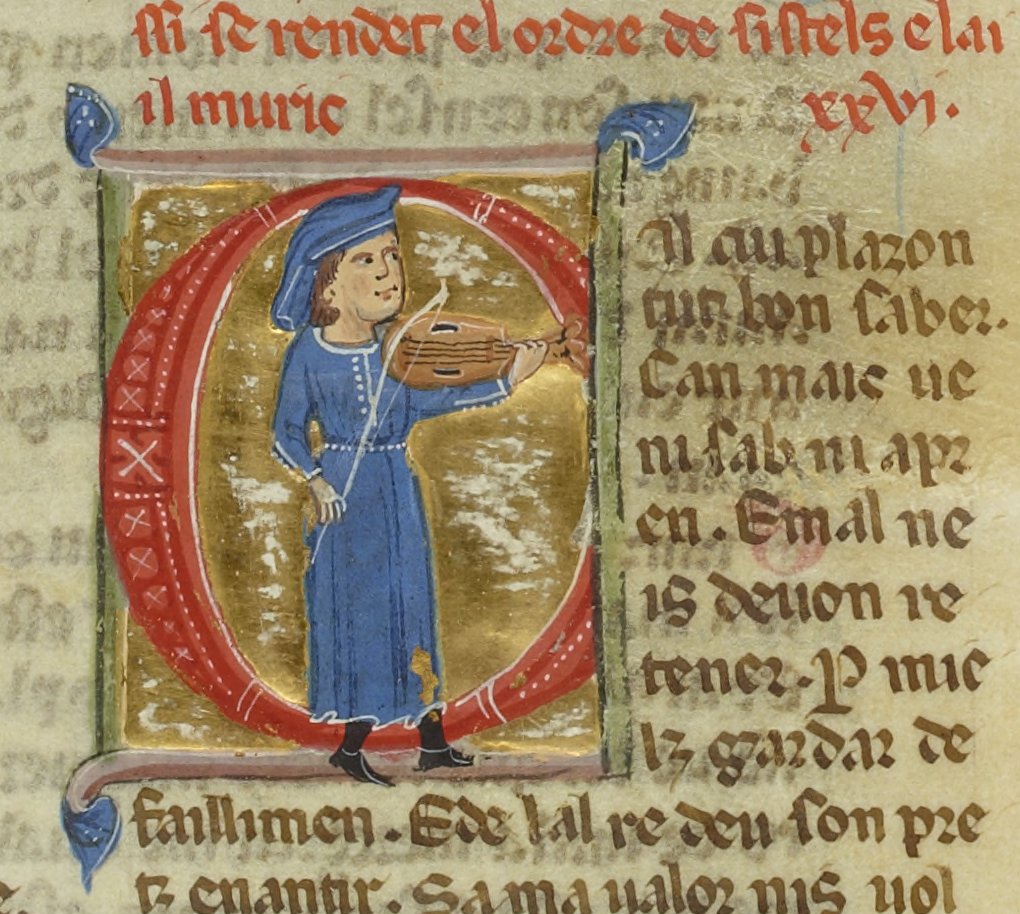
Troubadour poetry functioned as a sophisticated fusion of verse, music, and performance. Poets typically composed lyrics in Old Occitan, a Romance language spoken in southern France. The compositions often adhered to strict metrical and rhyme schemes, with common forms including the canso (love song), sirventes (political or satirical song), and tenso (debate). While many troubadours were also musicians, composing melodies for their verses, only a fraction of the musical notation has survived. The performance aspect was crucial, with troubadours often traveling between courts, performing for noble patrons and their audiences. This oral tradition meant that many compositions were disseminated through performance rather than solely through written manuscripts, which were often produced by scribes rather than the poets themselves.
📊 Key Facts & Numbers
The troubadour tradition spanned approximately 250 years, from roughly 1100 to 1350 CE. It is estimated that around 460 troubadour poems survive today, with musical notation accompanying only about 260 of these. The geographic spread was extensive, with troubadour influence reaching as far as the Byzantine Empire and the Holy Roman Empire. The Occitan language, the primary medium, boasted an estimated 2,000 surviving texts by the end of the 13th century. The economic impact, while difficult to quantify precisely, involved significant patronage from noble courts, with lords and ladies commissioning works and supporting poets, fostering a vibrant cultural economy. The tradition saw its peak in the 12th and 13th centuries, with a noticeable decline in output and influence by the mid-14th century.
👥 Key People & Organizations
The most prominent troubadours include William IX of Aquitaine (c. 1071–1126), a Duke of Aquitaine and one of the earliest documented practitioners. Bernart de Ventadorn (fl. 1147–1170) is celebrated for his exquisite love lyrics, considered by many to be the epitome of the troubadour style. Raimbaut de Vaqueiras (c. 1180–1207) was known for his adventurous life and innovative poetic forms. The female poets, known as trobairitz, included Azalais de Porcairagues and the Countess of Dia, who contributed significantly to the tradition. Literary patronage was often provided by powerful figures such as Eleanor of Aquitaine and the various counts and dukes of southern France and northern Italy.
🌍 Cultural Impact & Influence
The influence of troubadour poetry on subsequent European literature is profound and undeniable. It established the concept of courtly love as a central theme in Western poetry, shaping ideals of romance and chivalry for centuries. The troubadours' use of vernacular languages, rather than Latin, helped legitimize and standardize these languages for literary purposes, paving the way for national literatures. Their innovations in poetic form and musical composition directly inspired the Minnesang tradition in Germany, the trovadorismo in Galicia and Portugal, and the trouvères in northern France. Even Dante Alighieri, in his De Vulgari Eloquentia, analyzed and praised the troubadour lyric, demonstrating its high standing among literary scholars of the time. The themes and styles of troubadour poetry continued to resonate through the Renaissance and beyond, influencing poets like Petrarch and Chrétien de Troyes.
⚡ Current State & Latest Developments
While the original tradition of troubadour poetry died out by the mid-14th century, its legacy endures. Modern scholarship continues to analyze surviving manuscripts, employing digital humanities tools to reconstruct melodies and understand performance practices. Contemporary musicians and poets occasionally draw inspiration from troubadour themes and forms, creating new works that echo the medieval spirit. Academic institutions worldwide offer courses on medieval literature and Occitan studies, ensuring the continued study and appreciation of this rich poetic heritage. The Occitan language itself, though diminished, is experiencing a revival, with some modern poets writing in its contemporary forms, keeping a linguistic thread alive.
🤔 Controversies & Debates
A significant debate surrounds the precise nature of courtly love as depicted by the troubadours. Some scholars argue it represented a genuine, albeit often unconsummated, spiritual and emotional devotion, while others view it as a literary convention or even a coded expression of social and political dynamics within the court. The extent to which troubadour music was truly innovative versus derivative of existing traditions also remains a point of discussion among musicologists. Furthermore, the historical accuracy of certain biographical details concerning troubadours, often embellished in the vidas (biographies) and razos (explanations) appended to their poems, is frequently questioned by historians.
🔮 Future Outlook & Predictions
The future of troubadour poetry lies primarily in its continued academic study and its potential for reinterpretation. As digital archives and analytical tools become more sophisticated, scholars may uncover new insights into the performance practices and linguistic nuances of the original works. There is also potential for contemporary artists to engage with troubadour themes and aesthetics, creating modern adaptations or inspired pieces that introduce the tradition to new audiences. The revival of the Occitan language may also foster new creative output that consciously or unconsciously echoes the troubadours' linguistic and poetic legacy. The challenge remains to translate the historical context and artistic merit of these medieval works for a 21st-century sensibility.
💡 Practical Applications
While troubadour poetry itself is not a practical technology, its principles have found application in various fields. The concept of courtly love has profoundly influenced Western romantic literature, film, and popular culture, shaping societal expectations and expressions of affection. The troubadours' mastery of rhetoric and persuasive language in their sirventes can be studied as early examples of sophisticated public discourse and political commentary. Furthermore, the preservation and study of troubadour manuscripts have contributed to advancements in paleography, codicology, and linguistics, aiding in the understanding of medieval textual transmission and the evolution of Romance languages. The musical notation, though scarce, provides valuable data for historical musicology.
Key Facts
- Category
- culture
- Type
- topic