
Contents
Overview
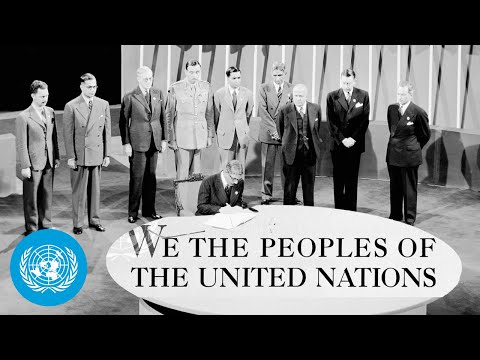
The United Nations Charter was drafted during the United Nations Conference on International Organization, held in San Francisco from April 25 to June 26, 1945. This pivotal conference brought together delegates from 50 nations, building upon proposals from earlier meetings like the Dumbarton Oaks Conference and the Yalta Agreement. The Charter was officially signed on June 26, 1945, and came into force on October 24, 1945, establishing the United Nations as a successor to the League of Nations. The foundational treaty was influenced by the failures of the League of Nations to prevent World War II, aiming to create a more robust and effective international body, a concept championed by leaders like Franklin D. Roosevelt and Winston Churchill.
⚙️ How It Works
The UN Charter establishes the core purposes and principles of the United Nations. Its primary goals, as outlined in Article 1, include maintaining international peace and security, developing friendly relations among nations based on equal rights and self-determination, achieving international cooperation to solve economic, social, cultural, and humanitarian problems, and serving as a center for harmonizing the actions of nations. The Charter also lays out the structure of the UN, including its principal organs: the General Assembly, Security Council, Economic and Social Council, Trusteeship Council, International Court of Justice, and the Secretariat. The principles guiding the organization and its members are detailed in Article 2, emphasizing sovereign equality, good faith fulfillment of obligations, and the peaceful settlement of disputes, as seen in discussions around concepts like the Bushido Code and the Politics of international relations.
🤝 Cultural Impact
The UN Charter has profoundly shaped international relations and global governance since its inception. It serves as a cornerstone for international law and cooperation, influencing numerous subsequent treaties and declarations, including the Universal Declaration of Human Rights. The Charter's emphasis on peace, human rights, and cooperation has inspired global movements and initiatives, though its effectiveness has also been a subject of debate, particularly concerning the Security Council's structure and the veto power held by its permanent members. The ideals embedded in the Charter resonate with ongoing discussions about global challenges, similar to how the Digital Music Revolution transformed cultural exchange.
📜 Legacy & Future
The UN Charter remains the foundational document guiding the United Nations' work in addressing contemporary global issues, from climate change to humanitarian crises. While it has been amended three times since its adoption, its core principles continue to be the basis for international cooperation. The Charter's legacy lies in its enduring vision for a more peaceful and just world, even as debates continue regarding its implementation and the need for reform to meet the evolving challenges of the 21st century, much like discussions surrounding Simulation Theory and the future of technology.
Key Facts
- Year
- 1945
- Origin
- San Francisco, California, United States
- Category
- history
- Type
- document
Frequently Asked Questions
When was the UN Charter signed?
The UN Charter was signed on June 26, 1945, in San Francisco, California, at the conclusion of the United Nations Conference on International Organization.
When did the UN Charter come into effect?
The UN Charter entered into force on October 24, 1945, after ratification by the five permanent members of the Security Council and a majority of the other signatory states.
What are the main purposes of the UN Charter?
The main purposes of the UN Charter are to maintain international peace and security, develop friendly relations among nations, achieve international cooperation in solving global problems, and serve as a center for harmonizing the actions of nations.
What are the principal organs of the United Nations established by the Charter?
The principal organs established by the UN Charter are the General Assembly, the Security Council, the Economic and Social Council, the Trusteeship Council, the International Court of Justice, and the Secretariat.
What is the relationship between the UN Charter and the League of Nations?
The UN Charter is considered the successor to the League of Nations. The United Nations was established after the failures of the League of Nations to prevent World War II, with the aim of creating a more effective international organization for maintaining peace and security.
References
- un.org — /en/about-us/un-charter/full-text
- un.org — /en/about-us/un-charter
- en.wikipedia.org — /wiki/Charter_of_the_United_Nations
- treaties.un.org — /doc/publication/ctc/uncharter.pdf
- un.org — /en/about-us/un-charter/chapter-1
- facebook.com — /unitednations/posts/-the-un-charter-is-the-foundation-of-everything-the-united-
- youtube.com — /watch
- betterworldcampaign.org — /un-explained/what-is-the-united-nations-chapter-and-article-2