
Contents
Overview
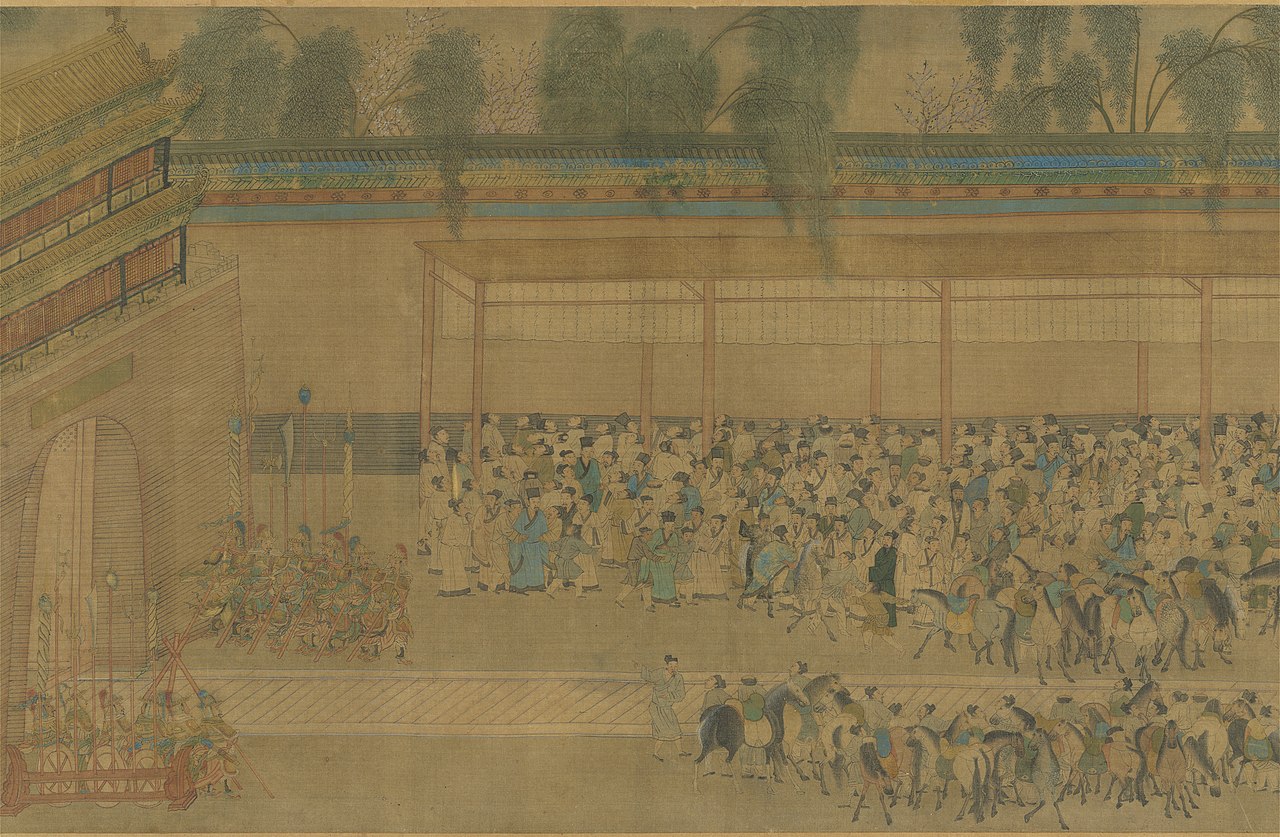
The Imperial Examination System, known as Keju (科舉), was a civil service examination system in Imperial China that lasted for over 1,300 years, from the Sui Dynasty (581–618 CE) to the Qing Dynasty (1644–1912 CE). It was designed to select candidates for the state bureaucracy based on their merit, primarily through rigorous testing of Confucian classics and literary skills. While lauded for promoting social mobility and creating a relatively stable, merit-based bureaucracy, the Keju system also faced criticism for its rigid curriculum, emphasis on rote memorization, and potential for corruption. Its influence extended beyond China, shaping examination systems in other East Asian countries and leaving a lasting legacy on educational and bureaucratic thought.
📜 What Was the Keju System?
The Keju was Imperial China's primary method for selecting officials for its vast bureaucracy, operating for over 1,300 years until its abolition in 1905. Far from a simple test, it was a rigorous, multi-tiered selection process designed to identify individuals with the intellectual and moral qualifications deemed necessary to govern. This system fundamentally shaped Chinese society, creating a meritocratic pathway to power that, in theory, transcended social class, though in practice, access was often influenced by wealth and connections. It was the backbone of imperial administration, ensuring a degree of standardization and competence across the empire.
⏳ Historical Timeline & Evolution
The roots of the Keju system stretch back to early Chinese dynasties, with the Sui dynasty (581–618) making the first serious attempts at using written exams for recruitment. However, it was during the Tang dynasty (618–907) that the system truly solidified, becoming a regular and increasingly dominant channel for bureaucratic appointment. The Song dynasty (960–1279) further expanded and refined the examinations, embedding them deeply into the fabric of governance. This enduring system finally met its end during the late Qing dynasty reforms in 1905, a move championed by figures like Yuan Shikai and Zhang Zhidong.
📚 Examination Structure & Content
The Keju examinations were notoriously demanding, focusing heavily on Confucian classics, classical literature, and essay writing. Candidates were expected to demonstrate mastery of texts like the Four Books and Five Classics and to compose prose in highly stylized forms. The exams were typically held in multiple stages, often spanning several days, with candidates confined to small, spartan cells. The difficulty and sheer volume of material required meant that preparation often began in childhood, with many aspiring scholars dedicating decades to study.
🎯 Who Could Participate?
While theoretically open to most males, participation in the Keju system was practically limited. While sons of peasants, artisans, and merchants could technically take the exams, the immense cost and time required for preparation meant that only those with financial means, typically from landowning or scholarly families, could afford the extensive education needed. Women were excluded from the system entirely. This created a de facto barrier, ensuring that while merit was the stated ideal, social and economic status played a significant role in who could even attempt the examinations.
💰 Cost & Investment
There was no direct 'fee' to take the Keju exams themselves, but the 'cost' was astronomical in terms of time, resources, and opportunity. Families would invest heavily in tutors, books, and living expenses for sons dedicated to study, often for decades. This meant that only affluent families could sustain such an endeavor. The opportunity cost was also immense, as a scholar dedicating their life to study forfeited potential income from other professions. This financial barrier was a major point of contention and a significant factor in limiting social mobility.
🏆 The Stakes: Power & Prestige
Passing the Keju examinations offered the ultimate prize: entry into the prestigious imperial bureaucracy. Successful candidates gained immense social status, economic security, and the opportunity to wield significant power. High-ranking officials were revered, their families often elevated by their success. The system created a distinct scholarly elite, whose members were expected to embody Confucian virtues and govern with wisdom and impartiality. The allure of this power and prestige fueled the intense competition and dedication seen among aspiring scholars.
📉 Criticisms & Controversies
Despite its longevity and the ideal of meritocracy, the Keju system faced persistent criticism. Skeptics pointed to its rigid adherence to classical texts, arguing it stifled innovation and practical governance skills. The intense focus on rote memorization and literary style over actual administrative competence was a frequent complaint. Furthermore, the system was susceptible to corruption, with bribery and cheating sometimes undermining the integrity of the examinations. The exclusion of women and the practical economic barriers also drew ire.
💡 Modern Legacies & Echoes
The legacy of the Keju system is profound and still felt today. While the examinations were abolished in 1905, the emphasis on rigorous testing for civil service positions continues in modern China and Taiwan. The cultural value placed on education and scholarly achievement, deeply ingrained by centuries of the Keju system, persists in East Asian societies. The concept of a merit-based selection process, even with its flaws, remains a powerful ideal in public administration globally.
🤔 How to Learn More
For those fascinated by the mechanics and societal impact of the Keju system, further exploration is highly recommended. Consider visiting museums with collections on Chinese history, such as the Palace Museum in Beijing, which often houses artifacts related to imperial administration. Academic texts on Chinese history and governance, particularly works by scholars like John K. Fairbank and Benjamin Elman, offer deep dives into the system's intricacies. Online resources like academic journals and university history department websites also provide valuable insights.
Key Facts
- Year
- 581 CE - 1905 CE
- Origin
- Sui Dynasty, China
- Category
- Historical Systems
- Type
- System
Frequently Asked Questions
When did the Imperial Examination System begin and end?
The system's origins trace back to the Sui dynasty (581–618), with systematic implementation starting in the Tang dynasty (618–907) and further expansion during the Song dynasty (960–1279). It endured for over 1,300 years, finally being abolished during the late Qing dynasty reforms in 1905.
What subjects were tested in the Keju exams?
The examinations heavily emphasized Confucian classics, classical Chinese literature, poetry, and essay writing. Candidates were expected to demonstrate profound knowledge of texts like the Four Books and Five Classics and to master specific literary styles.
Could anyone take the Imperial Examinations?
In theory, the system was open to most males. However, the extensive education and resources required for preparation meant that participation was practically limited to those from wealthier families who could afford tutors and years of study. Women were explicitly excluded.
What were the benefits of passing the Keju exams?
Passing the exams offered a direct pathway to prestigious and well-compensated positions within the imperial bureaucracy. Successful candidates gained significant social status, economic security, and the opportunity to influence governance.
Were there criticisms of the Keju system?
Yes, significant criticisms included its rigid focus on classical texts over practical skills, potential for corruption, and the stifling of innovation. The economic barriers to entry also meant it wasn't a pure meritocracy.
Does any form of the Keju system still exist today?
While the original system is gone, its legacy persists. Modern civil service examinations in China and Taiwan draw inspiration from the Keju's emphasis on merit-based selection, though the content and structure are vastly different.